Articles by Lewis Botcherby

Eurofins Scientific has announced the acquisition of Agfirst Bay of Plenty, a fruit maturity testing laboratory in New Zealand. Agfirst Bay of Plenty provides independent kiwifruit maturation sampling and testing services across two facilities in the Bay of Plenty region of New Zealand.
Activated Research Company (ARC), producers of the Polyarc reactor, has announced a new partnership with Wasson-ECE to bring the system to the international market for the first time.

Researchers from the Lawrence Berkeley National Laboratory (Berkeley Lab) have identified the source of toxic emissions within electronic cigarettes (e-cigarettes) using headspace gas chromatography in tandem with mass spectrometry (HS-GC–MS) and high pressure liquid chromatography (HPLC).
Sciex has announced that it will work with the Francis Crick Institute and the University of Cambridge to build a metabolism-centric proteomic map.
Polymer Char are holding a “User Training Meeting” at the 6th International Conference on Polyolefin Characterization (ICPC), Shanghai, China, 6–9 November 2016.
Researchers from the China Pharmaceutical University in Nanjing, China, have published a review of the recent advances in the preparation and application of monolithic capillary columns in separation science.
A publication in TrAC Trends in Analytical Chemistry has covered the recent advances in microfluidic liquid chromatography.

Victor U. Weiss and Günter Allmaier from TU Vien discuss how combining molecular beacons with chip capillary electrophoresis (CE) offers scope to investigate viral RNA replication and improve gene therapy delivery systems.
Waters Corporation has announced a collaboration with the Bioprocessing Technology Institute (BTI), a research institute within Singapore’s Agency for Science, Technology, and Research.

Researchers from Vienna University of Technology (TU Wien), Austria, have used chip capillary electrophoresis (CE) in combination with molecular beacons (MBs) to analyze the release of the RNA genome from a human rhinovirus.
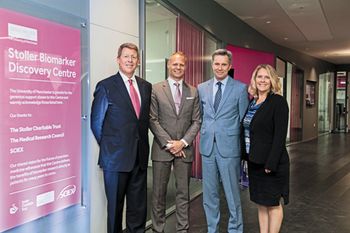
The University of Manchester unveiled the £18-million Stoller Biomarker Discovery Centre at the beginning of June 2016. The research centre will focus on biomedical research on major diseases, including cancer, psoriasis, and arthritis, using mass spectrometry (MS)‑based proteomics solutions from Sciex.
Eurofins Lancaster Laboratories, a part of Eurofins Scientific, has announced the expansion of its Dungarvan campus. The expansion includes a new building and an expansion of existing facilities.

Water contamination has come to the forefront of global debate as a result of high profile cases such as those in Flint, Michigan, USA, or the pollution of the Ganges River in India. Koji Kosaka of the National Institute of Public Health, Japan, has investigated the contamination of the Yodo River Basin in Japan, with the precursors of the carcinogen N-Nitrosodimethylamine (NDMA). He recently spoke with The Column about his use of high performance liquid chromatography (HPLC) to uncover the source of contamination and the chemical precursors responsible.
The winners of the 2016 Thermo Scientific Tandem Mass Tag (TMT) Research Award were celebrated at a ceremony held at the 64th American Society of Mass Spectrometry (ASMS) Conference on Mass Spectrometry and Allied Topics in San Antonio, Texas, USA.

Multidimensional liquid chromatography strategies are the most widely used method for increasing the number of spatially resolved components and reducing stress on mass spectrometric detection. However, the stress placed on a secondary dimension in a comprehensive on-line methodology is very high. An increasingly attractive approach is the coupling of high performance liquid chromatography (HPLC) with ion mobility spectrometry hyphenated to mass spectrometry (IMS-MS). Tim Causon and Stephan Hann of the University of Natural Resources and Life Sciences in Vienna, Austria, spoke to The Column about their work evaluating this approach and exploring its possibilities for metabolomics.

The Chromatography Society is holding a four-day educational event in the Lake District from 14–17 October at the Wordsworth Hotel in Grasmere. Aimed at post-graduate students and novice chromatographers, the event will focus on the fundamentals of liquid chromatography and its practical application in industry and academia.

Gas chromatography–mass spectrometry (GC–MS) may be a viable diagnostic tool for inflammatory arthritis according to research from the University of Amsterdam.

Leon Blumberg has been at the cutting edge of chromatography since the late 1980s. The Column spoke with him about his contribution to the past, present, and future of chromatography.
Thermo Fisher Scientific has extended a technology collaboration with the University of Birmingham in the UK. Thermo Fisher will supply a range of mass spectrometry instruments to be used at the University’s new Phenome Centre.
Waters Corporation has announced the addition of Richard Chang and Xiao Ran Yu to its Asia Pacific leadership team. Chang has been appointed as Vice President of Waters’ Asia Pacific Operations and Yu has been appointed as General Manager of Waters China.
Leap Technologies Inc. and Antec have announced a joint venture in the field of sample preparation for HDX–MS.

Following a successful launch last year, Shimadzu’s Lab4You program is once again accepting applications from young and enthusiastic researchers hoping to advance their research.
LGC Standards has been awarded a Responsible Sourcing status by Sedex for its Standards division in Germany. A non-profit membership organization, Sedex is dedicated to improving responsible and ethical business practices in global supply chains.

Researchers from the USA have developed a simple and derivatization-free gas chromatography (GC) method for the quantitative analysis of oleic acid and related fatty acids.

Researchers from Universidade Federal de Minas Gerais, Brazil, have used multiple analytical techniques including IEC and ATR‑FTIR spectroscopy to investigate bovine meat adulteration.

To mark the Chromatographic Society’s 60th birthday, The Column interviewed the current President of The Chromatographic Society, Dr. Paul Ferguson, and Associate Principal Scientist for Separation Science at AstraZeneca, Macclesfield, UK, on the past, present, and future of the Chromatographic Society - and separation science.
Researchers from the USA have developed a simple and derivatization-free gas chromatography (GC) method for the quantitative analysis of oleic acid and related fatty acids.
Spark Holland B.V.and Axel Semrau have announced an expansion of their existing distribution deal to include Switzerland and Austria.
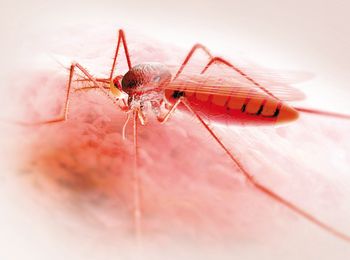
Researchers from Colorado State University have demonstrated the viability of exploratory metabolomics and HILIC–MS in identifying biomarkers associated with dengue virus (DENV) infections, such as dengue fever, dengue haemorrhagic fever/dengue shock syndrome (DHF/DSS).

Subcritical water chromatography (SBWC) is seen as an increasingly enticing prospect to replace high performance liquid chromatography (HPLC) in industrial settings because of its low costs and environmental impact. Yu Yang of East Carolina University, in Greenville, North Carolina, USA, has conducted research into this process for two decades. He recently spoke to Lewis Botcherby of The Column about his work, why companies should consider SBWC, and its role in pharmaceutical analysis.

