The Column
One of the major problems with plastics is recycling. Only a few materials can be recycled and the acceptance of recyclates is sometimes low. GPC/SEC can be applied to investigate the quality of materials containing recycled portions.
The Column
One of the major problems with plastics is recycling. Only a few materials can be recycled and the acceptance of recyclates is sometimes low. GPC/SEC can be applied to investigate the quality of materials containing recycled portions.

LCGC E-Books
LCGC E-Books

The Column
Membranes play an important role in living species as well as in technical processes, including in human care (for example, in kidney treatment). This instalment of Tips & Tricks discusses gel permeation chromatography/size-exclusion chromatography (GPC/SEC) for membrane analysis.
The Column
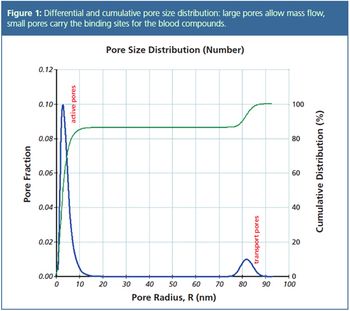
Gel permeation/size-exclusion chromatography (GPC/SEC) is the standard method for separating samples by molecular size and determining molar mass distributions. However, GPC/SEC instruments can also be used to investigate porous materials and to learn more about pore size distributions, as a powerful alternative to nitrogen gas (N2) adsorption or mercury (Hg) intrusion porosimetry.

The Column
How to transfer a chromatogram into the molar mass distribution.

The Column
This article provides some tips and tricks for monitoring sample recovery and peak area using GPC/SEC.

The Column
Integral calibration with a broad standard is a fast, cost-effective, and easy-to-use calibration technique for quality control. This article explains more.

The Column
GPC/SEC analysis can be easily optimized to yield improved results when analysing oligomers and low molar mass macromolecules.

The Column
GPC/SEC (gel permeation chromatography/size exclusion chromatography) methods generally contain multiple detectors in order to gather more information about the molecular structure of macromolecules.1. Up until now, however, the practice and the impact of detector combination has not been discussed.
The Application Notebook
Polymer Standard Service
LCGC Europe
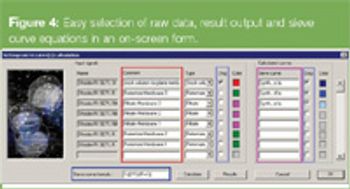
Because GPC is a reliable, simple and fast characterization method it can be readily adopted to investigate the separation behaviour of membranes.
LCGC Europe
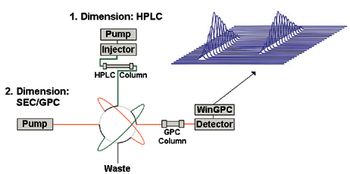
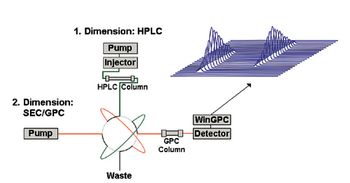
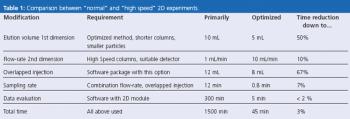
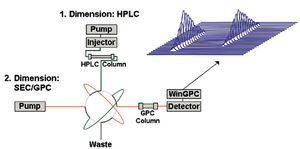
2D polymer liquid chromatography is a powerful tool for the deformulation of complex samples; however, it is considered to be very specialized and time-consuming. This article shows how recent hardware and software improvements have led to the technique becoming a method for routine analysis.

September 1st 2012

October 4th 2012
September 2nd 2012