
Ronald E. Majors

Ronald E. Majors

Ron Majors, editor of "Column Watch" and "Sample Prep Perspectives," has been with LCGC North America for over 26 years. Currently a senior scientist with Agilent Technologies, Wilmington, Delaware, Ron is known industry-wide as one of the premier chromatography experts in the field. He is also a member of LCGC's editorial advisory board.

Articles by Ronald E. Majors

Prof. Emanuela Gionfriddo of the University of Toledo, in Ohio, is the recipient of the ACS Analytical Division 2023 Satinder Ahuja Award for Young Investigators in Separation Science, which was presented to her at Pittcon 2023. The purpose of this award is to recognize and encourage outstanding contributions to the fields of analytical chemistry by a young analytical scientist based on or more of the following criteria: conceptualization and development of unique instrumentation for separations; development of novel and important separation methods or methodologies; elucidation of theory or fundamental processes involved in separations; and other significant contributions to the furtherance of separation science role in the use of chemical instrumentation. Read more about this award session here.

Ron Majors was the 2020 recipient of the Chromatography Forum of the Delaware Valley (CFDV) Award, which is given to those who have provided exceptional service for the Forum in addition to outstanding contributions within the field of chromatography. Readers of LCGC are well aware of his nearly 60 years of research and leadership in this area (1), but few outside the Delaware Valley region know of his decades of membership on the CFDV Executive Committee, including two terms as president. As part of this well-deserved honor, Ron gave a (remote) address to the organization in October 2020, detailing his many accomplishments in the field and summarizing the current state-of-the-art in high performance liquid chromatography (HPLC) column technology (2). However, it was his introduction describing the early days of HPLC that stood out to me, specifically a name I had not heard before: Elmar Piel. For this month’s blog post, I invited Ron to join me in writing a bit more about this scientist who may be unfamiliar to many chromatographers.

LCGC7_i1.jpg

A summary of the findings presented at the HPLC 2017 Jeju conference, reviewing how they fit into overall liquid-phase separation trends and the outlook for the future of these technologies

LCGC5_i1-1.gif

In advance of Pittcon 2018, leading scientists-Ronald Majors, Richard Henry, John W. Dolan, Zachary S. Breitbach, and Daniel W. Armstrong-who will be speaking at the LCGC awards symposium give us a preview of their talks.

Majors-Figure-10-web.jpg

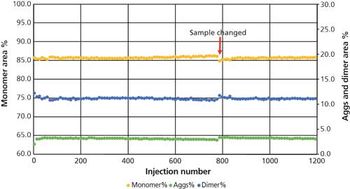
With many new biopharmaceuticals now being developed, robust analytical methods are needed to ensure that these protein-based drugs are of high purity and safe with a minimum amount of side effects. Size-exclusion chromatography is an important technique in investigating purity and is useful to identify and monitor protein aggregation, which can have economic and immunogenicity effects. This article discusses those column parameters that are most important in the selection of the optimum phase for SEC separations.

Figure1_web-1.jpg

In his final “Column Watch” article, Ron Majors looks into his crystal ball and discusses future needs in the area of HPLC/UHPLC column technology and related instrumentation. He looks at where current technology may be heading and makes a prediction that monolith-based columns may still have a rightful place in the HPLC/UHPLC laboratory .This article concludes his duration as a monthly columnist for LCGC.

figure 31450177376131.jpg

In his final “Column Watch” instalment, Ron Majors looks into his crystal ball and discusses future needs in the areas of high performance liquid chromatography (HPLC) and ultrahigh-pressure liquid chromatography (UHPLC) column technology and related instrumentation.

Fig-5-web.jpg

During the course of my scientific career beginning in the 1960s, I have grown up with the birth of modern LC column technology, the refinements of the instrumentation, and the development of widespread application of this most powerful separation and analysis technique. In this installment, I would like to share with you some of my observations and experiences with the beginning, the growth period, and the maturation of HPLC columns, where I have focused nearly 33 years of writing for this magazine. I will explore some of the early column breakthroughs beginning with the development of large superficially porous particles (SPP), the porous irregular and spherical microparticulate particles, inorganic and organic polymeric monoliths and the rebirth of the current generation of SPP. In next month’s installment I will look into my crystal ball and see what the future of HPLC and UHPLC holds.

Fig-5_web.jpg

Ron Majors’s personal recollections on the first 50 years of column development-with perspectives on what was going on behind the scenes, particularly during the exciting early days-including a summary of his early publications that contributed to development of HPLC column technology.

Ron Majors’s personal recollections on the first 50 years of column development-with perspectives on what was going on behind the scenes, particularly during the exciting early days-including a summary of his early publications that contributed to development of HPLC column technology.

Equation1_web-1.jpg

This article provided guidance for working with the low-dispersion, small-volume columns that were gaining popularity in 2003. These considerations are still appropriate today with the short, narrow HPLC and UHPLC columns now in vogue. Anatomy

Figure-3_web.jpg

A survey of LCGC readers on sample preparation techniques and methodology investigated trends in technologies being used, sample loads, sample sizes, automation, the use of SPE devices (cartridges, disks, plates, tips), SPE chemistries, selection criteria, and problems encountered.

The 42nd International Symposium of High Performance Liquid Phase Separations and Related Techniques (HPLC 2015), chaired by Gérard Hopfgartner was held 21–25 June in Geneva, Switzerland. This instalment covers some of the highlights observed at the symposium including stationary-phase developments, particle technology, and areas of growing application of HPLC. In addition, trends and perspectives on future developments in HPLC culled from the conference are presented.

The 42nd International Symposium of High Performance Liquid Phase Separations and Related Techniques (HPLC 2015), chaired by Gérard Hopfgartner was held 21–25 June in Geneva, Switzerland. This instalment covers some of the highlights observed at the symposium including stationary-phase developments, particle technology, and areas of growing application of HPLC. In addition, trends and perspectives on future developments in HPLC culled from the conference are presented.

Figure-1.jpg

There has been a revival of supercritical fluid chromatography (SFC) in recent years, especially in the chiral preparative field, but also more recently in the analytical area. However, SFC is considerably more complex than liquid chromatography (LC), mainly because of the compressibility of the mobile phase. One can say that SFC is a “rubber variant” of LC where everything considered constant in LC varies in SFC. In this review, we go through advances in theory, instrumentation, and novel applications.

LCE0615_Column-Watch_Figure-4.jpg

The use of superficially porous particles (SPPs) in the manufacture of high performance liquid chromatography (HPLC) columns has become prominent in recent years. Over the course of the past decade most major manufacturers have built column lines around the technology. At the recent Pittcon conference in New Orleans, Louisiana, USA, a large number of oral and poster presentations centred on the current research and advances using superficially porous particles. This instalment aims to provide some highlights of these recent trends.