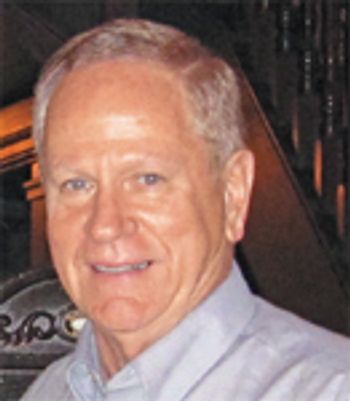
Ronald E. Majors

Ronald E. Majors

Ron Majors, editor of "Column Watch" and "Sample Prep Perspectives," has been with LCGC North America for over 26 years. Currently a senior scientist with Agilent Technologies, Wilmington, Delaware, Ron is known industry-wide as one of the premier chromatography experts in the field. He is also a member of LCGC's editorial advisory board.

Articles by Ronald E. Majors

LCGC4_i3.jpg

There has been a revival of supercritical fluid chromatography (SFC) in recent years, especially in the chiral preparative field, but also more recently in the analytical area. However, SFC is considerably more complex than liquid chromatography (LC), mainly because of the compressibility of the mobile phase. One can say that SFC is a “rubber variant” of LC where everything considered constant in LC varies in SFC. In this review, we go through advances in theory, instrumentation, and novel applications.
i4-852853-1416901086911.jpg

This year's HPLC symposium was held in New Orleans, Louisiana, USA. In this review, Ron Majors covers HPLC and UHPLC column and sample preparation highlights, summarizes the awards presented, and reviews the overall liquid-phase chromatography trends.

This year's symposium was held in New Orleans, Louisiana, USA. In this review, Ron Majors covers HPLC and UHPLC column and sample preparation highlights, summarizes the awards presented, and reviews the overall liquid-phase chromatographic trends.

Highlights of the discussions on column-technology topics - such as monoliths, high-pH columns, SPPs, and HILIC - and an analysis of the larger trends observed at the conference.

i4-845199-1408522795066.jpg

Sample preparation has often been viewed as the bottleneck in analytical procedures. Surveys have shown that time is typically the most frequent problem area for sample preparation procedures. While newly developed extraction techniques address time, modern chromatography advances are also moving towards faster separations. Based on these considerations, what is high-throughput sample preparation? Do modern extraction methods adequately address the issue of time? How can we address the analytical need for speed?

Entirely new sample preparation technologies continue to be introduced, mainly in the academic sector. Some of these technologies will undoubtedly stay in the academic laboratory. However, some new technologies may "cross the chasm" and eventually become a standard laboratory procedure. This instalment will examine some of those methods.

i4-830134-1408530682544.gif

In this instalment Ron Majors discusses new sample preparation media that could result in improved or even "breakaway" performance for solid–liquid extractions. Some of these sorbents are based on new novel bonded phases to existing media while others are based on new extraction phases, such as carbon on silica, other metal oxides, or polymeric media. With resulting new selectivities, sample preparation could be performed more quickly in fewer steps than typical of usual adsorbents

LCGC1_i1-830393-1416905893658.jpg

To keep readers informed of the latest developments and trends in sample preparation, LCGC North America occasionally runs reader- and expert-surveys that provide information on overall technology and usage patterns.

i8_t-828959-1408528875679.jpg

In any field, there are "misconceptions" or "myths" that arise and are perpetuated and passed on to the next generation. These myths are often driven by a lack of understanding of the real issues by practitioners. In the first of a two-part feature from Ron Majors, the top 10 high performance liquid chromatography (HPLC) column myths are presented and attempts are made to demystify them by offering some evidence that they are untrue. This part will feature myths 10 to six.

i4-825786-1408532301437.gif

In any field, there are "misconceptions" or "myths" that arise and are perpetuated and passed on to the next generation. These myths are often driven by a lack of understanding of the real issues by practitioners. In the first of a two-part feature from Ron Majors, the top 10 high performance liquid chromatography (HPLC) column myths are presented and attempts are made to demystify them by offering some evidence that they are untrue. This part will feature myths 10 to six.