

Special Issues
In 1983, the brainchild of Ed Aster, President of Aster Publishing, and Tom Hager, an editor, a publication called LC-Liquid Chromatography and HPLC Magazine was christened.

Ron Majors, editor of "Column Watch" and "Sample Prep Perspectives," has been with LCGC North America for over 26 years. Currently a senior scientist with Agilent Technologies, Wilmington, Delaware, Ron is known industry-wide as one of the premier chromatography experts in the field. He is also a member of LCGC's editorial advisory board.
Special Issues
In 1983, the brainchild of Ed Aster, President of Aster Publishing, and Tom Hager, an editor, a publication called LC-Liquid Chromatography and HPLC Magazine was christened.

LCGC North America
This month's installment of "Sample Prep Perspectives" describes a new extraction technique called QuEChERS (standing for quick, easy, cheap, effective, and safe and is pronounced "catchers") for the sample preparation of pesticides in foods and agricultural samples.
LCGC Europe
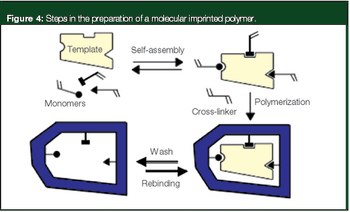
Although the majority of solid-phase extraction (SPE) is performed with conventional bonded silica- and polymeric-phases, difficult and complex samples may require more specialized stationary phases. In this instalment of "Sample Preparation Perspectives", columnist Ron Majors discusses advanced topics such as multimodal SPE, restricted-access media, molecular imprinted polymers, immunoaffinity extraction phases and other class-or compound-specific sorbents. These phases provide additional selectivity and procedures using them can be automated. Representative applications will be presented.
LCGC North America
This month's installment of "Column Watch" is the conclusion of a two-part series in which columnist Ron Majors examines trends in column and sample prep introductions at Pittcon 2007.
LCGC North America
This month's installment of "Column Watch" is the first of a two-part series in which Ron Majors examines the trends and highlights in columns and consumables at Pittcon 2007.

LCGC North America
This installment of "Sample Prep Perspectives" discusses techniques for the reduction/depletion of high-abundance proteins.

LCGC Europe
Traditional methods for the sample preparation of insoluble solid materials have represented one of the more time consuming and labour-intensive efforts in analysis. In this instalment of "Sample Prep Perspectives", Ron Majors examines modern sample preparation methods for solids that often involve increased temperature and higher pressure to speed up the extraction process. In addition, modern sample preparation methods have been automated to relieve analysts of the drudgery associated with traditional methods. Here, he reports on automated Soxhlet extraction, supercritical fluid extraction, pressurized fluid extraction–accelerated solvent extraction, and microwave-assisted extraction and updates earlier coverage.

LCGC Europe
In any field there are often "misconceptions" or "myths" that are perpetuated and passed on to the next generation. These myths are often driven by a lack of understanding by practitioners of the real issues. In this instalment of "Column Watch", the 10 most popular myths around high performance liquid chromatography (HPLC) column technology will be demystified by discussing the issues at hand. Among some of the popular myths that will be dispelled are that "All C18 (L1) columns are the same", "You can't reverse an HPLC column", "High temperature always leads to better separations" and "The higher the carbon load the better the reversed-phase column".
LCGC North America
Although the majority of solid-phase extraction (SPE) is performed with conventional bonded silica- and polymeric-phases, difficult and complex samples may require more specialized stationary phases. In this installment of "Sample Prep Perspectives," columnist Ron Majors discusses advanced topics such as multimodal SPE, restricted-access media, molecular imprinted polymers, immunoaffinity extraction phases, and other class- or compound-specific sorbents. These phases provide additional selectivity, and procedures using them can be automated. Representative applications will be presented.
LCGC North America
In any field there are often "misconceptions" or "myths" that are perpetuated and passed on to the next generation.
LCGC North America
The popular HPLC 2006 Symposium was held in June in San Francisco, California. It is the premier annual meeting in liquid phase separations technology.

LCGC North America
In this installment of "Column Watch," Ron Majors traces the developments in modern column design in analytical and preparative configurations and speculates on future directions.

LCGC North America
In this installment of "Sample Prep Perspectives," Ron Majors examines modern sample preparation methods for solids that often involve increased temperature and higher pressure to speed up the extraction process.

LCGC Europe
Higher productivity and faster analyses are two of the driving forces for continued improvement in high performance liquid chromatography (HPLC) column technology. Reduction in the average particle size of HPLC porous column packings below 2 ?m has resulted in sub-1.0 min separations in the gradient and isocratic modes. In this instalment of "Column Watch", Ron Majors traces the development of particle technology from the beginning of HPLC to the present, discusses why small particles are desirable, and probes some of the difficulties to be encountered, including extracolumn band broadening, pressure restrictions, and instrumental considerations. Finally, he shows a wide variety of fast- and ultrafast applications examples from commercial products in the sub-2 ?m range. Speculation on future directions in HPLC in particle technology concludes the column.

LCGC North America
Guest columnist Walter Jennings reflects on the early days of capillary gas chromatography (GC) and how chromatographers become experts in the technology by constructing their own columns, thereby achieving a more thorough understanding of the chromatographic process.
LCGC Europe
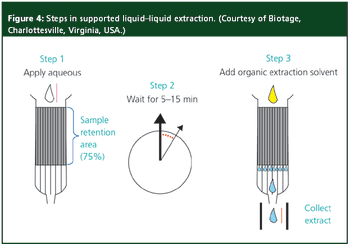
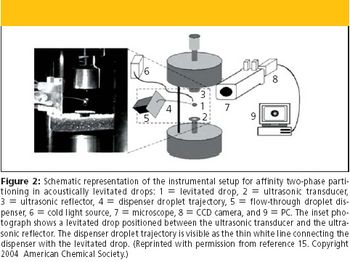
Liquid–liquid extraction (LLE) is among the most widely used sample preparation methods. In this month's instalment of "Sample Preparation Perspectives," Ron Majors discusses newer LLE approaches that offer significant advantages over classic methods. The miniaturization of LLE has resulted in solvent and time savings, improved automation possibilities and faster sample preparation. The techniques of single-drop microextraction, extraction in levitated droplets, flow injection-, membrane-based- and solid-supported extractions are reviewed. Often, these techniques use the same immiscible solvent pairs of conventional LLE.

Special Issues
Column packing materials continue to evolve as user needs for highthroughput, high-resolution and high-sensitivity HPLC analyses drive further developments. In this introductory article to this supplement, Ron Majors covers basic column packing morphology and particle design and compares and contrasts modern HPLC columns. Some applications of modern HPLC columns are provided. Future directions in packing developments are predicted.

LCGC North America
This month's installment of "Column Watch" is the conclusion of a two part series in which Ron Majors examines the trends in columns and sample preparation at Pittcon 2006.

LCGC North America
This month's installment of "Column Watch" is the first of a two-part series in which Ron Majors examines the trends and highlights in columns and consumables at Pittcon 2006.
LCGC Europe
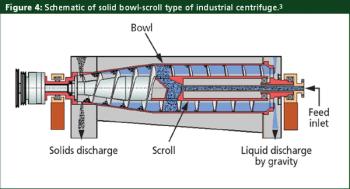
The two most popular mechanical techniques for sample preparation for large-scale protein production are concussion and liquid shear.
LCGC North America
Liquid-liquid extraction (LLE) is among the most widely used sample preparation methods. In this month's installment of "Sample Prep Perspectives," Ron Majors discusses newer LLE approaches that offer significant advantages over classical methods. The miniaturization of LLE has resulted in solvent and time savings, improved automation possibilities, and faster sample preparation. The techniques of single-drop microextraction, extraction in levitated droplets, flow injection-, membrane-based-, and solid-supported extractions are reviewed. Often, these techniques use the same immiscible solvent pairs of conventional LLE.
LCGC North America
In this month's "Column Watch," Ron Majors answers HPLC column questions posed by readers and others.
LCGC North America
Higher productivity and faster analyses are two of the driving forces for continued improvement in high performance liquid chromatography (HPLC) column technology.
LCGC Europe
The micropipette tip containing solid phases is a relatively new sample preparation format that permits the handling of microlitre and submicrolitre amounts of liquid samples using the techniques of solid-phase extraction, dialysis and enzyme digestion. Phases are packed, embedded or coated on the walls of the pipette, permitting liquid samples to be moved and transferred without undue pressure drop or plugging. This column reviews the latest technologies in micropipette tip sample preparation used in the study of genomics, proteomics and metabolomics.
LCGC North America
Ron Majors discusses advances in multidimensional chromatography and comprehensive multidimensional chromatography.
LCGC North America
HPLC 2005 was held in Stockholm, Sweden, June 26-30. In this month's installment of "Column Watch," Ron Majors covers this year's hot topics including proteomics, column technology - especially monoliths - microfluidics, and multidimensional and high-throughput separations.
LCGC North America
Columnist Ron Majors discusses methods that can be used to isolate large amounts of proteins from crude biological samples.
LCGC North America
The authors review the latest technologies in MPT sample preparation used in study of genomics, proteomics, and metabolomics.
LCGC Europe
In the last part of this series, the authors provide a technical review of the means for method adjustment and the pertinent regulations concerning the required validation of adjusted methods.