


Sponsored Content
Multidimensional LC/MS is a powerful tool to gain info in the laboratory. Analyzing ADCs with multidimensional LC/MS provides fast data for CQAs.
Sponsored Content
Multidimensional LC/MS is a powerful tool to gain info in the laboratory. Analyzing ADCs with multidimensional LC/MS provides fast data for CQAs.
Sponsored Content
Join this webcast to hear from leading scientists at Genentech about 2D and 4D LC–MS methods that have enabled more effective and streamlined characterization of critical quality attributes of antibody–drug conjugates (ADCs), in a workflow that is much shorter than traditional approaches. Live: Thursday, December 12, 2019 at 11am EST | 8am PST | 4pm GMT | 5pm CET On demand available after final airing until Dec. 12, 2020 Register free
Sponsored Content - NA
This note demonstrates the ability of a TSKgel® UP-SW2000 SEC column to discriminate oligonucleotides differing by one base in length.
Sponsored Content
• Enhanced sensitivity and range are needed to obtain molecular weight and size. • New light scattering detector addresses flaws of traditional approaches.
Sponsored Content - NA
In this note, the molecular weight averages and molecular weight distributions of two hydroxyethyl starch (HES) samples were successfully demonstrated.
Sponsored Content - NA
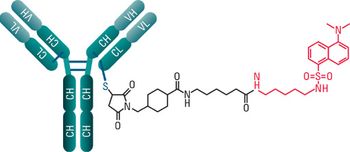
This application note demonstrates that SEC/MS and HIC/UV can be effectively used to characterize the drug-to-antibody ratio profile of antibody drug conjugates.

The Application Notebook
Antibody-dependent cell-mediated cytotoxicity (ADCC) is a crucial mechanism of action (MoA) of anti-tumour therapeutic antibodies and FcγIIIa receptor plays a key role in this process by interacting with the N-glycans of IgG Fc regions. Hence, affinity chromatography on Fc receptor ligands can deliver valuable information about expected ADCC activity and mAb glycoform distribution.

The purpose of this study is to demonstrate the use of mass spectrometry to characterize the elution profile of a typical IgG1 molecule separation on a TSKgel FcR-IIIA-NPR column, and verify the observations that certain glycan structures impart higher activity to the monoclonal antibody, especially as it relates to the presence of terminal galactose sugars.

The Application Notebook
Phenol formaldehyde resins (PFR) are used in various industrial products because of their versatile properties. Thermoplastic and thermo-reactive resin types differ in the degree of remaining reactive groups and their molar mass distribution (MMD). We compared the MMDs of two phenolic resins by gel permeation chromatography (GPC).


Special Issues
This article describes a workflow using nontargeted liquid chromatography–tandem mass spectrometry (LC–MS/MS) for reliable compound identification.
LCGC North America
TSKgel® UP-SW3000 columns are 2 µm SEC columns designed for the analysis of monoclonal antibodies and other biopharma products and can be used on both HPLC and UHPLC systems. A TSKgel UP-SW3000 column yielded very low percent relative standard deviation (%RSD) for peak parameters including retention times, peak asymmetry, and efficiency, demonstrating the exceptional reproducibility of this column versus a competitor UHPLC column.
LCGC North America
The characterization of monoclonal antibodies is a major challenge in process monitoring and quality control. TSKgel® G3000SWXL columns have been the industry standard for quality control of mAbs by SEC for decades. With the introduction of TSKgel UP-SW3000, 2 µm silica-based UHPLC–HPLC columns, increased speed and higher resolution can be achieved for the separation of antibody fragments, monomers, and dimers.
LCGC North America
This application note discusses the use of a 3 μm particle size, 30 nm pore size, size exclusion chromatography (SEC) column for monitoring folded (native) and unfolded (denatured) states of a monoclonal antibody using fluorescence detection (FLD).

The Application Notebook

The Application Notebook
LCGC Europe
Characterization of glycosylation is a major quality parameter in the production of biotherapeutics. This note demonstrates the benefits of using a new, small particle TSKgel Amide-80 HILIC column which improves peak capacity and sensitivity for UHPLC and LC-MS analysis of labelled glycans.

The Application Notebook
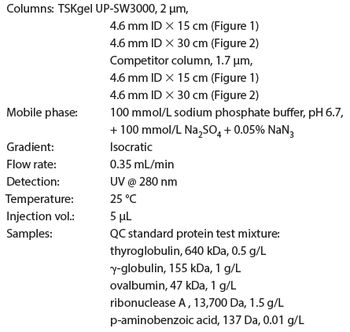
The peak resolution profile remained nearly unchanged. In particular, the resolution profile of thyroglobulin was similar to the resolution that was obtained by the 4.6 mm ID × 30 cm column. This suggests that the separation of high order molecular weight species, such as aggregates from mAb, can be easily achieved using this 4.6 mm ID × 15 cm column. Ten consecutive runs yielded excellent reproducibility. In fact, peaks from 10 consecutive injections were nicely overlaid.
LCGC North America
This note describes the use of TSKgel UP-SW3000, 2µm SEC columns for the analysis of proteins, with data demonstrating the operation of these columns using a simple and well established method for use in both HPLC and UHPLC systems. TSKgel UP-SW3000 columns have superior resolution for proteins and the shorter column dimension, 4.6 mm ID × 15 cm, allows runs to be completed 2 times faster than its longer column dimension counterpart without compromising resolution and reproducibility.
Special Issues
TSKgel UP-SW3000 columns are 2 µm SEC columns designed for the analysis of monoclonal antibodies and other biopharma products. Higher resolution can be achieved for the separation of antibody monomers, dimers, and higher order aggregates with a TSKgel UP-SW3000 column compared to a competitor UHPLC column. The TSKgel UP-SW3000 column provided excellent reproducibility for the peak parameters of retention time, asymmetry, and column efficiency. As demonstrated by the %RSD values, injection-to-injection reproducibility was superior to the competitor column.

The Application Notebook

The Application Notebook
Therapeutic antibodies are enjoying high growth rates in the pharmaceutical market. A majority of the top bestselling global drug brands are monoclonal antibodies (mAbs).

The Application Notebook
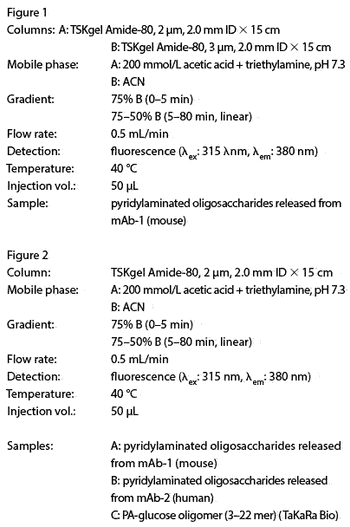
Glycosylation is one of the most common forms of post-translational modification of proteins. The polysaccharide side chains (glycans) play critical roles in physiological and pathological reactions. Besides the interest in characterizing glycosylation pattern of proteins for structure/function analysis, the thorough characterization of glycosylation is also a major quality parameter in the production of biotherapeutics. Hydrophilic interaction liquid chromatography (HILIC) is a well-recognized technique that effectively separates and quantifies isolated glycans.
The Application Notebook
Most proteins, particularly soluble and membrane-bound proteins expressed in the endoplasmic reticulum, are glycosylated. The extent and result of glycosylation varies.

The Application Notebook
Gel filtration chromatography (GFC) is a powerful analytical tool in the separation of antibodies. Traditionally, GFC columns with a dimension of 7.8 mm i.d. × 30 cm are used for analytical purposes.