

Research by Takuya Kubo and Koji Otsuka presented at HPLC 2023 promoted unique liquid chromatography (LC) separation using specific interaction.
Research by Takuya Kubo and Koji Otsuka presented at HPLC 2023 promoted unique liquid chromatography (LC) separation using specific interaction.

A talk by Alberto Cavazzini of the University of Ferrara at HPLC 2023 focused on various types of chiral stationary phases (CSP) in efforts to improve efficiency.
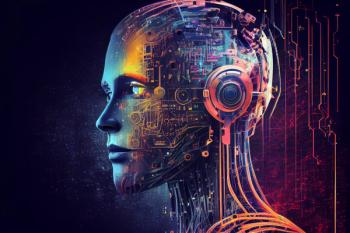
At HPLC 2023, Hyukju Kwon hosted a lecture on the roles LC–MS and artificial intelligence can have in autonomous material discovery.

At HPLC 2023, Valerie Gabelica of the Institut Européen de Chimie et Biologie said much is still unknown about this approach to mass spectrometry.

Peter Schoenmakers of the University of Amsterdam presented a talk at HPLC 2023 on multidimensional liquid chromatography (LC).

At HPLC 2023, LCGC spoke with Kevin Pagel of Freie Universität in Berlin, Germany. These clips comprise one of several HPLC interviews that were conducted at the conference.

At HPLC 2023, LCGC spoke with Peter Schoenmakers of the University of Amsterdam. These clips comprise one of several HPLC interviews that were conducted at the conference.
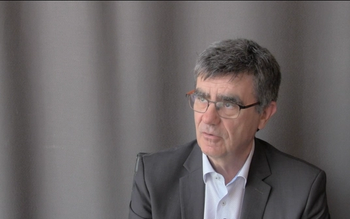
At HPLC 2023, LCGC spoke with Gérard Hopfgartner of the University of Geneva. This clip contains one of several HPLC interviews that were conducted at the conference.

At HPLC 2023, LCGC spoke with Oliver Fiehn of the University of California, Davis. This clip contains one of several HPLC interviews that were conducted at the conference.

Award presentations and plenary lectures were some of the attractions as the annual conference got underway on Sunday.

At HPLC 2023, Oliver Fiehn of the University of California explained results gathered from a device that can be used during daily digestion.

In a session on omics at HPLC 2023, Robert T. Kennedy of the University of Michigan revealed how scientists are taking advantage of new developments and cutting down on analysis time.

At HPLC 2023, Kelly Zhang gave a lecture on how machine learning can help further our understanding of the characterization of lipid nanoparticles.

At HPLC 2023, Matthias Pursch presented his findings on using UHPLC and SEC to monitor small molecule and polymer reactions in real time.

At HPLC 2023, Dr. Joachim Richert held a plenary lecture about what steps need to be taken to reach true laboratory digitalization.

Tony Edge, President of the Chromatographic Society (ChromSoc), announced the winners of both the 2023 Martin and the Silver Jubilee Awards as Professor Janusz Pawliszyn (University of Waterloo, Canada) and Jared Anderson (Iowa State University, USA), respectively.

Timo F. Beskers previews his tutorial lecture at HPLC 2023 in Düsseldorf, where he will give an overview on polymer REACH, its expected regulatory requirements, challenges, and analytical needs, as well as strategies to deal with those from the perspective of polymer chromatography.
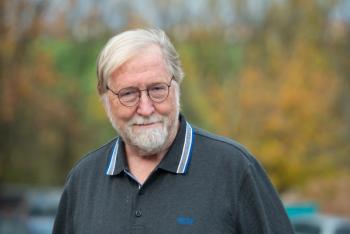
Gerard Rozing highlights the importance of the HPLC 2023 Best Poster Award (BPA).
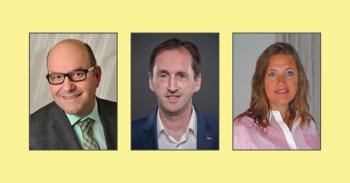

Organoids are predicted to become important tools for personalized medicine and are alternatives to animal models. Separation science and mass spectrometry (MS) are key approaches for studying organoids and organ‑on-a-chip systems. Applications include the study of organoid drug metabolism and biomarker discovery.
John McLean previews his plenary lecture at HPLC 2023, where he will describe emerging analytical strategies using liquid chromatography–ion mobility–mass spectrometry (LC–IM–MS) for untargeted molecular phenomics in systems, synthetic, and chemical biology.
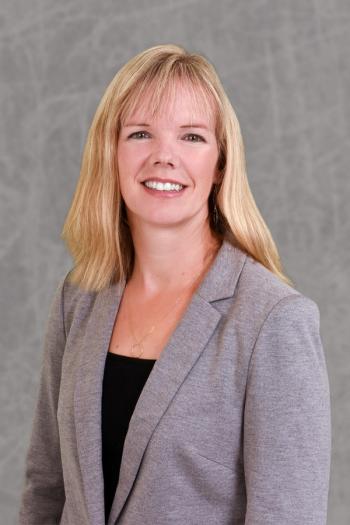
Measuring chemical exposure is extremely challenging due to the range and number of anthropogenic molecules encountered in our daily lives, as well as their complex transformations throughout the body. To broadly characterize how chemical exposures influence human health, a combination of genomic, transcriptomic, proteomic, endogenous metabolomic, and xenobiotic measurements must be performed. However, while genomic, transcriptomic, and proteomic analyses have rapidly progressed over the last two decades, advancements in instrumentation and computations for nontargeted xenobiotic and endogenous small molecule measurements are still greatly needed.