The Application Notebook-02-01-2009

i1-581384-1408661049864.jpg

The Application Notebook

The Clean Air Act (CAA) (1) provides the U.S. Environmental Protection Agency authority to enforce regulations limiting emissions of volatile organic compounds (VOCs) and other air pollutants. The Compendium of Methods for the Determination of Toxic Compounds in Ambient Air includes a variety of sampling and analysis methods (2, 3), including use of single- and multi-sorbent tubes. Concentrating a large volume of sample onto a sorbent tube, followed by thermal desorption onto a GC column provides an efficient, cost-effective means of monitoring VOCs at parts per billion (ppb) or parts per trillion (ppt) levels.

i1-581375-1408661088872.jpg

The Application Notebook

The new reversed-phase ProSwift® 1 mm i.d. column is a divinylbenzene-based monolithic column for routine chromatography of proteins and other biomolecules. It is available in two different lengths. The shorter (1 Ã- 50 mm) format is designed for fast separations and the longer (1 Ã- 250 mm) format is intended for high resolution analytical separations. However, depending on the application, either can be used for separation of proteins and for coupling with mass spectrometry.

i4-581395-1408661009455.jpg

The Application Notebook

The global economic downturn, particularly the collapse of the automotive and associated industries, has caused an overall reduction in the demand for acrylonitrile. Since acetonitrile is obtained as a co-product in the production of acrylonitrile, the pharmaceutical, food, environmental, and chemical industries are experiencing an unprecedented acetonitrile shortage. This shortage has resulted in a sharp price increase, in some cases as much as 6-8 times; and the price is projected to remain high even after the production returns to normal.

i1-581405-1408660966717.jpg

The Application Notebook

Hydrogen, commonly used as a carrier gas instead of Helium for gas chromatography (GC) can be supplied via cylinders or by the electrolysis of water using an in-house generator containing metallic electrodes or an ionomeric membrane. An in-house generator can provide a significant increase in safety and convenience with a reduction in operating costs.

i4-581390-1408661026266.jpg

The Application Notebook

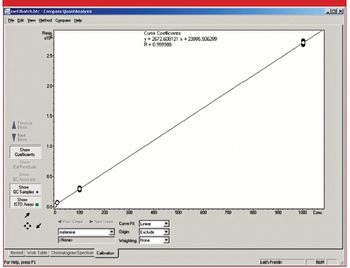
Since September 2008, 294,000 infants and young children suffered urinary problems due to the contamination of melamine in infant milk powder and were hospitalized. This hospitalization was required to treat the symptoms caused by the ingestion of melamine contaminated infant formula and related dairy products. Previously in 2007, pet food, animal feed, wheat gluten, and other protein-based foods were found to contain residues of melamine and its degradation product cyanuric acid (2).

i1_t-581397-1416915117604.gif

The Application Notebook

The analysis of chemical residues in food requires techniques sensitive enough to detect and quantify contaminants at or below the maximum residue limit (MRL) of the compound in a given sample matrix. Because of increased food safety regulations and the growing numbers of samples to be analyzed, it is critical that the analytical techniques provide high sample throughput.

i1-581377-1408661081451.jpg

The Application Notebook

Hydroxyethylstarches (HES) are used increasingly as plasma expanders in medical applications. The HES' circulation time in the blood depends strongly on its molar mass distributions. Historically, polysaccharide characterization by Gel Permeation Chromatography (GPC) has been problematic, especially

i3-581404-1408660968902.gif

Heparin Characterization

The Application Notebook

Heparin is well-known as an anti-coagulant, antithrombotic drug. Chemically, it is a linear polysaccharide that is derived from animal tissues. For some time it has been known that heparin is not a homogeneous substance; rather, it is a heterogeneous mixture of molecules ranging in molar mass from less than 5,000 to more than 30,000 Daltons. Heparin can be chemically or enzymatically depolymerized to obtain low molecular weight (LMW) heparin products, which exhibit an improved pharmacological profile.

i1-581387-1408661037002.jpg

The Application Notebook

The CUSTODIONâ„¢ solid phase microextraction (SPME) syringe was used to rapidly sample and concentrate volatile organic compounds (VOCs) from water in 5 s. The VOCs were analyzed quickly and reliably in approximately 70 s using the GUARDIONâ„¢ -7 portable capillary gas chromatograph toroidal ion trap mass spectrometer (GC-TMS).

i2-581400-1408660982614.gif

The Application Notebook

Sample preparation is an essential technique to remove unwanted matrix components prior to LC–MS-MS analysis of drugs in biological fluids. Plasma matrix components whether endogenous (salts, proteins, and phospholipids) or exogenous (dosing vehicles, e.g. PEG 400), can interfere with compounds of interest leading to regions of ion suppression or enhancement. This can lead to inaccurate quantitation and have adverse effects on sensitivity. Mixed-mode SPE provides cleaner extracts as a result of rigorous interference wash steps, afforded by the dual retention mechanism of the sorbents.