LCGC Europe-05-01-2018

Barriers.jpg

LCGC Europe

Comprehensive two-dimensional liquid chromatography (LC×LC) is a powerful technique for separating highly complex samples. However, the proliferation of this technique is hindered by a range of challenges, including the possible impact of the additional separation on the detection sensitivity, concerns that mobile phase incompatibility problems will limit the applicability, and the complexity of the system and associated method development costs. This article addresses these issues and describes how modern modulators and software tools are overcoming the barriers associated with this technique.
equation 1.png

LCGC Europe

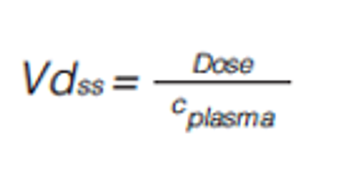
The biomimetic gradient retention time measurements on C18, immobilized artificial membrane (IAM), human serum albumin (HSA), and acid-glycoprotein (AGP) stationary phases can be used to characterize compounds partitioning into phospholipids and proteins. The data obtained can then be used in equations to estimate the in vivo plasmaÐtissue distribution of the compounds measured. The plasma protein binding, brain tissue binding, and in vivo drug efficiency can also be calculated using the biomimetic chromatographic data.

figure 11527175783275.png

LCGC Europe

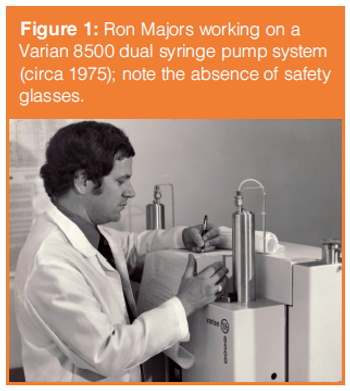
We explore the careers and achievements of the winners of LCGC’s 11th annual awards: Ronald E. Majors and Zachary S. Breitbach.

crete.jpg

LCGC Europe

The 2018 Sample Prep Summer Course will take place in Chania-Crete, Greece, on 22–24 August 2018.

Andrew Turner FE-4.jpg

LCGC Europe

LCGC Europe spoke to Andrew Turner, Principal Chemist in the Food Safety Group at the Centre for Environment, Fisheries, and Aquaculture Science (Cefas) in Weymouth, UK, about developing a simple ultrahigh-pressure liquid chromatography tandem mass spectrometry (UHPLCÐMS/MS) method for the quantitation of microcystins and nodularin in various sample matrices.