

The Column
The Column spoke to Dr Ailsa Benton - an "ice core" analytical scientist from the British Antarctic Survey (BAS) research team - about the role of chromatography in climate change.
The Column
The Column spoke to Dr Ailsa Benton - an "ice core" analytical scientist from the British Antarctic Survey (BAS) research team - about the role of chromatography in climate change.

The Column
A team of researchers from the Kobe University Graduate School of Medicine in Japan have developed a metabolomics-based approach to diagnose early-stage pancreatic cancer.1 The method uses gas chromatography coupled to mass spectrometry (GC?MS).
Special Issues
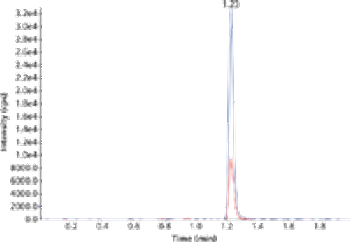
A new technique was developed based on liquid chromatography coupled with tandem mass spectrometry to analyze drugs that are not part of current immunoassay screening, specifically zolpidem, zopiclone, and zaleplone, or "z-drugs." This method allows for the simultaneous quantification of the z-drugs and all major benzodiazepines in human urine samples.

Special Issues
Soft ionization MS using GC–APCI-MS and GC–SMB-MS offers complementary identification power for the characterization of natural products, as illustrated by the identification of alkanes, sterols, long chain alcohols, and derivatized polar compounds in tobacco leaf extracts described here.
LCGC North America
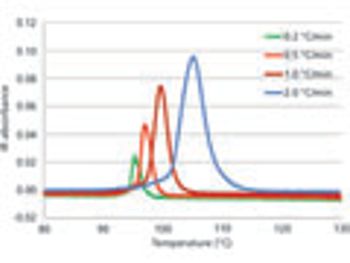
A new method is presented to evaluate the temperature shift observed in analytical temperature rising elution fractionation (ATREF).
Special Issues
An analysis of the capabilities of direct analysis in real time (DART) and desorption electrospray ionization (DESI) sources for the analysis of contaminated fabrics

LCGC North America
Profiles of Peter W. Carr, the Lifetime Achievement in Chromatography award winner, and Davy Guillarme, the Emerging Leader in Chromatography winner

Special Issues
A new technique was developed based on liquid chromatography coupled with tandem mass spectrometry to analyze drugs that are not part of current immunoassay screening, specifically zolpidem, zopiclone, and zaleplone, or "z-drugs."

LCGC North America
This month's installment of "Column Watch" comprises Part II of our yearly report on new products introduced at Pittcon. Gas chromatography columns, sample preparation products, and hardware, accessories, and small tabletop instruments mainly for sample preparation are covered.


LCGC North America
Sometimes when changes are made to gradient conditions, the result isn't what was expected.
Special Issues
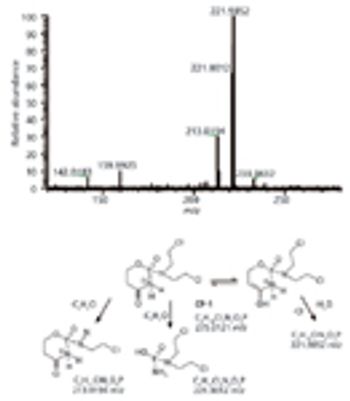
Here, degradation compounds similar to those formed in metabolic or environmental pathways were generated by adopting a photocatalytic process, quantified in environmental samples by liquid chromatography with multiple-stage mass spectrometry (LC–MSn) analysis using an orbital trap instrument with an electrospray interface, and then identified in indoor environments alongside parent compounds.
LCGC Europe
Click the title above to open the LCGC Europe May 2013 regular issue, Vol 26 No 5, in an interactive PDF format.
LCGC North America
Click the title above to open the LCGC North America May 2013 regular issue, Vol 31 No 5, in an interactive PDF format.
Special Issues
Click the title above to open the July 2013 issue of Current Trends in Mass Spectrometry, Volume 11, Number 3, in an interactive PDF format.
LCGC North America
Highly polar compounds ? such as small molecule pharmaceuticals, metabolites, and biomarkers ? can be challenging to separate using traditional reversed-phase separation methods. Several alternatives are available, including hydrophilic interaction liquid chromatography (HILIC), aqueous normal phase (ANP) chromatography, and HPLC using ion-exchange, polar-embedded, or polar-endcapped columns. So which option should you choose? Joseph Pesek of San Jos? State University explains the mechanisms, advantages, and disadvantages of these approaches.
LCGC North America
LCGC is pleased to announce the additions of Emily Hilder and Davy Guillarme to its editorial advisory board.
LCGC Europe eNews
Click here to view the full LCGC Europe E-newsletter from 29 April
E-Separation Solutions
The preservation of food in the home is a concern for all consumers. A group of researchers from INRA in Avignon, France, have conducted a study into tomato aroma with the aim of finding the optimum place for storage.
E-Separation Solutions
Scientists in Portugal have been investigating important molecular and biochemical changes that occur when grapes are growing to find out how they affect wine aroma.
LCGC Asia Pacific eNews
Agilent Technologies (California, USA) has announced the establishment of the Asia Glycomics Education Center in South Korea, building on the recent collaboration with Chungham National University (Daejon, South Korea) through the university?s Graduate School of Analytical Science and Technology (GRAST).
LCGC Europe eNews
Agilent Technologies (California, USA) has announced the establishment of the Asia Glycomics Education Center in South Korea, building on the recent collaboration with Chungham National University (Daejon, South Korea) through the university?s Graduate School of Analytical Science and Technology (GRAST).
LCGC Europe eNews
Researchers from Queen?s University of Belfast (Belfast, Northern Ireland, UK) have shown that marine bacteria are able to efficiently biodegrade ionic liquids (ILs).
LCGC Asia Pacific eNews
Waters (Massachusetts, USA) has announced the selection of the St John's Research Institute (SJRI)(Bangalore, India) - known for its proteomics research ? for it?s Centers of Innovation program. St John's is the first research institution in India to join the programme.
The Column
Thermo Fisher Scientific (Massachusetts, USA) will acquire Life Technologies Corporation (California, USA) under the terms of a definitive agreement signed earlier this week.
The Column
Shimadzu officially opened a new laboratory building called ?Laboratory World? at the company?s headquarters in Duisberg, Germany on the 15th of April,. The building was officially opened in a traditional Japanese ceremony by the President and CEO of Shimadzu, Akira Nakamoto; the Japanese Consul, Kiyoshi Koinuma; and Duisberg?s Lord Mayor, Soren Link.
LCGC Europe eNews
Thermo Fisher Scientific (Massachusetts, USA) will acquire Life Technologies Corporation (California, USA) under the terms of a definitive agreement signed earlier this week.
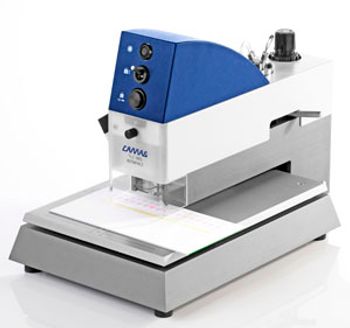
The CAMAG TLC-MS Interface enables rapid and contamination-free elution of TLC/HPTLC zones directly from the layer and subsequent online transfer into any given HPLC/MS system.