

E-Separation Solutions
Click here to view the complete E-Separation Solutions newsletter from March 26, 2013.
E-Separation Solutions
Click here to view the complete E-Separation Solutions newsletter from March 26, 2013.

LCGC Europe eNews
Scientists at The Scripps Institute (California, USA) have used liquid chromatography?mass spectrometry (LC?MS) to identify a new biomarker for the diagnosis of river blindness.1
LCGC Europe eNews
AB Sciex (Massachusetts, USA) and Leco (Michigan, USA) have formed a co-marketing partnership to provide support for researchers working in metabolomics in Europe and North America.
LCGC Europe eNews
Click here to view the complete LCGC Europe E-Newsletter from 22 March 2013
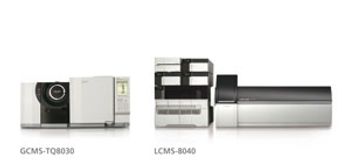
The two triple quadrupole mass spectrometers LCMS-8040 and GCMS-TQ8030 complete Shimadzu?s UFMS series consisting of seven powerful systems. The UFMS product family provides higher sensitivity, greater excellence in data quality, increased analytical throughput and a wider range of applications.
LCGC NA - The Quantification of Clopidogrel in Human Plasma

The Column
Scientists at The Scripps Institute (California, USA) have used liquid chromatography?mass spectrometry (LC?MS) to identify a new biomarker for the diagnosis of river blindness.1

The Column
Bruker (Massachusetts, USA) has built on its 30-year history in India by opening two new centres of excellence in Mumbai and Bengaluru.

The Column
Incognito espouses the benefits of a rigorous testing procedure in the workplace.
The Column
Dr Ronald A. DePinho ? president of the University of Texas MD Anderson Cancer Center (Texas, USA) ? has received an Agilent Thought Leader Award.
The Column
Breath may be an indicator of stress levels according to a study published in the Journal of Breath Research.1
The Column
A reliable and sensitive determination of glyphosate residues in water and food is discussed.
LCGC NA - Determination of Hormones in Water by Solid-Phase Extraction (SPE) and Liquid Chromatography ? Tandem Mass Spectrometry (LC-MS/MS)
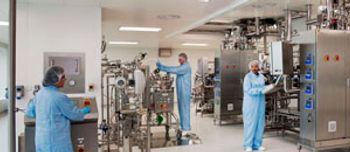
Advanced biopharmaceutical training in the most cutting-edge analytical methods and techniques: NIBRT's state-of-the-art facility in Dublin, Ireland provides comprehensive, innovative training solutions for academia and industry.
LCGC Europe eNews
Waters Corporation (Massachusetts, USA) has announced the opening of a Solution Centre based within the Singapore Science Park II (Singapore).
LCGC Europe eNews
Click here to view the complete LCGC Europe E-Newsletter from 15 March 2013

Waters NuGenesis? 8 is a comprehensive data management and workflow solution that combines data repository, E-lab notebook, sample management, laboratories inventories, and e-record lifecycle management to provide easily accessible data.
LCGC Europe eNews
Breath may be an indicator of stress levels according to a study published in the Journal of Breath Research.1 The breath samples of 22 individuals were analysed by perfoming thermal desporption–gas chromatography–mass spectrometry (TD–GC–MS) to pinpoint six stress sensitive compounds.
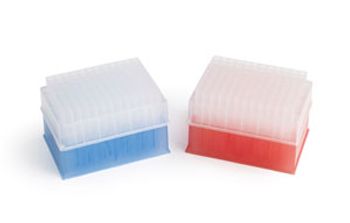
Comprising four p3 protein precipitation plates and four 1ml deep well collection plates (colour coded in red or blue polypropylene) the Combipack from Porvair Sciences provides all the elements you require to undertake protein precipitation separations at a very affordable price.

(Santa Barbara, CA) Wyatt Technology announces the immediate availability of the Optilab UT-rEX (UHPLC refractometer with EXtended range), the first RI detector specifically designed for use with UHPLC systems using columns packed with small beads.
Bruker EU - Simultaneous Quantitative and Qualitative Measurements in a Single Workflow
Bruker NA - Simultaneous Quantitative and Qualitative Measurements in a Single Workflow
E-Separation Solutions
Click here to view the complete E-Separation Solutions newsletter from March 14, 2013.

The LCGC Blog
Method validation is a concept that has been ingrained (or should have been ingrained) in the minds of most analytical chemists. Any new method that is created has to be proven reliable and provide some level of performance under well-defined conditions.
Phenomenex NA - A Simplified and Streamlined Approach to Solid Phase Extraction (SPE) using Strata-X-Drug B for SAMHSA's Low Cutoff Drugs of Abuse Panel
Thermo NA - HR/AM Targeted Peptide Quantitation on a Q Exactive MS: A Unique Combination of High Selectivity, Sensitivity and Throughput
E-Separation Solutions
This Monday morning session will be presided over by Arindam Roy of Novartis Consumer Health.
E-Separation Solutions
Dr. Irving W. Wainer of the National Institutes of Health will receive the 2013 Dal Nogare award this morning presented by the Chromatography Forum of the Delaware Valley.
E-Separation Solutions
The 2013 Charles N. Reilley award will be given to Andrew G. Ewing, of the University of Chalmers and the University of Gothenburg, Sweden, this afternoon presented by the Society for Electroanalytical Chemistry (SEAC).