

LCGC Asia Pacific
Thermo Scientific Application Note
LCGC Asia Pacific
Thermo Scientific Application Note

LCGC NA 2013 Editorial Calendar
The Application Notebook
LCGC is planning to publish the next issue of The Application Notebook special supplement in December. The publication will include vendor application notes that describe techniques and applications of all forms of chromatography and capillary electrophoresis that are of immediate interest to users in industry, academia, and government.
LCGC Asia Pacific
Wyatt Technology Note
LCGC June 2012 BPA

The Application Notebook
This short review focuses on the physicochemical properties of core–shell particles and their resulting chromatographic efficiencies as they relate to the comparison of their mass transfer kinetics to those of columns packed with sub-2-?m fully porous particles.
LCGC North America
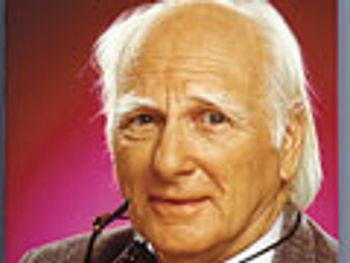
We note here the passing of pioneering American gas chromatographer Walter G. Jennings on July 5, 2012. Walt, as he preferred, died peacefully at home surrounded by family. He was 90 years old.
LCGC Asia Pacific
Questions from the e-mail bag are considered this month.
LCGC North America
Benefits of using elevated-temperature separations and some practical considerations for implementing this approach.

LCGC Asia Pacific
A dedicated GC– MS analyser was developed to address the increasing need for more sensitive catalyst poisoner analysis. The system combines the separation power and robustness of a classic backflush configuration with the selectivity and sensisitivitiy of mass spectrometry.


LCGC Asia Pacific
Click the title above to open the LCGC Asia Pacific September 2012 regular issue, Vol 15, No 3, in an interactive PDF format.
LCGC North America
Click the title above to open the LCGC North America September 2012 regular issue, Vol 30 No 9, in an interactive PDF format.
The Application Notebook
Click the title above to open the LCGC North America September 2012 Application Notebook, Vol 30 No s9, in an interactive PDF format.
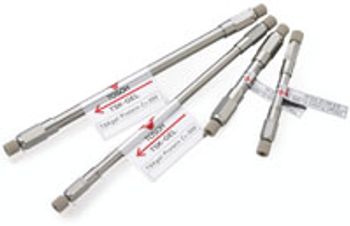
LCGC Europe eNews
Tosoh Bioscience is introducing a new reversed phase HPLC column for the separation of intact proteins.
LCGC Asia Pacific eNews
Agilent Technologies (Santa Clara, California, USA) has purchased the supercritical fluid chromatography company Aurora SFC Systems, Inc (Redwood, California, USA).
LCGC Asia Pacific eNews
Phenomenex (Torrance, California, USA) has announced the creation of a new company – Phenova, Inc. – the culmination of the integration and expansion of Colorado-based Wibby Environmental.
LCGC Europe eNews
Agilent Technologies (Santa Clara, California, USA) has purchased the supercritical fluid chromatography company Aurora SFC Systems, Inc (Redwood, California, USA).

LCGC Asia Pacific eNews
Capillary electrophoresis (CE) provides a number of advantages for analysts, including high separation efficiency, short analysis times, low waste generation and a diverse range of applications
LCGC Europe eNews
Phenomenex (Torrance, California, USA) has announced the creation of a new company – Phenova, Inc. – the culmination of the integration and expansion of Colorado-based Wibby Environmental.
LCGC Europe eNews
Fasha Mahjoor —Founder and CEO of Phenomenex (Torrance, California, USA) —will leap off the 87th floor of The Shard in London on 3 September to raise money for The Outward Bound Trust, an educational charity.
LCGC Europe eNews
Phenomenex (Torrance, California, USA) has announced the creation of a new company – Phenova, Inc. – the culmination of the integration and expansion of Colorado-based Wibby Environmental.
LCGC Europe eNews
The North Carolina State University Plants for Human Health Institute (PHHI) and the Dole Nutrition Research Laboratory (Kannapolis, North Carolina, USA) have collaborated to form a joint industry-academic postdoctoral fellowship, the first of its kind at the North Carolina Research Campus (NCRC).
LCGC Europe eNews
Capillary electrophoresis (CE) provides a number of advantages for analysts, including high separation efficiency, short analysis times, low waste generation and a diverse range of applications
LCGC Europe eNews
29th International Symposium on Chromatography (ISC) 9th – 13th September 2012, Torun, Poland
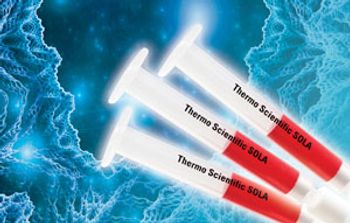
LCGC Europe eNews
Thermo Scientific SOLA products revolutionize Solid Phase Extraction (SPE). This first fritless SPE product range provides greater reproducibility with cleaner, more consistent extracts.
