

Thermo NA - Extraction of Total Petroleum Hydrocarbon Contaminants (Diesel and Waste Oil) in Soils by Accelerated Solvent Extraction
Thermo NA - Extraction of Total Petroleum Hydrocarbon Contaminants (Diesel and Waste Oil) in Soils by Accelerated Solvent Extraction
Thermo NA - Rapid Determination of Persistent Organic Pollutants (POPs) Using Accelerated Solvent Extraction
Thermo NA - Rapid Determination of Fat in Meat Using Accelerated Solvent Extraction
LCGC Europe eNews
Phenomenex (California, USA) has announced the formation of a collaboration agreement with ChromaDex (California, USA).
LCGC Europe eNews
Waters (Massachusetts, USA) has announced the introduction of the University of Northern Texas (UNT) (Texas, USA) metabolomics and metabolic signalling pathway research laboratory to its Waters Centres of Excellence Innovation Programme.
LCGC Europe eNews
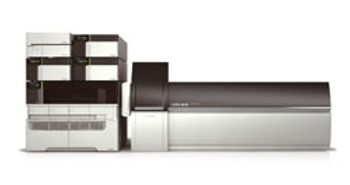
Shimadzu has introduced the LCMS-8040 which combines newly improved ion optics and collision cell technology with proprietary ultrafast technologies. This significantly expands the application range and ensures high-sensitivity, high-throughput analysis at lower levels of detection.

The Column
Protein/peptide discovery data obtained from data-dependent experiments have been used to increase the success rate of targeted quantification assays as well as automate method building.
The Column
Global warming is a contentious issue, with different groups voicing opposing opinions on if, how and at what rate the warming is occurring. The general consensus is that with increased industrialization, greenhouse gas emissions have also increased, resulting in the formation of a so-called 'greenhouse effect'. The origin of greenhouse gases is therefore of great interest to the scientific community.

The Column
GPC/SEC (gel permeation chromatography/size exclusion chromatography) methods generally contain multiple detectors in order to gather more information about the molecular structure of macromolecules.1. Up until now, however, the practice and the impact of detector combination has not been discussed.
The Column
Spodoptera littoralis is a destructive caterpillar pest indigenous to tropical and subtropical areas of agriculture that has the potential, if accidentally imported, of becoming a major greenhouse pest in Northern Europe. The UK government agency Defra reports that many populations of the species are already highly pesticide resistant2.

The Column
The Column spoke to Dr J-F Focant, associate professor at the chemistry department of the University of Liege, Belgium, about thenatochemistry and his recently published articles profiling the 'smell of death'.
The Column
Conditions of acute and chronic anaemia that are the result of either a long-standing medical condition (sickle-cell anaemia) or surgical intervention (chemotherapy) often require the administration of blood transfusions to improve the capacity of the patient's red blood cells to carry oxygen1. Red blood cell (RBC) populations have a short shelf life in storage as a result of biomechanical and biochemical changes that reduce the RBC functionality. This has an impact on the viability and therapeutic benefits of ex vivo RBC transfusions.
LCGC North America
Preparing Red Wine Extracts for LC-MS-MS Pesticide Analysis

LCGC Europe
The authors characterized twelve SFC achiral stationary phases with 60 compounds from four chemical classes to establish guidelines for the rational selection of the optimum stationary phase for separations.

LCGC Europe
In this month's installment, John Hinshaw discuses solid-phase micro extraction.

LCGC North America
Professor Mary Wirth and graduate students Bingchuan Wei and Benjamin Rogers from Purdue University demonstrate a quantum leap in protein column efficiency. Using colloidal silica particles of submicrometer diameters (470 nm), they obtained plate heights that were as much as 15-fold lower than the theoretical limit for Hagen-Poiseuille flow.
Special Issues
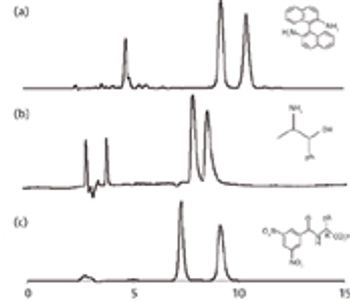
An update on some of the latest chiral stationary phases and their use in various separation modes.


LCGC Europe
The solvent chosen for injection can affect the appearance of chromatographic peaks.

Special Issues
A brief review of the physicochmical properties of core-shell particles and their chromatographic efficiencies compared with those of sub-2-?m fully porous particles.
LCGC Europe
An excerpt from LCGC's e-learning tutorial on preparative HPLC at CHROMacademy.com
LCGC North America
Click the title above to open the LCGC North America October 2012 regular issue, Vol 30 No 10, in an interactive PDF format.
Special Issues
Click the title above to open the October 2012 issue of Current Trends in Mass Spectrometry, Volume 10, Number 4, in an interactive PDF format.

LCGC Asia Pacific eNews
With further improvements in instrumentation and column design, supercritical fluid chromatography (SFC) Is becoming a mainstream technology.
LCGC Europe eNews
AB SCIEX (Massachusetts, USA) and the University of Wollongong (UOW) (Wollongong, Australia) have formed a partnership to advance research in lipid analysis, as part of AB SCIEX’s academic partnership programme.
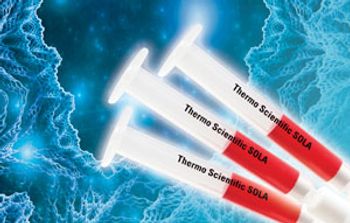
Thermo Scientific SOLA products revolutionize Solid Phase Extraction (SPE). This first fritless SPE product range provides greater reproducibility with cleaner, more consistent extracts.
LCGC Europe eNews
With further improvements in instrumentation and column design, supercritical fluid chromatography (SFC) Is becoming a mainstream technology.
LCGC Asia Pacific eNews
AB SCIEX (Massachusetts, USA) and the University of Wollongong (UOW) (Wollongong, Australia) have formed a partnership to advance research in lipid analysis, as part of AB SCIEX’s academic partnership programme.
LCGC Europe eNews
Markes International (Llantrisant, UK) has announced the formation of a partnership with Cardiff University (Wales, UK) and twelve partner organisations from across Europe to undertake a research project aimed at the improvement of the safety and quality of pre-packed fruit and vegetables. The initiative is co-funded by the European Commission through the 7thFramework program.