
Spark Holland Product Profile
Spark Holland Product Profile

LCGC Asia Pacific eNews
Merck (known as MSD outside the United States and Canada) and BGI (formerly known as Beijing Genomics Institute) have recently announced the signing of a statement of intent to initiate and develop a working relationship in which they will explore areas of mutual interest in healthcare research and discovery.
LCGC Asia Pacific eNews
Agilent Technologies and Chungnam National University have agreed to develop new applications, methods, technologies and software tools in the field of glycomics ? the study of complex sugars.
Agilent product profile

LECO's holistic HRT approach offers ease of operation, sensitivity, confident data generation and continuity in your laboratory. Accuracy, Resolution & Speed are delivered by CITIUS&£153; LC-HRT and Pegasus® GC-HRT — Without compromise.
EMD Millipore (Billerica, Massachusetts), a division of Merck KGaA of Darmstadt, Germany, has launched a new program for users of laboratory water filtration systems to recycle the filters? plastic housings.
Waters EU - Quantification of Ethinyl Estradiol in Plasma at 1 pg/mL Using UPLC and Xevo TQ-S
Waters NA - Quantification of Ethinyl Estradiol in Plasma at 1 pg/mL Using UPLC and Xevo TQ-S
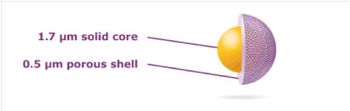
Get consistent results and more efficiency from Agilent Poroshell 120 columns
Shimadzu Application Note
LCGC Europe eNews
PerkinElmer has recently signed an agreement to acquire Caliper Life Sciences Inc., (Hopkinton, Massachusetts), a leader in imaging and detection solutions for life sciences, research, diagnostics and environmental markets .
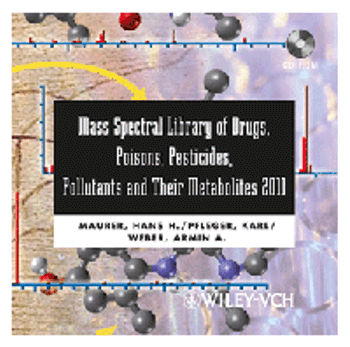
Featuring 800 new spectra, the 2011 release of this venerable database includes the latest novel designer drugs and AIDS therapeutics.
LCGC North America
With a recently awarded grant from the U.S. Department of Agriculture (Washington DC), The University of Texas at El Paso (UTEP) will be promoting awareness of careers in the sciences, especially environmental chemistry, among students from kindergarten through every level of higher education.
LCGC North America
Using data from its research solution, Web of Knowledge, to quantitatively determine the most influential researchers in Nobel categories, Thomson Reuters (New York, NY) has released its picks for its 2011 Thomson Reuters Citation Laureates in Chemistry?researchers likely to be in contention for Nobel honors.
LCGC Europe eNews
Recent years have seen the emergence of smartphones and tablet computers, providing even greater convenience and connectivity to users. These and other technological developments are offering more opportunities than ever to the already wide-reaching field of chromatography software.
Agilent Technologies has announced that its LC?MS systems, including the 6100 Series single quadrupole and 6400 Series triple quadrupole systems are now manufactured under ISO 13485 certification.
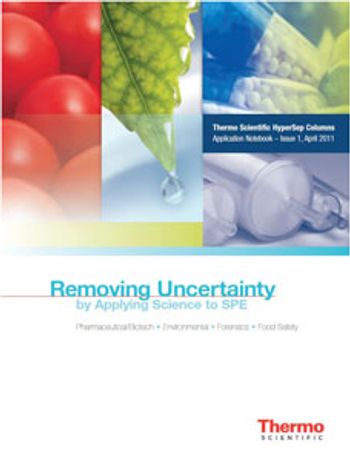
Thermo Product Profile
Agilent product profile


The Column
The United States Pharmacopeia (USP) provides details on how to perform experiments to characterize dissolution behaviour of conventional release dosage forms. These instructions cover procedures for running the experiments and for assessing the data.
The Column
Waters has recognized the Center for Proteomics at the Translational Genomics Research Institute, in Phoenix, Arizona, USA, as a Waters Center of Innovation. In particular the company recognized the work of Dr Konstantinos Petritis, head of the centre, and his team for their leadership in the research of proteomics and biomarker discovery and verification.
The Column
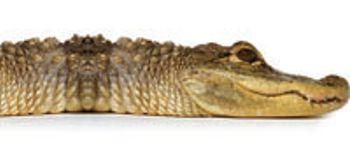
Concerns over the effect that the increasing use of soy beans and other crops for biodiesel could have on food and agricultural markets has led scientists to an unlikely new source: alligator fat.

The Column
Analysis of the hair of ancient Egyptian mummies has found that they used a fat-based ?hair gel? to style their hair. According to researchers this was used as a beauty product during daily life, and during the mummification process where more elaborate styles were created to preserve the deceased?s individuality in death.
The Column
Incognito's enthusiasm for mobile technology is undeniable as he compiles his wish list of ideal apps for separation scientists.
The Column
The Australian Research Centre?s Centre of Excellence in Plant Energy Biology will use Agilent Technologies? informatics systems in its research to build a plant protein monitoring database. The centre will use an HPLC-Chip MS system, Openlab Electronic Lab Notebook and Enterprise Content Manager.
At the Human Proteome Organization (HUPO) 2011 World Congress, in Switzerland, Thermo Fisher Scientific has announced the establishment of a biomarker translational centre.
Waters - Rapid Analysis of Soft Drink Additives
Waters - Trace contamination testing in manufactured parts and assemblies
Waters - Diverse Analysis of Cosmetics and Home and Personal Care Products
Waters - Analysis of Biodiesel Fuel Using UPLC/Xevo G2 QTof