

LCGC Europe eNews
Separation techniques will be key in future research following the discovery of a link between arsenic in drinking water and type 2 diabetes...
LCGC Europe eNews
Separation techniques will be key in future research following the discovery of a link between arsenic in drinking water and type 2 diabetes...
LCGC Europe eNews
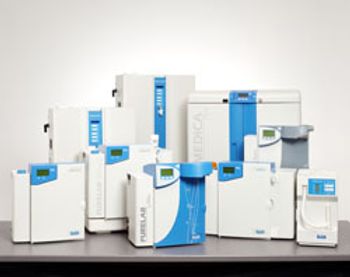
In an attempt to demonstrate elements of its environmental responsibilities ELGA Process Water is offering to recycle old ELGA LabWater purifiers free-of-charge...
The US EPA has approved Dionex's reagent-free ion chromatography systems with eluent regeneration as an alternative test procedure for methods 300.0 and 300.1.
Phenomenex, Inc., (Torrance, California) has been named one of the 15 best small workplaces in the U.S. by the Wall Street Journal.
Pittcon and Wiley-Blackwell announced that they will produce four webinars in 2008-2009 to kickoff the new "Wiley-Blackwell/Pittcon Webinar Series."
Thermo Fisher Scientific Inc. (San Jose, CA), t will host an informative seminar on the latest advances and applications for its vast range of GC products.
Research by scientists from University College London (UCL) and Tel Aviv University shows that the tuberculosis infection is 3,000 years older than was previously imagined and that TB in people evolved before bovine TB.
A research group from BRGM (Orleans, France) and Ecole Superieure de Physique et de Chimie Industrielles (Paris, France) used terbutylazine molecularly imprinted polymers following a pressurized liquid extraction step to remove interfering compounds from soil extracts containing the herbicide atrazine.
Researchers from Universidad Complutense de Madrid (Madrid, Spain) and Universität Dortmund (Dortmund, Germany) used a molecularly imprinted polymer (MIP) solid-phase extraction method in the analysis of fluoroquinolone antibiotics in environmental water samples.

Paul A. Wilks, Jr. died Saturday, October 11, 2008 at Dartmouth-Hitchcock Center in Lebanon, New Hampshire after a brief illness. He was 85 and lived an active and productive life until the end.
Researchers from Hiroshima University (Hiroshima, Japan), Hiroshima Prefectural Police Headquarters (Hiroshima), Tokai University School of Medicine (Kanagawa, Japan), and GL Sciences Inc. (Saitama, Japan) developed a spin column device packed with octadecyl silane-bonded monolithic silica for extracting amphetamines and methylenedioxyamphetamines from urine.
The Pittsburgh Conference (Pittsburgh, Pennsylvania) announced the opening of registration for Pittcon 2009 short courses March 7-13.
Thermo Fisher Scientific (San Jose, California) announced that a method that uses the company?s equipment for detecting melamine and cyanuric acid in food matrixes was described in the U.S. FDA?s Laboratory Information Bulletin Number 4396, May 2007.
Researchers from Universita degli Studi di Parma (Parma, Italy) used immunomagnetic beads to extract trace peanut allergen protein Ara h3/4 from breakfast cereals.
Agilent Technologies (Santa Clara, California) has created a specialized training program to address the current melamine crisis in China.
Waters Corporation (Milford, Massachusetts) has joined the BioIT Alliance, an initiative spearheaded by Microsoft Corporation (Redmond, Washington) that involves more than 80 pharmaceutical, biotech, laboratory instrument, and software companies working together to advance personalized medicine.
Scientists from Hoshi University (Tokyo, Japan) and the National Research Institute of Police Science (Chiba, Japan) employed stir-bar sorptive extraction (SBSE) and thermal desorption gas chromatography?mass spectrometry (GC?MS) for analyzing 5-chloro-2-(2,4-dichlorophenoxy)phenol, otherwise known as triclosan, in river water samples.
Novasep has added a current good manufacturing practices (cGMP) pilot-scale continuous chromatography system in its facility in Chasse sur Rhone, France.
Universal quantification using ELS detection and real-time response control
LCGC Europe eNews
Thermo Fisher Scientific showcased its comprehensive laboratory instrumentation and informatics solutions for food, beverage and agricultural applications at the 2008 Association of Analytical Communities (AOAC) annual meeting and exposition at the end of September...
Bruker Daltonics announces ETD II, a next-generation ETD (electron transfer dissociation) module for its HCTultra™ high capacity ion traps.
LCGC Europe eNews
The Swedish National Food Administration in Uppsala and the Karolinska Institute in Stockholm have been looking at the potential toxicity of musks following their discovery in human milk, when mothers are breastfeeding...
E-Separation Solutions
The following question and answer were taken from LCGC Europe's "CE Currents" column (1). How should I approach method development? If possible request any details of sample stability, pKa, and solubility in different solvents and pH ranges. Information on solvents used in HPLC can also be useful.
E-Separation Solutions
Size exclusion chromatography (SEC) is a powerful tool for the characterization of molecules differing in size and molar mass. It is widely used and well known for the determination of molar mass distributions and molar mass averages. For membranes GPC/SEC is a useful characterization method as it can measure the membrane characteristic pore size distribution, average pore size and molecular cut-off significantly faster than other methods.
E-Separation Solutions
Transforming "standard" gradient HPLC systems into extremely fast gradient systems is readily achievable with proper application of chromatographic principles, particularly temperature control, combined with utilization of advanced HPLC columns. Bottom line: You don't have to buy a new LC to achieve ultra high quality and speed!
Detection of Mycotoxins in Nuts by Shodex columns
The Column
Rapid Fatty Acid Fingerprinting in Microalgae by Gas Chromatography: Analytical Opportunities Lieve M. L. Laurens Tips and Tricks: GPC/SEC Understanding Positive and Negative Detector Signals Daniela Held and Peter Kilz Biodiesel Patterns Reflect Quality: Analysis According to DIN EN 14103 Margit Geissler Bringing Together GC and LC on an MS–TOF System Ralf Dunsbach and Ralf Ketterlinus News All the news for October 2008 Incognito Total Solutions - Really? This month Incognito asks how "total" are the solutions being offered by the "Total Solutions" providers! Market Trends and Analysis Market Profile: The Analytical and Life Science Instruments Industry Glenn Cudiamat Q&A Craig Dobbs from pharmaceutical business operations at Waters, reveals what the company can offer scientists involved in implementing PAT and why the company has launched a chromatography system dedicated to this market that offers real-time monitoring
LCGC North America
PerkinElmer, Inc. (Waltham, Massachusetts) announced an arrangement with the University of Texas M.D. Anderson Cancer Center (Houston, Texas) that will bring the company's Array Comparative Genomic Hybridization technique to the cancer center.
LCGC North America
Chromatide (Runcorn, Cheshire, UK) and Separation Product's Kromasil, a brand of Azko Nobel (Amsterdam, The Netherlands) have set up a research collaboration to develop and market silica-based HPLC media.
LCGC North America
The 9th Csaba Horvåth Medal Award Symposium, to be held on April 28-29, 2009 at the Hartford Convention Center (Hartford, Connecticut), announced they are accepting papers for oral and poster presentations.