The dioxin family consists of 210 compounds, of which 17 contain the 2,3,7,8 pattern of chlorination. These 2,3,7,8-containing compounds are of extreme concern to human health because of their high level of toxicity. Approximately, 12 of the 209 polychlorinated biphenyls have also been identified as human toxins. For this reason, the US FDA and EU have established strict regulations for the monitoring of food products for human consumption, in particular edible oils. Manual extractions of oils can be a time-consuming procedure often delaying lab turnaround times. By automating the process with the PowerPrep®, food oil samples can be reliably processed with routine 24 h turnaround times.
In this seventh part of " Conversations with Michael Dong," a series on fundamentals of HPLC in pharmaceutical analysis, LCGC International’s "Perspectives in HPLC" column editor explains why 2.1-mm i.d. columns are less preferred for pharmaceutical quality control.
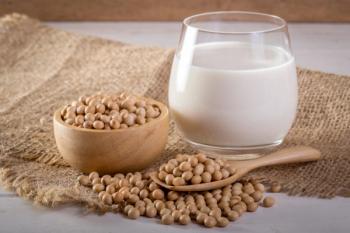
Ultrahigh-performance liquid chromatography–quadrupole time-of-flight mass spectrometry (UHPLC–QTOF-MS) shows how soaking and cooking break down soybean fats.
Nicolai Zederkopff explores chromatography’s role to help implement the maximum tolerable level (MTL) framework for food adulteration to translate analytical results into compliance decisions.
Franz Berthiller (BOKU University, Austria) discusses a multilaboratory study that used retention index markers to align mycotoxin liquid chromatography–mass spectrometry (LC–MS) data.
A QuEChERS/ultrahigh-performance liquid chromatography and high-resolution mass spectrometry (UHPLC-HRMS) method tracks 23 plant toxins in cereals and spices. Michele Suman discusses the method with LCGC International.