Industrial facilities such as commercial sterilizers and chemical manufacturers frequently use ethylene oxide (EtO) in their processes. Due to the toxic nature of EtO, such users need to monitor for very low levels in and around their facilities. That can be particularly challenging with EtO which can present difficulties due to interfering species, high reactivity, a low boiling point, and other challenges.
In this note, we examine how a familiar analytical technology is optimized for real-time, direct measurement of EtO. The Thermo Scientific™ EMS-10 System utilizes optically enhanced FTIR (OE-FTIR) technology to successfully address the many challenges of analyzing EtO quickly and with the required sensitivity.
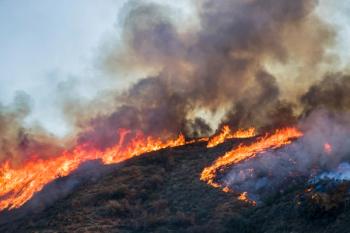
Justin Miller-Schulze and Smith Purdum explain how machine learning and chemometrics can improve fire debris classification in forensic science applications.
This week, the Chromatography Online website observed National Forensic Science Week with expert interviews on how chromatography helps solve cases, plus career stories from women in analytical science and new research on detecting rat poison in cats and tracking mold toxins in gluten-free pasta.
Kinjal Bhatt argues inclusion advocacy shouldn't fall on women alone, while Ina Varfaj credits sharing the load and learning to say no for avoiding burnout.
Steven Ray Wilson defines organ-on-a-chip as organoids on microfluidic devices, tracing their small, complex samples to the case for automated online LC–MS.