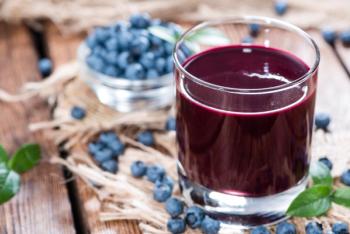
Chiral gas chromatography–mass spectrometry (GC–MS) shows how heat and storage alter linalool in blueberry juice.
Chromatography and spectrometry techniques reveal how high-heat cooking alters fatty acid profiles in three vegetable oils.
Researchers investigating changes in composition of changes in sunflower, cottonseed, and flaxseed oils during heat treatment used a multiplatform analytical workflow comprised of gas chromatography–mass spectrometry (GC–MS) for untargeted profiling of oils in native form and after methylation, Fourier-transform infrared (FTIR) spectroscopy to quantify trans-fatty acids (TFA), and high-field proton nuclear Magnetic Resonance (1H NMR) spectroscopy to quantify saturated (SFA), monounsaturated (MUFA), and polyunsaturated (PUFA) fatty acids. This study shows that heating cooking oils leads to a range of harmful changes, and that the extent of these changes depends on the type of oil being used. To the best of the researchers' knowledge, this is the first study of its kind to take such a comprehensive look at how frying affects both the fat composition and the broader chemical makeup of these widely used vegetable oils, making it clear that both frying temperature and cooking time have a significant impact on how safe and nutritious these oils remain. A paper based on their efforts was published in Food Chemistry.1
What Happens to Vegetable Oils When They Are Exposed to High Cooking Temperatures, and Why Does It Matter?
Vegetable oils are a staple in most people's diets, providing the body with energy, essential fats, and important vitamins such as A, D, E, and K.2 Beyond nutrition, vegetable oils are an essential part of cooking,especially for deep-frying. The quality and makeup of these oils can be influenced by many things, including the type of plant they come from, where it was grown, how it was farmed, and how the oil was refined and cooked. Of all these factors, everyday cooking habits are perhaps the least studied, despite having a major impact on oil quality. When exposed to the high heat of cooking (particularly deep-frying) vegetable oils can break down in significant ways, through processes such as oxidation, the splitting of fat molecules by water, and the formation of large, complex compounds caused by prolonged heat exposure.3 Heating oil repeatedly speeds up the breakdown process, depleting the beneficial fats and causing the build-up of harmful compounds. Of particular concern is the formation of trans fats, which are produced when healthy unsaturated fats are chemically altered by intense heat. This is especially worrying given the well-established link between TFA consumption and an increased risk of heart disease and other metabolic health problems.4,5
How Does High-Heat Cooking Change the Composition and Safety of Vegetable Oils?
The researchers discovered that cooking these oils at high temperatures (180–250 °C) for extended periods triggered some unfavorable changes. Harmful trans fats increased — moderately in sunflower and cottonseed oils, but dramatically in flaxseed oil, where they rose to around 20%. Saturated fats also went up by about 10% across all three oils. On top of that, the healthier fats took a hit — sunflower and cottonseed oils lost a significant amount of their beneficial polyunsaturated fats, while flaxseed oil saw a sharp drop in its monounsaturated fats. Heating also caused the oils to break down in other harmful ways, producing unwanted compounds such as oxidation byproducts and aldehydes, while also depleting beneficial substances like tocopherols (a form of vitamin E) and phytosterols (plant-based compounds known to support heart health).1
“Overall,” write the authors of the paper,1 “oil type was the main factor determining initial composition and thermal stability. Further research is needed to establish nutritionally safer frying practices and elucidate compositional changes when oils interact with food ingredients during cooking.”
Moving forward, researchers suggest that these findings should be tested by actually frying food rather than just heating the oil on its own, which is a more realistic cooking scenario. Future studies should also keep closer track of how the fats change and break down throughout the cooking process and look at what happens when the same oil is reused multiple times, as is common in both home and commercial kitchens. Additionally, there is a need for faster, more practical ways to check whether a cooking oil has degraded to the point where it is no longer safe or healthy to use.1
Read More on Similar Topics
References