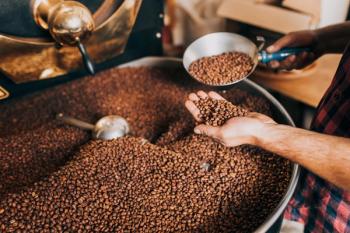
Liquid chromatography–tandem mass spectrometry (LC–MS/MS) finds low glyphosate residues of the weedkiller glyphosate in coffee beans.
Liquid chromatography-mass spectrometry (LC–MS) was used in combination with 16S rDNA sequencing to analyze the upper respiratory tract microbiomes and metabolomes of children with asthma. The LC–MS analysis uncovered significant metabolic variations between chronic persistent and acute exacerbation asthma groups, identifying L-carnitine as a highly accurate differential metabolite and a promising biomarker for evaluating pediatric asthma.
Researchers from the Department of Respiratory Medicine at Children's Hospital of Soochow University (Suzhou, China) aiming to investigate characteristic changes in the upper respiratory tract (URT) microbiome and metabolome in children with asthma and explore their associations with lung function collected throat swabs for microbiome detection using 16S rDNA sequencing and metabolomics analysis from subjects using liquid chromatography-mass spectrometry (LC–MS). A paper based on this work was published in Frontiers in Microbiology.1
The URT microbiome plays a crucial role in the development of the airway, as well as in immune modulation and protection against pathogens.2,3 While previous studies highlight its significance in asthma pathogenesis, most investigations have mainly concentrated on microbial composition (for example,diversity and abundance) as opposed to functional metabolic activity.4By offering a thorough analysis of small-molecule metabolites, metabolomics complements taxonomic data and provides a direct window into microbial functions and host–microbe interactions.5
The study group for this study was comprised of children with asthma aged 6 years and above admitted to the Children's Hospital of Soochow University from December 2022 to December 2023, with age-matched healthy children undergoing physical examinations in the Department of Child Health were recruited as controls. According to the researchers, significant differences in alpha and beta diversity were observed among the control group (H), chronic persistent asthma group (CA), and acute exacerbation group (AA). In both CA and AA groups, forced vital capacity (FVC)% predicted (FVC%/Pred) and forced expiratory volume (FEV) 1% predicted (FEV1%/Pred) were negatively correlated with URT microbiota abundance. Abundance of the microbiota Actinobacillus was positively correlated with FEV1%/Pred, FEV1/FVC, forced expiratory flow (FEF)25%/Pred, FEF50%/Pred, and FEF75%/Pred. Furthermore, metabolite differences between CA and AA groups were analyzed, and the top 5 differential metabolites were evaluated for their accuracy as asthma assessment biomarkers. L-carnitine showed an AUC > 0.9, with a sensitivity of 85.7% and specificity of 85%. Other differential metabolites, including monoisobutyl phthalate, 4-hexyl-2,5-dimethyloxazole, and dibutyl phthalate, correlated with several lung function indices. The most relevant differential metabolic pathways included arginine biosynthesis, alanine-aspartate-glutamate metabolism, central carbon metabolism in cancer, and D-amino acid metabolism.1
“The URT microbiota in asthmatic children,” write the authors of the paper,1 “exhibits alterations in composition, structure, and diversity, with lower diversity in acute asthma compared to chronic persistent asthma. At the genus level, some microbiota (Actinobacillus, Fusobacterium) were correlated with FEV1%/Pred, FEV1/FVC, FEF25%/Pred, FEF50%/Pred, FEF75%/Pred. The differential metabolite L-carnitine may be a potential biomarker for asthma assessment.”
The researchers acknowledge several limitations with their study, the first of these being that the sample size for metabolomic analysis, particularly in the AA group (n = 20), was modest. In addition, microbiome and metabolomic data were not systematically paired across participants, resulting in limited feasibility of formal multi-omics integration analyses. Furthermore, the cross-sectional design precludes causal inference; longitudinal studies tracking microbiome and metabolome dynamics before, during, and after asthma exacerbations are needed. Finally, throat swabs primarily reflect the oropharyngeal microbiota and may not fully represent the lower airway environment. While the researchers believe that more invasive sampling approaches could provide deeper insights, those approaches are less practicable in pediatric populations.1
Read More on Similar Topics
References