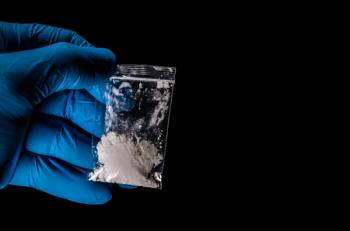
Paper spray-mass spectrometry vs. liquid chromtography-tandem mass spectrometry (LC-MS/MS): Can rapid screening rival the gold standard in ER drug testing?
LCGC Europe eNews
The National Institute of Standards and Technology (NIST), an agency of the U.S. Department of Commerce, has made a polycyclic aromatic hydrocarbon (PAH) structure index database publicly available on-line (http://pah.nist.gov/). A byproduct of hydrocarbon fuel combustion, PAHs can have significant adverse health and environmental impacts. The website contains data on more than 650 PAH compounds, with more to be added in the future.
The National Institute of Standards and Technology (NIST), an agency of the U.S. Department of Commerce, has made a polycyclic aromatic hydrocarbon (PAH) structure index database publicly available on-line (http://pah.nist.gov/). A byproduct of hydrocarbon fuel combustion, PAHs can have significant adverse health and environmental impacts. The website contains data on more than 650 PAH compounds, with more to be added in the future.
According to NIST, the Chemical Informatics Research Group of NIST’s Material Measurement Laboratory created the site to provide Standard Reference Data to industry, academia, and the US public, and builds on NIST Special Publication 922: Polycyclic Aromatic Hydrocarbon Structure Index (SP922) by Lane C. Sander and Stephen A. Wise of NIST. SP922 indexed a large number of PAH structures and provided parameters for estimating retention indices for liquid chromatography using a simple model. The new database expands on this by providing data from further experimental data including a collection of thermochemical data on gas-phase PAH compounds, and UV–visible spectra.
For more information visit:
over 12 years ago
Akzo Nobel Chief Financial Officer Keith Nichols to Stand Downover 12 years ago
Eurofins CEO Gilles Martin Appointed to Bruker Board of Directorsover 12 years ago
LCGC TV: Fully Porous vs. Superficially Porous Particlesover 12 years ago
Duke Molecular Physiology Institute Receives Agilent Grant