

News|Videos|December 7, 2025
Navigating Drug Shortages and Alternative Therapies
Author(s)Judith Hey-Hadavi, Nicole Snow
Advertisement
Episodes in this series
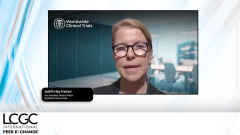

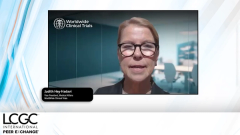
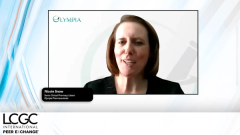

Judith Hey-Hadavi, vice president of Medical Affairs at Worldwide Clinical Trials, and Nicole Snow, senior clinical pharmacy liaison at Olympia Pharmaceuticals, discuss the challenges of GLP-1 receptor agonist drug shortages and the role of compounded alternatives in patient care. They highlight safety concerns with compounded medications, including variable dosing, lack of standardized delivery devices, and the risk of counterfeit products. Both emphasize the importance of patient education, proper administration training, and monitoring supply chains to ensure safety and efficacy.
Advertisement
Related to this article

High-performance liquid chromatography (HPLC) shows atropine for myopia contact lenses stays stable for a year.

Bin Sun of Cytiva explains his study testing whether USP <665> 50% ethanol extractables data covers DMA and DMSO in antibody–drug conjugate processing.
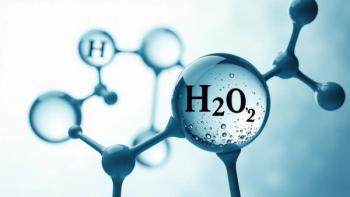
Derivatization-based liquid chromatography–tandem mass spectrometry (LC–MS/MS) preserves the O–O bond for specific hydrogen peroxide detection.

Sarah Foster’s principal component analysis of mead fermentation kinetics found Brix drove separation, with mean centering the best preprocessing.
Liquid chromatography–mass spectrometry (LC–MS) proteomics shows spreading colorectal and pancreatic tumors differ.
Sarah Foster found Abbaye yeast meads clustered apart in PCA and HCA, driven by furfural, ethyl octanoate, ethyl decanoate, and furan-2,5-dicarbaldehyde.

Gas chromatography–mass spectrometry (GC–MS) links Lactococcus and Enterococcus to fruity esters in sauerkraut.

Tuned liquid chromatography–tandem mass spectrometry (LC–MS/MS) separation beats brain matrix effects to quantify psilocin.
Advertisement
Advertisement