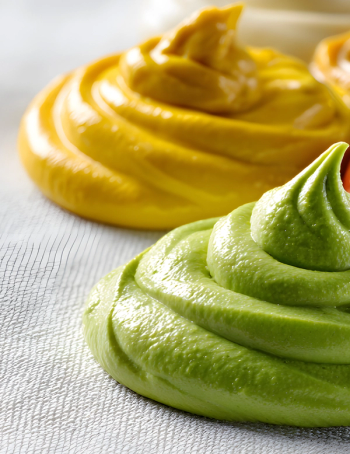
Gas chromatography–mass spectrometry (GC–MS) and ion chromatography profile wasabi and mustard heat and acidity.
Pittcon (Pittsburgh, Pennsylvania) announced that Alan G. Marshall, Kasha Professor of Chemistry and Biochemistry at Florida State University (Tallahassee, Florida) and director of the Ion Cyclotron Resonance Program at the National High Magnetic Field Laboratory will be the plenary lecturer during the opening session on March 1 at Pittcon 2010.
Pittcon (Pittsburgh, Pennsylvania) announced that Alan G. Marshall, Kasha Professor of Chemistry and Biochemistry at Florida State University (Tallahassee, Florida) and director of the Ion Cyclotron Resonance Program at the National High Magnetic Field Laboratory will be the plenary lecturer during the opening session on March 1 at Pittcon 2010. The conference will be held February 28 to March 5, 2010, in Orlando, Florida, at the Orange County Convention Center, West Building. Marshall’s presentation will focus on how high-end instrumentation has both advanced state-of-the-art applications and stimulated the performance of lower-end instrumentation. He will present examples drawn from cyclotrons, lasers, mass spectrometry, microscopy, NMR spectroscopy, Raman spectroscopy, and robots. Marshall coinvented and continues to lead in the development of Fourier-transform ion cyclotron resonance mass spectrometry. His current research includes instrumentation development, fossil fuels and environmental analysis, and mapping the primary and higher-order structures of biological macromolecules and their complexes.