|Articles|October 7, 2011
- The Column-10-07-2011
- Volume 7
- Issue 18
Separations in the Food Industry
The global food, beverage and agricultural industry caters to the population of the entire world. Even though the food industry does not rely on analytical instrumentation to the same extent as perhaps other industries, the sheer size of the industry results in a considerable market for such instruments.
Advertisement
The global food, beverage and agricultural industry caters to the population of the entire world. Even though the food industry does not rely on analytical instrumentation to the same extent as perhaps other industries, the sheer size of the industry results in a considerable market for such instruments.
Articles in this issue
about 15 years ago
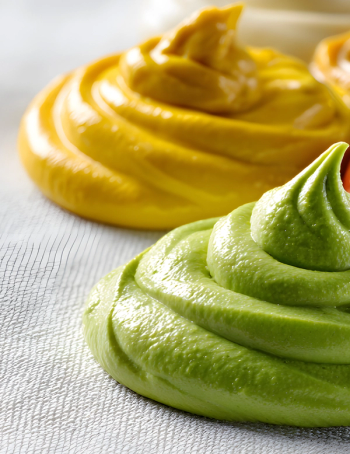
Healthy spaghettiabout 15 years ago
Accelerating Proteomic Biomarker Validationabout 15 years ago
Water contamination collaborationabout 15 years ago
Tackling myeloma drug resistanceabout 15 years ago
$1.2 million NASA grant for chromatographerAdvertisement
Related to this article

Gas chromatography–mass spectrometry (GC–MS) and ion chromatography profile wasabi and mustard heat and acidity.

How feasible is it to integrate this Bayesian graph-theory methodology into existing commercial chromatography software workflows for semi-automated data curation in routine analytical laboratories?

Reversed-phase high-performance liquid chromatography (RP-HPLC) and liquid chromatography-tandem mass spectrometry (LC-MS/MS) show frequent milking alters cobra venom toxin makeup.

Gabriel Vivó-Truyols outlines the benefits and challenges of combining graph theory with Bayesian statistics to automate peak assignment and alignment.

This week, Chromatography Online’s coverage spanned lipidomics-based early cancer detection, career paths in separation science, machine learning and uncertainty-driven approaches to LC method development, new EU wastewater rules for pharmaceutical micropollutants, automated Separation Quality Factor (SQF) evaluation in chromatography data systems, and solutions to GLP-1 peptide analysis challenges.

Gabriel Vivó-Truyols from the Spanish Council for Scientific Research, Madrid, Spain. discusses his work on using graph theory and Bayesian statistics for peak assignment and chromatographic alignment.
Advertisement
Advertisement
Trending on LCGC International
1
GLP-1 Peptide Analysis: Challenges and Solutions
2
HPLC–DAD Method Tracks Semaglutide and Tirzepatide Stability
3
Industry Roundup: Waters Posts Strong Third Quarter as LC–MS and Chromatography Consumables Drive Growth, Acquires Ion Mobility Pioneer MOBILion
4
LC–MS/MS Dried Blood Spot Test for Galactosemia
5