Aimed at GMP-regulated laboratories, this podcast discusses the regulatory and business drivers for digitizing analytical processes, how they go hand in hand, and some practical aspects on how to approach such a journey. The business benefits of improving laboratory efficiency by releasing product earlier, and technical controls to ensure regulatory compliance, should easily justify automation projects. It is crucial to automate now under your own timeline rather than be forced by regulatory citations.
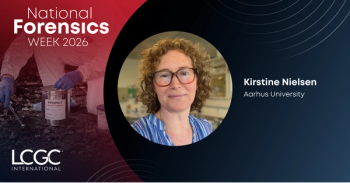
Kirstine Nielsen of Aarhus University (Denmark) discusses how targeted metabolomics ratios helped build a robust bloodstain time-since-deposition tool.
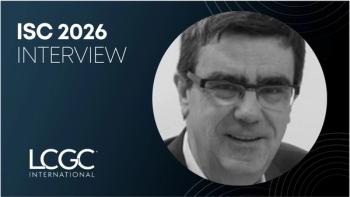
Gérard Hopfgartner explains how atmospheric pressure photoionization can generate radical cations in LC–MS, unlocking EI-style spectra and NIST's spectral library.
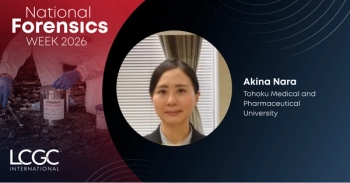
LCGC International spoke to Akina Nara of Japan’s Tohoku Medical and Pharmaceutical University about a new study which links a blood compound to how long a body has been dead.
A method coupling gas chromatography-tandem mass spectrometry (GC-MS/MS) and multiple reaction monitoring (MRM) tracks lipid markers of decomposition in commingled remains.
This week's top stories on the Chromatography Online website spotlight LCGC International's new SFC-focused interview series charting the technique's rise alongside LC and GC, complemented by a practical GC data-reporting refresher and a study using chromatography to detect trace pesticides in tap water.