The need for enhanced product quality of biomolecules has led to a higher-level of characterization of different critical quality attributes. Size exclusion chromatography (SEC) has been widely used as a technique to provide size and purity. SEC coupled with multi-angle light scattering (MALS) can determine molecular weight (MW) and size (or radius of gyration, Rg) of complex samples. Dr. Wei Lu, Ph.D. and Philip Hoang from Tosoh Bioscience discuss how SEC-MALS as an analytical method can be optimized and applied to a wide range of applications including oligonucleotides, monoclonal antibodies, and virus-like particles.
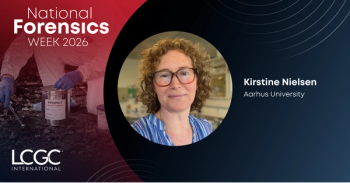
Kirstine Nielsen of Aarhus University (Denmark) discusses how targeted metabolomics ratios helped build a robust bloodstain time-since-deposition tool.
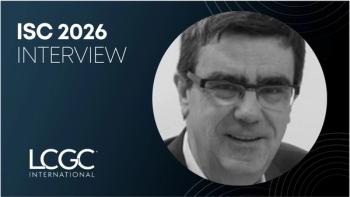
Gérard Hopfgartner explains how atmospheric pressure photoionization can generate radical cations in LC–MS, unlocking EI-style spectra and NIST's spectral library.
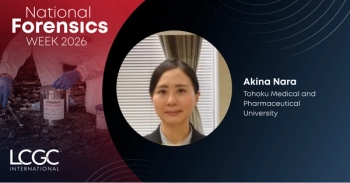
LCGC International spoke to Akina Nara of Japan’s Tohoku Medical and Pharmaceutical University about a new study which links a blood compound to how long a body has been dead.
A method coupling gas chromatography-tandem mass spectrometry (GC-MS/MS) and multiple reaction monitoring (MRM) tracks lipid markers of decomposition in commingled remains.
This week's top stories on the Chromatography Online website spotlight LCGC International's new SFC-focused interview series charting the technique's rise alongside LC and GC, complemented by a practical GC data-reporting refresher and a study using chromatography to detect trace pesticides in tap water.