

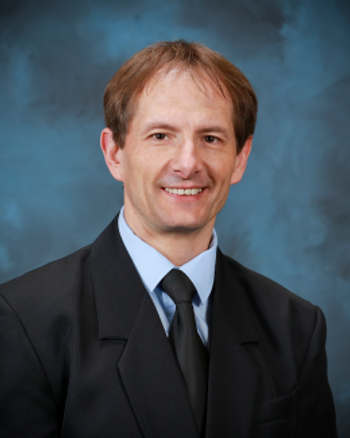
In the final section of our interview with Vilmos Kertesz of Oak Ridge National Laboratory, he imparts the most important lessons he would like future generations of scientists to learn.
Aaron Acevedo is the Assistant Editor for LCGC and Spectroscopy. Direct correspondence to: aacevedo@mjhlifesciences.com
In the final section of our interview with Vilmos Kertesz of Oak Ridge National Laboratory, he imparts the most important lessons he would like future generations of scientists to learn.

Separating stereoisomers is an extensively researched and challenging process, with approved substances being rare. A new SFC-based system was made to possibly ease some aspects of these procedures.
In the penultimate section of our interview with Vilmos Kertesz of Oak Ridge National Laboratory, he reflects on the people who guided him throughout his scientific career.
In the third part of our interview with Vilmos Kertesz of Oak Ridge National Laboratory, he discusses his time creating new liquid extractions and his feelings on seeing his work used around the world.

This new study presents a validated QuEChERS–LC-MS/MS method for detecting eight persistent, mobile, and toxic substances in escarole, tomatoes, and tomato leaves irrigated with contaminated water.
In the second part of our interview with Vilmos Kertesz of Oak Ridge National Laboratory, he discusses the most notable aspects of his previous research efforts.
In the first part of our interview with Vilmos Kertesz of Oak Ridge National Laboratory, he reflects on his winning the 2025 Al Yergey MS Scientist Award and previews what his awards lecture will discuss.
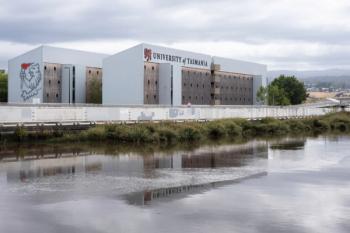
Haloacetic acid detection has become important when analyzing drinking and swimming pool water. University of Tasmania researchers have begun applying capillary liquid chromatography as a means of detecting these substances.
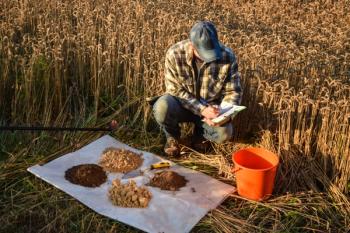
When analyzing samples using liquid chromatography–high-resolution mass spectrometry, there are various ways the processes can be improved. Researchers created new methods for prioritizing these strategies.

In the final part of our interview with Michael Shortreed, he shares the most important lessons he would like the next generation of mass spectrometrists to learn.
In the second part of our interview with Michael Shortreed, he reflects on how his work is used in laboratories worldwide and discusses those who mentored him throughout life.
In the first part of our interview with Michael Shortreed, we discuss his winning the Al Yergey MS Scientist Award and learn about his research on computational methods.

Here is some of the most popular content posted on LCGC International this week.

Aqueous two-phase systems have become more popular as biomanufacturers look to adopt continuous processing. However, there are several uncertainties regarding widespread use of this technique.

Ping Wei powder is a type of traditional Chinese medicine used to treat digestive system diseases. Its growth in popularity has led to scientists seeking to properly identify its chemical profile.
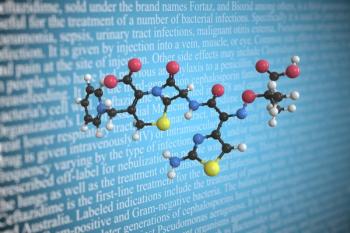
Ceftazidime and avibactam are two anti-infective drugs that can prove difficult to analyze in serum. Determining them can assist in therapeutic drug monitoring or pharmacokinetic studies.

As part of the collaboration, BASF will contribute its R&D expertise in catalytic materials and technologies, while Mingyang will focus on applying its research capabilities to Power-to-X equipment.

Novichok nerve agents are lethal substances when improperly handled. The researchers from the University of Helsinki aimed to find new ways of neutralizing Novichok A-234.

Flavonoids are widely used metabolites that carry out various functions in different industries, such as food and cosmetics. Detecting, separating, and quantifying them in fruit species can be a complicated process.

Highly reactive aldehydes can pose significant health concerns in polluted environments. HPLC was used in this study to simultaneously analyze carbonyl compounds hydrazones.
Shimadzu researchers aimed to develop a more efficient supercritical fluid chromatography method for solid-state injection and streamlining sample pretreatment.
Here is some of the most popular content posted on LCGC International this week.

A new collaboration facility, opened by Thermo Fisher Scientific, will work to make cell therapy developers’ research more accessible and optimized.

Texas Tech University researchers used liquid chromatography–tandem mass spectrometry to quantify glucose transporter 1 (GLUT1) in mammalian brain cells.

Root exudates—substances secreted by living plant roots—are challenging to sample, as they are typically extracted using artificial devices and can vary widely in both quantity and composition across plant species.

A new study, published by a researcher from Chemical Characterization Solutions in Minnesota, explored a new approach for sample preparation for the chemical characterization of medical devices.

A team of scientists from the Paris university developed and optimized MAVERIC, a miniaturized and autonomous gas chromatography (GC) system coupled to a nano-gravimetric detector (NGD) based on a NEMS (nano-electromechanical-system) resonator.

Karolinska University Hospital researchers recently tested new approaches for analyzing drugs of abuse in oral fluids.

A recent roundtable discussion featuring Aloka Srinivasan of Raaha, Mayank Bhanti of the United States Pharmacopeia (USP), and Amber Burch of Purisys discussed the challenges surrounding nitrosamine analysis in pharmaceuticals.
A team of researchers from Waters Corporation, led by Szabolcs Fekete, tested a new approach for separating oligonucleotides.