Curcumin is a polyphenol believed to have anticancer effects. To better quantify its existence in plasma, reversed-phase high-performance liquid chromatography (RP-HPLC) was used to create a new analytical approach for quantifying this substance.
Aaron Acevedo is the Assistant Editor for LCGC and Spectroscopy. Direct correspondence to: aacevedo@mjhlifesciences.com
Curcumin is a polyphenol believed to have anticancer effects. To better quantify its existence in plasma, reversed-phase high-performance liquid chromatography (RP-HPLC) was used to create a new analytical approach for quantifying this substance.

In this article, you’ll find some of the top content that was published on LCGC this week, including calls for new chromatography technologies and interviews with rising stars in the field.

To create a new approach for monitoring and quantifying free fatty acids (FFAs), Chinese researchers combined stable isotope derivatization coupled with liquid chromatography–triple quadrupole mass spectrometry (ID-LC-QQQ-MS).

Enantiomer self-disproportionation can occur during various scientific processes. To understand temperature’s relationship with this phenomenon, researchers studied how temperature affected SDE in chromatographic separation.

Researchers from Comenius University Bratislava used LC–MS/MS to analyze albendazole substances in plasma samples.

To better detect cardiovascular diseases in people, researchers used high-performance liquid chromatography–tandem mass spectrometry (HPLC–MS/MS) to simultaneously quantify metabolites in human plasma.

In new research, two transition substances in myrrh oil were studied during gas chromatography, in order to monitor for any changes in peak shape.

In the second part of this interview with Maria Olds of the University of Texas at Arlington, she discusses the consequences of not accounting for preanalytical factors in blood alcohol concentration (BAC) analysis.

A recent study created a new technique for quantifying propylene glycol, a notable substance found in electronic cigarettes, using gas chromatography–mass spectrometry (GC–MS).
In this article, you’ll find some of the top content that was published on LCGC this week, including our upcoming forensic science content series and an interview on preanalytical factors for ethanol testing.
In the first part of this interview with Maria Olds of the University of Texas at Arlington, she discusses why preanalytical techniques should be considered for ethanol analysis.

Researchers at the Institute of Marine Research in Bergen, Norway used liquid chromatography–mass spectrometry to analyze resolvins in fish and human cells.

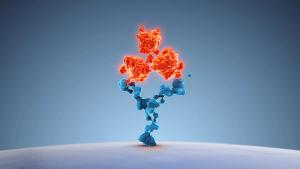
A new approach for purifying immunoglobulin-based therapies was created by Pfizer researchers.

Johns Hopkins University researchers, in response to many high performance liquid chromatography (HPLC) systems having issues with peak resolution, created their own system for quantifying complex HPLC chromatograms.

Antiretroviral drug residues were monitored in breastmilk samples using ultrahigh-performance liquid chromatography–tandem mass spectrometry (UHPLC–MS/MS).

To detect popular party drugs in human waste, researchers combined headspace solid-phase microextraction and solid-phase microextraction to detect these substances and their metabolites.
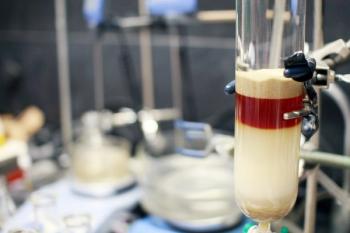
University of Geneva researchers led a collaboration for testing different size-exclusion chromatography columns to compare the capability for characterizing mRNA.

Researchers from Sapienza Università di Roma and ETH Zürich investigated the performance of micro- and nano-liquid chromatography systems by examining how capillary LC behaves under varying operational conditions.
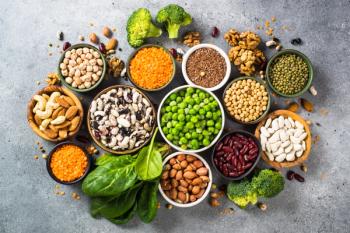
Bioactive compounds extracted from plants are revered for their abilities to enhance human health. However, due to the complex matrices of plant foods, the qualitative and quantitative analysis of metabolites in plant foods requires a prior separation step.
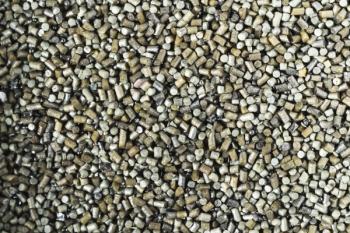
Smokeless powders can be vital aspects of forensic investigations, though distinguishing between different powders can prove difficult. Chinese researchers aimed to simplify this process using gel permeation chromatography.

Ink authentication is often complicated by tampering, aging, and chemical variability. Now, forensic scientists are turning to advanced gas chromatography (GC) techniques to enhance the accuracy and efficiency of ink analysis.
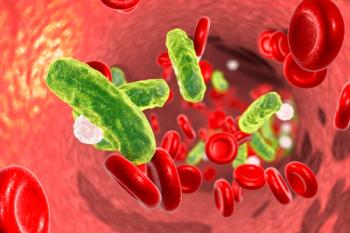
University of Barcelona researchers created a new method for detecting sepsis in patients, based on capillary electrophoresis-mass spectrometry (CE-MS).

To better analyze components from chaga (Inonotus obliquus) mushrooms, researchers created a supercritical fluid chromatography (SFC)-based approach to collecting and quantifying chaga components.

Researchers at LUT University highlight challenges in calculating adsorption values during aqueous chromatography and explore new methods to close this knowledge gap.

Universitat de Barcelona researchers have developed a new method for characterizing solute-solvent interactions in electrokinetic systems.

During ASMS 2025, LCGC International covered the most notable news from corporate and individual attendees, highlighting the latest advancements in mass spectrometry.

The components of explosive devices can be difficult to characterize, whether pre- or post-blast. To rectify this, two-dimensional liquid chromatography was tested as a means of analyzing these compounds.

Continued helium use in gas chromatography–mass spectrometry/flame ionization detection has proven problematic. To combat this, alternative efforts are being tested.

To better analyze polyphenols, scientists from Sapienza University of Rome examined the capabilities of supercritical fluid chromatography (SFC), comparing it to traditional methods.
In this article, you’ll find some of the top content that was published on LCGC this week, including details on the recent merger between Waters Corporation and BD Biosciences.
February 1st 2024
February 28th 2024