


The researchers explored ways to simplify retention time calculation across LC–MS and various other chromatographic methods.
Aaron Acevedo is the Assistant Editor for LCGC and Spectroscopy. Direct correspondence to: aacevedo@mjhlifesciences.com
The researchers explored ways to simplify retention time calculation across LC–MS and various other chromatographic methods.

A new type of micro-gas chromatography column was fabricated using direct metal laser sintering (DMLS) to circumvent manufacturing issues faced by other micro-GC systems.

Here is some of the most popular content posted on LCGC International this week.
Hydrophobic deep eutectic solvents have proven useful in extracting non-polar target compounds, though researchers have shown there is room for further development.
A new method has been created for determining N-nitrosamines (NAs) in pharmaceutical preparations using liquid chromatography with tandem mass spectrometry.

A new approach to characterizing human milk oligosaccharides was developed using a combination of liquid chromatography, mass spectrometry, and other techniques.

New types of smart proteolytic samplers were tested for their effectiveness in liquid chromatography-mass spectrometry (LC–MS)-based protein quantification.

During Pittcon 2025, Christopher Pohl and Katelynn Perrault Uptmor won awards honoring their careers. In this interview, they share their best advice for the next generation of separation scientists.

Scientists from the Zhejiang Institute of Quality Scientists used liquid chromatography–tandem mass spectrometry to detect 35 PFAS in paper and plastic products.

Cation exchange chromatography was tested for its effects on the elution behavior of the vesicular stomatitis virus, which is a contagious disease among livestock.

A new solid-phase microextraction-based technique has been developed for extracting triazole residues from environmental samples including water and juice.

Reinforcement learning was tested as a means of improving liquid chromatography method development.
Reinforcement learning was tested as a means of improving liquid chromatography method development.

High-performance liquid chromatography with diode-array detection (HPLC-DAD) was tested for detecting antibiotic residues in environmental samples.
Here is some of the most popular content posted on LCGC International this week.

Physics-informed neural networks were tested for their capabilities in predicting concentration profiles in gradient liquid chromatography.
Shimadzu Corporation and Vrije Universiteit Brussel researchers recently investigated how extra-column band broadening (ECBB) can be optimized in micro-flow capillary liquid chromatography.
A new review article provides an overview of the use of two-dimensional liquid chromatography (2D-LC) for the quantitative analysis of natural products.
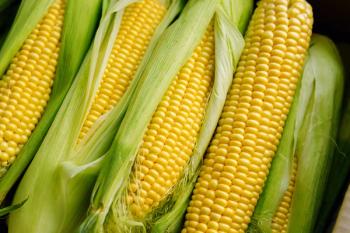
Aflatoxins are a family of toxins made by certain fungi that are found on agricultural crops, such as maize (corn), peanuts, and cottonseed.

The company reported $1.68 billion in revenue at a 25.1% operating margin across its businesses in America, Europe, and Asia.

During Waters Corporation’s 2025 Investor Day, the company’s top executives highlighted the company’s growth and hints at future points of development.
Here is some of the most popular content posted on LCGC International this week.

In the final section of our interview with Christopher Pohl, he imparts knowledge to the next generation of aspiring separation scientists.
In this penultimate section of our interview with Christopher Pohl, he reflects on the history of chromatography, sharing what he deems the most important moments in the field.
Here is some of the most popular content posted on LCGC International this week.
In this third part of our interview with Christopher Pohl, he tells us about his most treasured accomplishments from throughout his storied career.
In this second part of our interview with Christopher Pohl, we learn about the mentors Pohl turned to throughout his career, and the important teachings he took from them.

Guangdong University of Technology researchers used a gas chromatography-based method to detect nonylphenol isomers in sewage and wastewater sludge.
Scientists from Bristol Myers Squibb developed a method using supercritical fluid chromatography for chiral bioanalysis.

In this first part of our interview with Christopher Pohl, he discusses the 2025 LCGC Lifetime Achievement Award, and what this means to him.