


Salvia is an herb that is utilized in various industries. High-performance thin-layer chromatography was used to analyze different Salvia extracts.
Aaron Acevedo is the Assistant Editor for LCGC and Spectroscopy. Direct correspondence to: aacevedo@mjhlifesciences.com
Salvia is an herb that is utilized in various industries. High-performance thin-layer chromatography was used to analyze different Salvia extracts.

Countercurrent chromatography systems were tested and combined to optimize their capacity for handling non-polar and polar substances.

A new study done by scientists in Switzerland and Sweden investigated the use of automated systems to develop multispecific antibodies.

To create a technique suited for analyzing proanthocyanidins and their properties, scientists combined high-speed countercurrent chromatography (HSCCC) and electrospray ionization–tandem mass spectrometry (ESI–MS/MS).

Circular dichroism and fluorescence were used to create a platform for monitoring changes in monoclonal antibodies.

Researchers tested immobilized metal affinity chromatography’s potential for broad applications.

Seven research teams from universities across the United States and Canada have been honored for their collaborative efforts that integrate automation and artificial intelligence (AI) to tackle fundamental scientific challenges.

To better conduct the analysis of nucleoside analogues, hydrophilic interaction liquid chromatography–tandem mass spectrometry (HILIC-MS/MS) was used to quantify antitumor prodrugs and their metabolites.

A new cancer detection test to analyze volatile organic compounds through urine analysis, was granted the Breakthrough Device Designation status by the U.S. FDA. The system, which is built on gas chromatography–mass spectrometry (GC–MS) and proprietary AI, generates real-time cancer risk scores.

Using two-dimensional liquid chromatography–mass spectrometry, a new workflow was developed to characterize phosphorodiamidate morpholino oligomers, which can help treat infectious diseases.

Scientists from the Technical University of Munich and Lund University explored the use of new models for liquid-liquid chromatography based off pre-existing procedures for liquid-liquid extraction.

Recently, we spoke with Esther Olonimoyo from the University of Maryland, who recently published a study using high-performance liquid chromatography to analyze short chain fatty acids.

To better detect polycyclic aromatic hydrocarbons in the human body, a UHPLC–MS/MS method was developed and tested on urine samples from workers exposed to diesel exhaust.

Gas chromatography–mass spectrometry was used alongside quality control systems to analyze amino acids present in urine samples.

To quantify antibiotics in ICU patients’ blood, dried blood spot analysis was sued alongside UHPLC–MS/MS to monitor these substances in a more convenient matter.
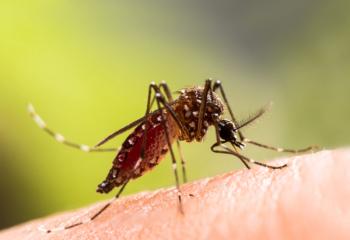
A new gas chromatography-based approach involving skin-contact sampling bands was used to detect potential malaria infections.

In this article, you’ll find some of the top content that was published on LCGC this week, including a technical article on food flavor and an interview with the president of Shimadzu Europa.
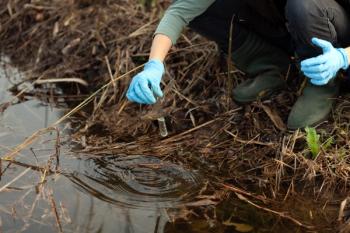
In a new study, researchers explored a new approach for detecting pesticide residues in water samples, based around ionic liquid-based dispersive liquid–liquid microextraction (IL-DLLME).

A new analysis method for detecting bisphenols in environmental sources was tested using loofah sponges and solid-phase extraction.

In a new study, researchers used GC–MS and LC–MS were used to detect composition fraud in food supplement creation.

A new dried spot-based technique involving untargeted liquid chromatography coupled with high-resolution mass spectrometry was testing for characterizing foodstuffs.

Environmental polycyclic aromatic hydrocarbons can prove dangerous if metabolites enter human systems. A new gas chromatography-based approach was developed to analyze the hydroxy derivatives in wastewater samples.

Organic contaminant transformations in water were researched to understand the mechanisms behind such phenomena.

In the final moments of our time with Tian (Autumn) Qiu, winner of the ASMS 2025 Research Award, she discusses what initially drew her to the conference and what makes her enjoy returning.

A gas chromatography–mass spectrometry-based approach was created and optimized to analyze reaction products of partial isobutane oxidation.

New upgrades to the Waters Corporation Alliance iS HPLC System Software systems were recently discussed at HPLC 2025.
Here is some of the most-read content posted on LCGC International this week.
In the fourth section of our time with Tian (Autumn) Qiu, winner of the ASMS 2025 Research Award, she discusses the mentors who guided her to where she is now and imparts advice to future mass spectrometrists.
In the third section of our time with Tian (Autumn) Qiu, she discusses how mass spectrometry can be useful in environmental toxicology research.

New gas chromatography-based approaches were tested for detecting volatile organic compound (VOC) emissions for binders used in mineral wool insulation products.