


A new separation platform based on chromatographic techniques was used to characterize algae hydrocolloids.
Aaron Acevedo is the Assistant Editor for LCGC and Spectroscopy. Direct correspondence to: aacevedo@mjhlifesciences.com
A new separation platform based on chromatographic techniques was used to characterize algae hydrocolloids.

Researchers from Waters and Biospring studied the contribution of nucleotide type and modifications on the retention and resolution of 22–24 nt long oligonucleotides in different chromatographic methods.

Monitoring the quality of essential oils is vital for protecting consumer health. Researchers recently combined gas chromatography and mass spectrometry approaches to gather data on mandarin essential oils.

Capillary gas electrophoresis was used recently to study what optimizes messenger RNA analysis.

As a precursor to the Lindau Nobel Laureate Meetings, Texas A&M University held a meeting for future Lindau attendees to highlight the institution’s scientific facilities. One such attendee is Caitlin Cain of the University of Michigan, one of LCGC International’s 2024 Rising Stars of Separation Science.

A new chromatography-based approach was created to screen perfumes for hazardous substances.
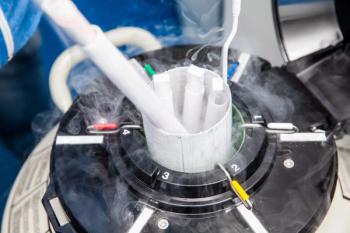
Cryogenic systems were recently tested for their ability to improve gas chromatography’s ability to modulate multi-component mixtures.

Here is some of the most-read content posted on LCGC International this week.
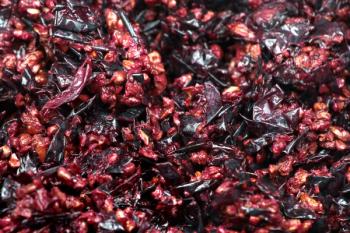
Grape pomace, a byproduct of the winery industry, holds various phenolic compounds within it. Scientists used liquid chromatography-based techniques to harvest these potentially beneficial components.
Molecular simulations, while useful in chromatographic biomolecule analysis, can be complex to set up and run. Researchers aimed to simplify these processes using two workflow management systems.

Hydrophobic interaction chromatography (HIC) is useful, albeit costly, for purifying proteins. Researchers aimed to reformulate HIC isotherms using salt-dependent water activity to optimize the process.

New QuEChERs-based methods were created to detect pesticide residues in commercial dry pet food.

In the second part of our time with Tian (Autumn) Qiu, she discusses her laboratory research into the interactions between hosts and microbes, with mass spectrometry techniques being useful in these efforts.

Shea kernels contain bioactive secondary metabolites that can offer potential health benefits. Researchers aimed to learn more about these substances.
In the first part of our time with Tian (Autumn) Qiu, she shares her thoughts on winning the ASMS 2025 Research Award.
Here is some of the most popular content posted on LCGC International this week.

Microplastics can linger in aquatic ecosystems, and there are limited studies that evaluate those substances’ sorption kinetics. Researchers aimed to investigate the sorption behavior of cortisone on MPs.

Analyzing esters from marigold flowers can be a complicated process. Researchers created a new approach for separating these substances using ultra-high-performance low pressure supercritical chromatography (UHP/LP-SFC).

Water pollution management is an important process that faces difficulty with handling microplastics. University of Porto (Portugal) researchers aimed to optimize existing methods to help rectify this issue.

To meet the increasing worldwide demand for monoclonal antibodies, it is crucial to develop purification methods that are both efficient and easily scalable. Membrane chromatography offers a promising solution for streamlining antibody purification, thanks to its ability to handle high processing volumes rapidly. Convective membrane chromatography has become popular for purifying monoclonal antibodies. Researchers created a new model for modeling mass transfer during purification.
Oxygen heterocyclic compounds are notable components in citrus-scented creams, though quality control is important when using these compounds. Researchers recently created a workflow for extracting these substances using a deep eutectic solvent (DES) for microwave-assisted extraction (MAE).
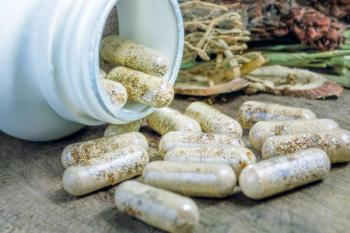
A type of traditional Chinese medicine that is believed to address depression symptoms, scientists recently studied the medicine’s components of the Xiaoyao Pill (XYP) to measure its effectiveness and identify its components.

In the final moments of our time with Varun Gadkari, he shares advice for the next generation of mass spectrometrists.
In the penultimate section of our time with Varun Gadkari, he discusses the mentors that guided him throughout his professional career.
In the third part of our time with Varun Gadkari, he discusses his time with his University of Minnesota research group in greater detail.
Here is some of the most popular content posted on LCGC International this week.
In the second part of our time with Varun Gadkari, he shares more about the research that led to his receiving the ASMS 2025 Research Award.
In the first part of our time with Varun Gadkari, he shares his thoughts on winning the ASMS 2025 Research Award.

High-temperature gas chromatography (HTGC) is typically limited by a lack usable stationary phases. University of Rouen-Normandy researchers created their own stationary phases and tested them under HTGC conditions.

In a new study, researchers explored quantifying bile acids and tryptophan metabolites in human serum samples was created using ultrahigh-performance liquid chromatography coupled with tandem mass spectrometry (UHPLC–MS/MS).