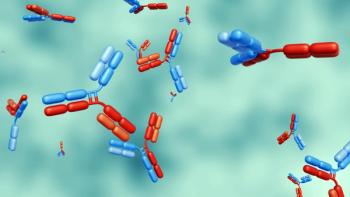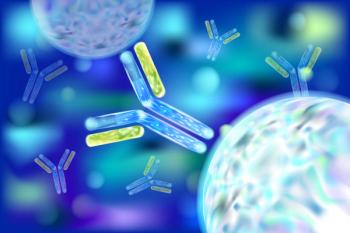
Explore the complexities of bispecific antibodies and multispecific biologics, focusing on production, purification, and analytical challenges in biopharmaceuticals.

Jared Auclair is Interim Dean at the College of Professional Studies, Vice Provost Research Economic Development and Director of Bioinnovation at Northeastern University, in Boston, Massachusetts. He is also the Director of Biotechnology and Informatics, as well as the Director of the Biopharmaceutical Analysis Training Laboratory.

Explore the complexities of bispecific antibodies and multispecific biologics, focusing on production, purification, and analytical challenges in biopharmaceuticals.

This article reviews literature related to 2D-LC applications in the biopharmaceutical field over the past six years (2018-2024).

AI-powered tools are enhancing precision, efficiency, and decision-making in biopharmaceutical development. Recently, Jared Auclair and Anurag Rathore explored AI's evolving role in biopharmaceuticals in detail.

In this column, we discuss the label-free and stable isotope labeling proteomics approaches that help in biomarker discovery. We also discuss the different enrichment techniques, such as stable isotope labeling by amino acid in cell culture (SILAC), isobaric tags for relative and absolute quantitation (iTRAQ), and tandem mass tags (TMT, that help in measuring low-abundance protein biomarkers.

This article discusses the challenges and effective solutions for high performance liquid chromatography (HPLC)-based analytical characterization of virus-like particles (VLPs).

Biopharmaceutical analysis is a rapidly evolving field that requires the development of new technologies and methods to keep pace with the increasing complexity of biologics. One of the most promising areas of research is the use of single-cell omics and microfluidic chips for the analysis of biopharmaceuticals. Single-cell omics has revolutionized our understanding of cellular heterogeneity, while microfluidic chips have enabled high-throughput analysis of single cells that provide an understanding of the complex biological network that complements the genomics and transcriptomics studies. This article will explore some of the emerging trends and technologies in biopharmaceutical analysis, with a particular focus on single-cell omics and microfluidic chips. We will also discuss the developments in ambient ionization mass spectrometry such as sub nanoampere ionization and the potential of low current ionization in studying cell-to-cell heterogeneity and its role in metabolomics.

We present formulation and delivery of gene therapy products, focusing on adeno-associated virus (AAV) formulations. We also discuss the analytical technologies most used to characterize these products.

When used appropriately in RPLC, ion pairing agents can increase the separation and retention of charged analytes. But should they be explored in other modes of HPLC as well?

Characterizing lipid nanoparticles (LNPs) is a developing delivery modality in biotherapeutic analysis. We address some of the current challenges and opportunities in this field, including an examination of the most common tools used to characterize LNPs.

Some traditional MAM workflows are being substituted with iMAM workflows that rely on analyzing the intact mass of mAbs in their native form, resulting in significant improvements in high-throughput sample analysis.

A drug stability program is a fundamental part of ensuring product quality, safety, and efficacy. Here, we summarize essential guidelines, differences between large- and small-molecule stability, and the analytical methods used.

What is the right number of replicates in biopharmaceutical analysis? Does the answer depend on the type of analysis?

In response to regulatory concerns, host cell protein (HCP) analysis is now often conducted using LC–MS/MS. Unlike ELISA, LC–MS/MS can positively identify and quantify specific HCPs and characterize the total amount of HCPs present.

Charge detection mass spectrometry (CDMS) is a useful tool to characterize larger, more complex biopharmaceuticals like bispecific antibodies and ADCs.

We review different approaches and coupling strategies for analyzing monoclonal antibody aggregates with 2D-LC.

Intact mass analysis is becoming increasingly useful for characterizing biologics. We describe the current application of intact mass analysis, including quantitation, sequencing, and structural characterization.

We present the main analytical techniques for performing functional characterization of biotherapeutic products. Such assessments are particularly critical for biosimilars, where analytical testing must ensure functional comparability with the innovator product.

New analytical workflows are needed to address the advances in biopharmaceutical product composition. A description of the multi-attribute method (MAM) is given, which has been developed to monitor critical quality attributes (CQAs) simultaneously and directly.

IMS is a valuable tool for biopharmaceutical analysis. Two formats in particular have proven useful: cyclic IMS and structures for lossless manipulations (SLIM).

Hydrogen–deuterium exchange–mass spectrometry enables determination of higher order structures of biopharmaceuticals and direct comparisons between a biosimilar and its proprietary analog.

Determining the higher order structure of a protein pharmaceutical is important. Here, we review the approaches for HOS determination that are currently receiving the most attention in the literature and at scientific meetings.

A look at techniques for charge-variant analysis of monoclonal antibodies and the question of whether pH gradients are really better than salt gradients

Published: August 17th 2025 | Updated:

Published: August 1st 2023 | Updated:

Published: June 2nd 2023 | Updated:

Published: June 10th 2024 | Updated:

Published: June 1st 2021 | Updated:

Published: May 13th 2025 | Updated: