

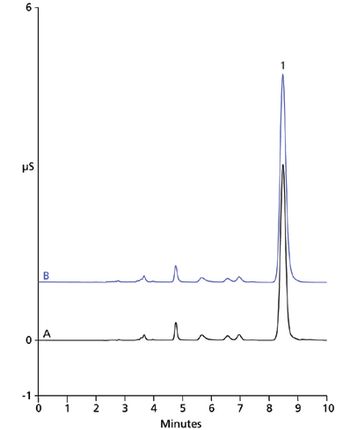
Development of an ion chromatography (IC) method using suppressed conductivity detection for the determination of Cr(VI) in drinking water.
Development of an ion chromatography (IC) method using suppressed conductivity detection for the determination of Cr(VI) in drinking water.

The Column
Laboratories focusing on ensuring the safety and quality of infant formulas and adult nutritionals require cost effective, rigorous, international consensus methods to address gaps in current approaches. To meet this need, the AOAC International formed its Stakeholder Panel on Infant Formula and Adult Nutritionals (SPIFAN). This article describes the performance of the AOAC Official First Action Method (AOAC Method 2012.20) chosen by SPIFAN, which uses microwave-assisted hydrolysis sample preparation followed by ion chromatography (IC) separation with suppressed conductivity detection for the determination of the SPIFAN priority nutrient choline.

The Application Notebook
Thermo Scientific
The Application Notebook
Thermo Scientific

The Application Notebook
U.S. EPA Method 531.2 describes the determination of widely used carbamate pesticides in raw surface water using HPLC with fluorescence detection following postcolumn derivatization, which enhances method sensitivity and selectivity as compared to UV absorbance detection.
The Application Notebook
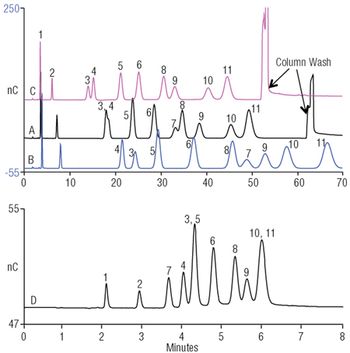
Coffee carbohydrates constitute the major part (at least 50% of the dry weight) of raw coffee beans, and are good tracers for assessing the authenticity of instant coffee.

The Application Notebook
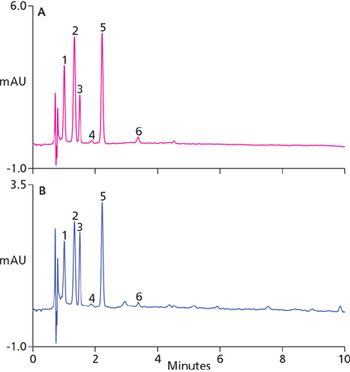
Tetracycline (TC), a common antibiotic used to treat urinary tract infections, acne, gonorrhea, and other conditions, yields a toxic degradation product, 4-epianhydrotetracycline (EATC). General Chapter 226 of the U.S. Pharmacopeia and National Formulary (USP-NF), referred to by monographs for epitetracycline and drug products containing tetracycline hydrochloride (TC-HCl), prescribes an antiquated assay for EATC impurity in TC.
The Application Notebook
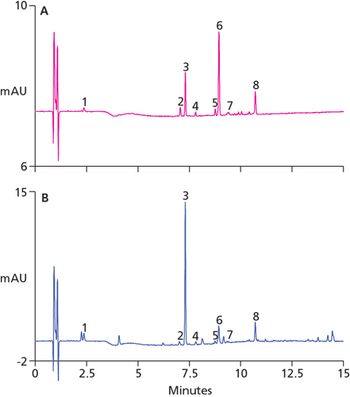
Anthocyanins are a sub-class of naturally electron deficient and powerful antioxidants called flavonoids that are responsible for the red, orange, and blue coloration in fruits and flowers.
The Application Notebook
Tea, one of the most consumed non-alcoholic drinks worldwide, contains catechins that are powerful antioxidants thought to provide many health benefits, including reduction of cholesterol and obesity, and protection against cardiovascular disease and cancer.
The Application Notebook
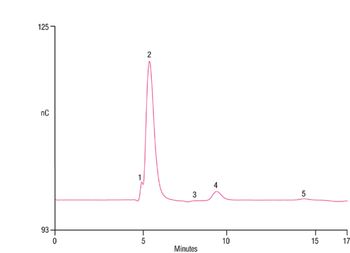
Ingestion of DEG-adulterated glycerin excipients in pharmaceuticals and personal care products, such as toothpaste, mouth wash and medicinal syrups has caused systemic alcohol intoxication, acidosis and subsequent multiorgan failure that have led to hundreds of fatalities of children and adults.
The Application Notebook
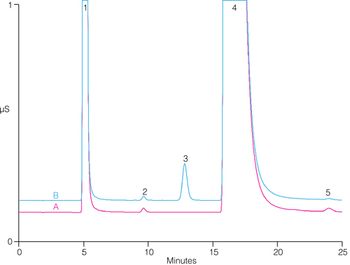
Methacholine chloride is a synthetic analogue of the neurotransmitter acetylcholine used to assess bronchial asthma of subjects in respiratory function labs and epidemiological field studies.

LCGC North America
Oxytocin acetate samples were analysed successfully for both the peptide and acetate with a single method using a mixed-mode weak-anion-exchange column.
The Application Notebook
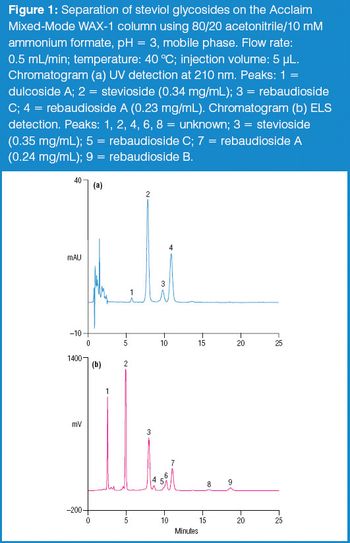
The stevia plant and its extracts have long been used as sweeteners in Asia and Latin America. Two steviol glycosides present in plant tissue, stevioside and rebaudioside A, are largely responsible for the sweet flavour.1 In December 2008, the US FDA placed rebaudioside A (also known as rebiana) on the Generally Recognized as Safe (GRAS) list of sugar substitutes to be used in foods, thereby allowing the use of rebiana as a commercial sweetener.2 The determination of steviol glycosides in these sweeteners is challenging due to their weak UV absorbance. Other detection methods, such as evaporative light scattering (ELS), can improve steviol glycoside quantification. In this proposed method, steviol glycosides were determined by UV and ELS detections in consumer sweeteners following separation on the Acclaim Mixed-Mode WAX-1 column.3

The Application Notebook
Corn stover is the above-ground portion of the plant minus the kernels and it accounts for a large percentage of the global supply of lignocelluosic biomass available as feedstock for fermentation systems used for biofuel production.
The Application Notebook
Oxidation of amino acid residues can alter a protein's biological activity, half-life and immunogenicity. Peptide maps can be used to detect oxidized peptide fragments. Peptides are commonly separated by RP-HPLC; however, hydrophobic interaction chromatography (HIC) is an alternative technique offering different selectivity.

LCGC Asia Pacific
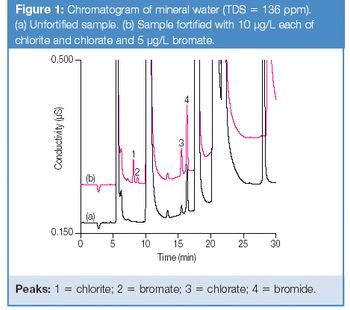
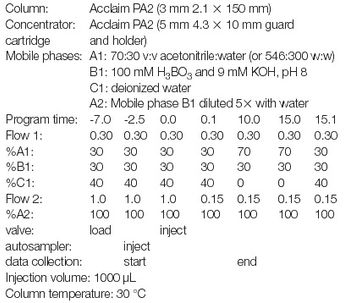
Suppressed conductivity detection is a well-developed method for detecting charged species. Reversed-phase high-performance liquid chromatography (RP-HPLC) is a well developed method of separating substances on the basis of hydrophobicity. There are some situations where it is advantageous to use these two methods together. Perfluoro-acids (PFOAs) are one class of compounds that are ionic, hydrophobic and have low UV absorbance and are, therefore, suited to this combination.
LCGC Asia Pacific
Brian De Borba and Jeffrey S. Rohrer, Dionex Corporation
LCGC Asia Pacific
Brian De Borba and Jeffrey S. Rohrer, Dionex Corporation

September 2nd 2012

February 1st 2012

February 1st 2012

February 1st 2012

