


The latest research news and news in brief.
The latest research news and news in brief.
Agilent and Metrohm join forces, and Waters Corporation completes acquisition of Wyatt Technology.

Here, we summarize the 17 Monday evening workshops that took place from 5:45–7:00 pm at ASMS.
At ASMS 2023, Tabitha Hambidge of LGC presented a novel method for automating the certification of reference materials with the help of double exact matching isotope dilution mass spectrometry (DEM-IDMS).

On June 5th from 2:30–4:30 pm at ASMS, an oral session on food safety and chemistry took place. We summarize this session here.
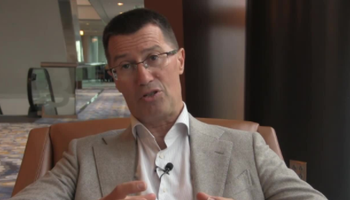
At ASMS 2023, LCGC spoke with Ron Heeren of Maastricht University. This segment previews one of several ASMS interviews that were conducted at the conference.
On June 5th from 8:30–10:30 am at ASMS, an oral session on polymers took place. We summarize this session here.

An oral session recognizing the John B. Fenn Distinguished Contribution in Mass Spectrometry Award winner and the Al Yergey MS Scientist Award winners took place on Monday, June 5th, from 4:45–5:30 pm.

On June 5th from 8:30–10:30 am at ASMS, an oral session on small molecules took place. We summarize this session here.

At ASMS 2023, LCGC spoke with Kevin Schug of the University of Texas at Arlington. This segment previews one of several ASMS interviews that were conducted at the conference.
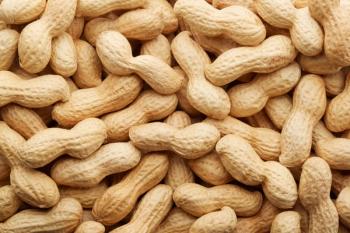
Speaking at ASMS 2023, Sara Schlange of the University of Nebraska-Lincoln discussed a mass spectrometry (MS)-based alternative for matrices problematic in current immunoassays regarding the detection of peanut allergens.

At ASMS 2023, LCGC spoke with Erin Baker of the University of North Carolina at Chapel Hill. This segment previews one of several ASMS interviews that were conducted at the conference.

At ASMS 2023, LCGC spoke with Brandon Ruotolo of the University of Michigan in Ann Arbor. This segment is one of several ASMS interviews that were conducted at the conference.

Researchers have developed polyacrylamide hydrophilic stationary phases with adjustable performance. The innovative approach allows for customized separation capabilities, enhancing the efficiency and versatility of chromatographic techniques. The findings open up new possibilities for natural product chemistry and pharmaceutical research.

Scientists achieve a breakthrough in separation techniques with the development of alizarin-modified iron oxide magnetic nanoparticles, enabling highly efficient and selective separation of anthraquinones from complex plant extracts.
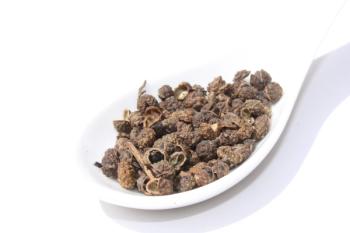
Researchers achieve a breakthrough in countercurrent chromatography, successfully separating three types of sanshools from Zanthoxylum bungeanum oleoresin, paving the way for enhanced purification and isolation of valuable compounds.

ASMS 2023 is excited to be hosting its annual conference in Houston, Texas. Here is what to expect on Sunday evening.

We offer a sneak peek at some of the award presentations that will be taking place at the ASMS 2023 Conference this week.

ASMS will conclude its conference at the Houston Museum of Natural Science (HMNS) on Thursday June 8th, from 7:00 to 10:00 pm. The HMNS is known for their paleontology display, giving attendees the opportunity to embark on a one-of-a-kind prehistoric journey while socializing with friends and colleagues.

The upcoming 2023 ASMS Conference will feature two concurrent tutorial sessions on Sunday, June 4, from 5:00–5:45 pm, along with a Special Keynote Section from 5:45–6:30 pm that will feature local activists from the Houston community.
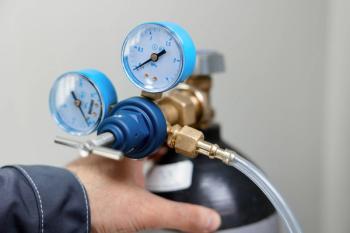
Metal organic frameworks (MOFs) and ionic liquids (ILs) combine to form a powerful gas chromatography stationary phase, enabling improved separation properties and expanded application possibilities. This innovative system offers enhanced separation capabilities and paves the way for advancements in gas chromatography analysis.

Superficially porous particle (SPP) column technology is leveraged to optimize high-throughput HPLC methods for small-molecule drug discovery, resulting in improved efficiency and reduced runtime.

An analytical team has successfully developed a novel strategy for the separation of sanshools from Zanthoxylum bungeanum oleoresin using countercurrent chromatography, providing valuable insights for the separation of compounds with similar chemical properties.

Researchers in Iran utilize graphene oxide aerogels to significantly improve the extraction and analysis of risperidone from plasma samples, offering enhanced accuracy and efficiency in pharmaceutical analysis.

A novel system combining hydrogel-modified human umbilical vein endothelial cell membrane chromatography with high-performance liquid chromatography-mass spectrometry revolutionizes the screening and purification of active ingredients in herbal medicines.

A new publication introduces a groundbreaking automated system for high-throughput mass spectrometry analysis, reshaping the future of biotherapeutic characterization.

A recent study has introduced comprehensive quality control procedures for large-scale plasma proteomics analyses. The research provides valuable insights into optimizing performance, enhancing reproducibility, and ensuring quantitative accuracy in proteomics investigations.
A novel analytical method combines charge inversion ion-ion reactions with ion mobility–mass spectrometry to enhance the separation and characterization of oligosaccharides.
A new tandem mass spectrometry technique has been developed for the rapid determination of complex lipid A structures, including novel variations from arctic bacterioplankton. This study enhances our understanding of bacterial adaptations and paves the way for the development of targeted therapies and antimicrobial agents.

A cutting-edge technique combining droplet microfluidics and mass spectrometry revolutionizes monoclonal antibody screening, enabling rapid and high-throughput analysis while setting a new standard for efficient clone selection in biopharmaceutical development.