


In a recent study, the research team introduces a new software tool for proteomic analysis that can analyze both ESI and MALDI mass spectral data.
In a recent study, the research team introduces a new software tool for proteomic analysis that can analyze both ESI and MALDI mass spectral data.

In a recent study, researchers outlined the advances in ultralow flow LC over the last decade.

On Thursday, September 28, 2023, the Chromatographic Society (ChromSoc) will hold a meeting focused on gas chromatography in the Science and Industry Museum, in Manchester, UK.
As part of the upcoming Recent Advances in Gas Chromatography meeting, Laura McGregor of SepSolve will discuss how workflows for comparing 1D and 2D GC–MS chromatograms can be automated.

As part of the upcoming Recent Advances in Gas Chromatography meeting, Paul O'Nion of RSSL will provide his perspective on different elements in the periodic table.

As part of the upcoming Recent Advances in Gas Chromatography meeting, Nicholas Morley will look at how two-dimensional gas chromatography-time-of-flight-mass spectrometry analyzes pharmaceutical packaging.

Two-dimensional gas chromatography time-of-flight mass spectrometry (GCxGC/TOF-MS) and gas chromatography–time-of-flight mass spectrometry (GC-TOF-MS), two different gas chromatography techniques, will have their procedures and uses compared at the Science and Industry Museum, in Manchester, UK.

In a recent study, a new instrument configuration suggests an alternative method for investigating polypeptides.

The 43rd International Symposium on Halogenated Persistent Organic Pollutants (POPs) will take place from September 10–14th, in Maastricht, The Netherlands.

Researchers investigated a three-dimensional fluorinated covalent organic framework (3D-FCOF) as a stationary phase in capillary electrochromatography.

A recent review article discussed advances in liquid chromatography (LC) enantioseparations.

A recent study described how a new secondary ion mass spectrometer coupled with microscope mode detection allows for rapid mass spectral imaging over a larger surface area.

A recent study highlighted a cost-effective, time-efficient method that can extract polycyclic aromatic hydrocarbons (PAHs) from water and fish samples over traditional SPE methods.

A new study proposes a new subtraction model to characterize non-polar stationary phases.

In his keynote lecture at HPLC 2023, Alejandro Cifuentes from the Laboratory of Foodomics, Institute of Food Science Research, CIAL, CSIC in Madrid, Spain, highlighted the promising application of foodomics in addressing Alzheimer’s disease (AD) (1).

Markes International has recently entered into a partnership with ExtraTech Analytical Solutions to globally distribute ExtraTech’s vacuum-assisted caps for headspace microextraction.

Researchers at West Virginia University introduce an algorithm which, in combination with binary classifiers, enables accurate and specific identification of cocaine in mass spectra from various laboratories, outperforming traditional approaches.

LCGC North America spoke to Caroline McGregor and Justin Pennington of Merck Research Laboratories regarding what employers are looking for in candidates they are considering for open separation scientist positions.


In this interview, we explore the significance of this groundbreaking technology and its impact on mass spectrometry with Aaron Robitaille, Director of Marketing for Mass Spectrometry at Thermo Fisher Scientific in San Jose, California.

During a presentation at the North America Chemical Residue Workshop, scientists described a method for pesticide analysis using liquid chromatography-tandem mass spectrometry and gas chromatography-tandem mass spectrometry.

Researchers have developed a trapping mode two-dimensional liquid chromatography (2D-LC) workflow for the enrichment and quantification of low-level impurities in pharmaceutical development, offering a promising approach for enhancing impurity monitoring in the pharmaceutical industry.

A research team has developed a new method for the online measurement of tetraethyllead (TEL) in aqueous samples. The approach utilizes magnetism-enhanced in-tube solid phase microextraction (ME/IT-SPME) coupled with high performance liquid chromatography (HPLC) and diode array detection (DAD).
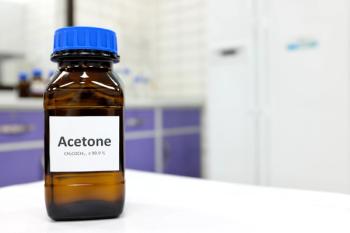
A team of researchers has investigated strategies to overcome sample introduction challenges in hydrophilic-interaction chromatography (HILIC). By employing techniques such as pre-column dilution and selecting alternative organic solvents, they successfully addressed the issues related to injection solvent strength, resulting in improved peak symmetry and separation efficiency in HILIC analyses.
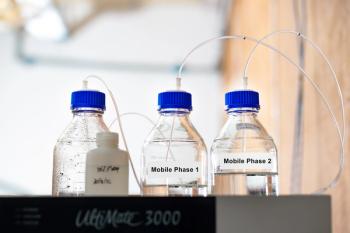
A research team has investigated the impact of hydrophilic/lipophilic balance (HLB) on the porogenic properties of non-ionic surfactants for chromatographic separation.

Researchers have recalibrated polyparameter linear free energy relationships (PP-LFERs) for low-density polyethylene (LDPE) passive samplers. By utilizing a robust regression method and reliable partition coefficients and solute descriptors, the recalibrated models exhibited improved predictive performance, accurately estimating LDPE-water and LDPE-air partition coefficients across a wide range of compounds.

Researchers have synthesized a chiral metal-organic framework (MOF) called L-histidine-zeolitic imidazolate framework-67 (L-His-ZIF-67) for enantioseparation of drugs in capillary electrochromatography. The chiral MOF demonstrated excellent separation efficiency for five chiral drugs, offering promising possibilities for pharmaceutical analysis and quality control.
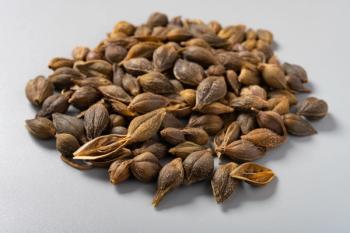
Forsythiae fructus is a traditional Chinese medicinal herb that has been used to treat various ailments such as inflammation, fever, and infections.

LCGC was on the ground at HPLC 2023.

Researchers have utilized computational fluid dynamics (CFD) simulations to optimize the design of membrane chromatography devices, enhancing fluid flow uniformity and separation efficiency.