


A separation science team has developed a green and cost-effective method, called feather fiber-supported liquid extraction (FF-SLE), for determining synthetic antioxidants in edible oils.
A separation science team has developed a green and cost-effective method, called feather fiber-supported liquid extraction (FF-SLE), for determining synthetic antioxidants in edible oils.

Researchers compare the separation efficiency of olefins and paraffins using stationary phases containing silver(I) ions in ionic liquid (IL) and polymeric ionic liquid (PIL) matrices for gas chromatography techniques.

Researchers have introduced a novel primary method utilizing gas chromatography–isotope dilution infrared spectrometry (GC–IDIR) for accurate peptide purity analysis.

Researchers have developed a robust method utilizing high-performance liquid chromatography–tandem mass spectrometry (HPLC–MS/MS) to accurately quantify amino acids in plasma, making it a valuable tool for clinical diagnostics and research in amino acid metabolism.

Scientists have developed a novel sorbent, diphenyl-functionalized nickel foam (NF-2Ph), for the accurate detection of polycyclic aromatic hydrocarbon (PAH) contaminants in Chinese herbal medicines. The method, which combines dispersive solid-phase extraction (DSPE) with gas chromatography-mass spectrometry (GC–MS) analysis, offers high sensitivity and precision, providing a reliable approach for quality control and safety assessment of these medicinal products.
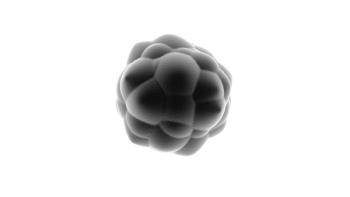
A new method for automatic z-axis correction during mass spectrometry imaging of uneven surfaces has been developed, allowing for accurate molecular analysis of complex samples. This advancement enhances the reliability and reproducibility of mass spectrometry imaging, enabling researchers to visualize the spatial distribution of molecules in challenging samples with uneven topographies.
New research using matrix-assisted laser desorption ionization-mass spectrometry imaging (MALDI-MSI) has revealed the distinct distributions of acetaminophen and its metabolite in the kidneys at an unprecedented resolution of 10 μm. The study, conducted by Mitsutoshi Setou and his team from Hamamatsu University School of Medicine in Japan, provides valuable insights into drug distribution and metabolism, enhancing our understanding of the pharmacokinetics and potential nephrotoxicity of acetaminophen.

Researchers have discovered that phospholipids form doubly charged lipid-metal ion complexes during electrospray ionization (ESI), providing valuable insights into the analysis of phospholipid structures.

Researchers have developed an ultrahigh-pressure liquid chromatography (UHPLC)—tandem mass spectrometry (MS/MS) method for the simultaneous determination of 10 aminoglycoside antibiotics in aquatic products.

A recent study reveals that pesticide residues in herbs have a low transfer rate to herbal infusions, ensuring safer consumption of these products. The validated analytical method used in the study provides valuable insights into the levels of pesticide residues in herbs and their limited presence in the resulting infusions.

Researchers have introduced MCnebula, a new framework for untargeted LC–MS/MS data analysis. MCnebula focuses on critical chemical classes and utilizes visualization techniques to streamline the analysis process, enabling efficient pathway analysis, biomarker discovery, and classification of unknown compounds beyond the limits of spectral libraries.

A new method has been developed for detecting and quantifying polycyclic aromatic hydrocarbons (PAHs) in intermediates used in plastics production. The method, based on liquid chromatography column switching, allows for the analysis of 18 PAHs and addresses the lack of regulatory oversight for PAH concentrations in plastic intermediates.

A research team has developed a new approach for selecting precursor ions in tandem mass spectrometry (MS/MS) experiments called DiffN, which increases the likelihood of biomarker discovery and provides a promising tool for lipidomic analyses.
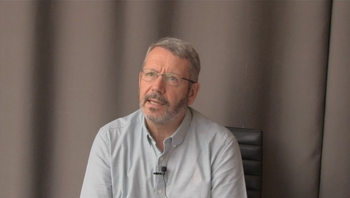
At HPLC 2023, LCGC spoke with John Langley of the University of Southampton in the UK. These clips comprise one of several HPLC interviews that were conducted at the conference.

At HPLC 2023, LCGC spoke with Andrea Gargano of the Van 't Hoff Institute for Molecular Science at the University of Amsterdam in The Netherlands. These clips comprise one of several HPLC interviews that were conducted at the conference.

At HPLC 2023, LCGC spoke with Wim De Malsche of Vrjie Universiteit Brussel in Brussels, Belgium. These clips comprise one of several HPLC interviews that were conducted at the conference.

Researchers have discovered that the combined use of deep eutectic solvents (DESs) and amino acid-based ionic liquids (AAILs) with cyclodextrin-based chiral selectors can significantly enhance the chiral separation of amphetamine derivatives.

With the potential for compact mobile devices, interferometric mass spectrometry (Interf-MS) is a pioneering technique that utilizes quantum interference and wave-like properties of samples for mass separation, offering a high dynamic range and complementing traditional methods such as accelerator mass spectrometry (AMS).
Researchers have developed a novel algorithm that combines multivariate curve resolution-alternating least-square (MCR-ALS) and Bayesian inference techniques to estimate confidence intervals for the quantitation of coeluted peaks in liquid chromatography-photodiode array detection.
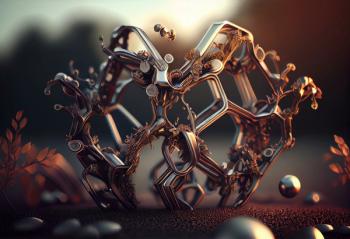
New research reports on the development of a groundbreaking strategy that utilizes metal oxide-nanochannel arrays as templates for the in-situ growth of metal-organic frameworks (MOFs), revolutionizing the field of protein isolation, offering promising potential for high-efficiency protein recovery from complex biological samples.

At HPLC 2023, Brett Paull of the University of Tasmania in Australia explained how pulsed deep ultraviolet light-emitting diodes (DUV-LED) may open up new and cost-effective avenues in liquid chromatography (LC) analysis.

In a lecture at HPLC 2023, Valérie Pichon of ESPCI Paris and Sorbonne University said these advances address limitations of more traditional extraction techniques.

In a presentation at HPLC 2023, Kevin Pagel of Freie Universität in Berlin, Germany described methods he has found most effective for better understanding the roles of glycans and glycoconjugates in biological processes.

At HPLC 2023, LCGC spoke with Michal Holčapek of the University of Pardubice in the Czech Republic. These clips comprise one of several HPLC interviews that were conducted at the conference.

At HPLC 2023, LCGC spoke with André De Villiers of Stellenbosch University in South Africa. These clips comprise one of several HPLC interviews that were conducted at the conference.

At HPLC 2023, LCGC spoke with Deirdre Cabooter of KU Leuven in Belgium. These clips comprise one of several HPLC interviews that were conducted at the conference.

In Alejandro Cifuentes's keynote lecture at HPLC 2023, he discussed the research he and his team have done to explore how foodomics can be effective in combating Alzheimer's disease.

At HPLC 2023, Paola Dugo held a lecture on how combining two-dimensional liquid chromatography (LC×LC) with mass spectrometry (MS) can help scientists analyze food samples.
At HPLC 2023, Erin Baker held a lecture on how using liquid chromatography and mass spectrometry together can help scientists further understand diseases that can arise from chemical exposure.
Davy Guillarme of the University of Geneva said in a talk at HPLC 2023 that short columns have shown promise, but ultrahigh-performance liquid chromatography (UHPLC) instrumentation is not yet optimized to realize their benefits.