


A newly published review reveals insights into the history of capillary electrophoresis, from its development to its current state-of-the-art applications, through a comprehensive bibliometric analysis of publications between 1980 and 2021.
A newly published review reveals insights into the history of capillary electrophoresis, from its development to its current state-of-the-art applications, through a comprehensive bibliometric analysis of publications between 1980 and 2021.
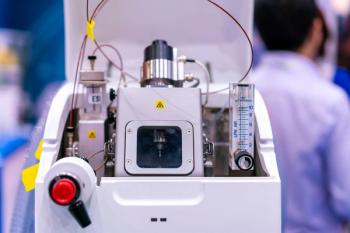
A review article describes spatial metabolomics using high spatial resolution mass spectrometry imaging (MSI), a promising technology that enables the visualization and analysis of metabolites at the cellular and subcellular levels.

Recent advancements in electrospray ionization mass spectrometry (ESI-MS) for single-cell proteomics are highlighted in a review article, including various separation techniques and MS instrumentation used to improve sample throughput and coverage.

Researchers at Xuzhou Medical University have developed a new type of chiral stationary phase (CSP) for HPLC that can be used under normal-phase, reversed-phase, and polar organic mobile phase conditions.
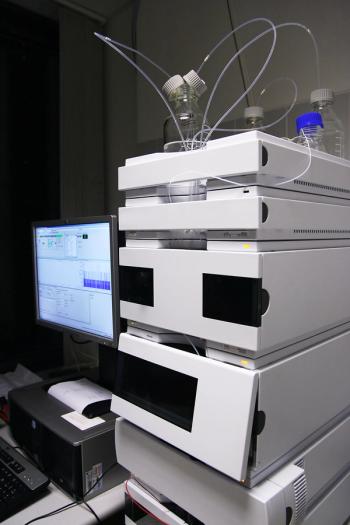
A new study has reported the preparation, characterization, and chromatographic evaluation of a nickel oxide deposited silica stationary phase in HILIC, which exhibited multiple retention mechanisms and enhanced chromatographic selectivity for analytes.

New article reviews the progress in suppression techniques for ion chromatography from 1981 to 2022, with an emphasis on the last ten years, and discusses the current challenges and future prospects regarding suppressors.

A new study has demonstrated a practical solution for the reliable compound-specific isotope analysis (CSIA) of trace-level pollutants in complex environmental samples, using 2DGC-IRMS.

Researchers have developed a new model for achiral chromatography (ACh) that can separate non-racemic mixtures of enantiomers.
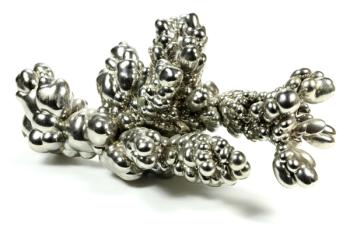
A new study evaluated the use of HILIC for fast aqueous species distribution analysis of Nickel(II)-Histidine complex, finding that HILIC is appropriate for investigating coordination metal complexes.

Researchers have now used mass spectrometry imaging to study induced pluripotent stem cells (iPSCs) during the early stages of differentiation.

Every year, the American Society for Mass Spectrometry (ASMS) presents Research Awards, the Research at Primarily Undergraduate Institution (PUI) Award, and Postdoctoral Career Development Awards. This year's winners will be honored at the 2023 ASMS Conference in Houston, Texas, from June 4–8.

By modifying polyniobate on a metal-organic framework, scientists have managed to purify Cytochrome C for proteomic analysis using LC–MS/MS.

A desorption electrospray ionization mass spectrometry (DESI-MS) method has been developed to effectively analyze historical synthetic dye samples.

In the first of a two-part series, a recent study discusses a new strategy for assessing the peak purity of pharmaceutical peptides analysis using 2D-LC–MS.

The development of a new tool that combines native ion mobility-mass spectrometry (IM-MS) and collision-induced unfolding (CIU) could lead to a better understanding of bsAbs and aid in the development of effective treatments for diseases that remain challenging for conventional mAb therapeutics to access.

A recent study analyzed individual hippocampal cells at ultrahigh mass resolution using a FT-ICR mass spectrometer.

Brandon Ruotolo will receive the Biemann Medal at the 2023 ASMS Conference in Houston, Texas, which takes place June 4–8.

Joshua Sharp will receive the Ron Hites Award at the 2023 ASMS Conference in Houston, Texas from June 4–8.

This year, the American Oil Chemists Society will convene in Denver, Colorado, for a conference filled with exciting talks about the latest developments related to edible oils, fats, surfactants, and related materials.
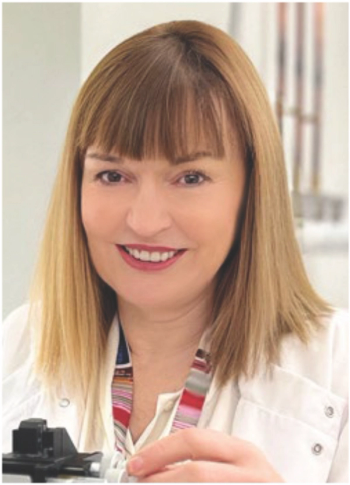
Carol V. Robinson of the University of Oxford has been named the 2023 recipient of the ASMS John B. Fenn Award for Distinguished Contribution in Mass Spectrometry. Robinson will receive the award at the 2023 ASMS Conference in Houston, Texas, which takes place June 4–8.
A new study tested different solvents and buffer additives for ion mobility spectrometry to test their impact on results.

Scientists have discovered that combining imaging mass spectrometry and microscopy can enhance molecular visualization.

Glyphosate and AMPA are two potentially dangerous chemicals within herbicides. Using LC–MS to detect these chemicals is important to human and environmental health.

Using LC–MS, scientists have developed a new method for testing doping steroids in blood.

A new method was recently developed that has the potential to revolutionize the use of piezoelectric atomizers in MS analysis, and ultimately provide a more efficient and superior soft ionization approach for the direct analysis of a variety of samples, including aqueous solutions.

The study highlights the importance of developing new chromatographic methods for the analysis of ionizable compounds, such as BAK, and the potential of mixed-mode chromatography for pharmaceutical applications.

The American Society for Mass Spectrometry will recognize twenty graduate students and ten undergraduate students for their academic achievements and mass spectrometry research.
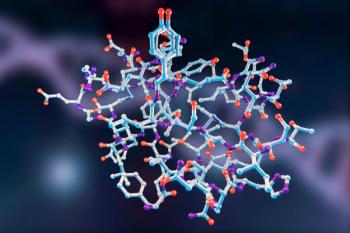
This study highlights the benefits of using ternary eluent compositions in SFC for separating peptides.
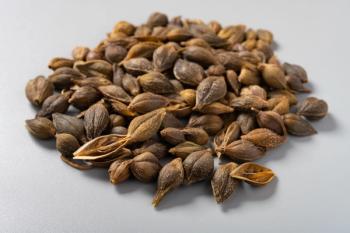
A supramolecular solvent-based dispersive liquid–liquid microextraction method was discovered that can potentially serve as a better alternative when analyzing lignans in medicinal plants.

The Al Yergey Mass Spectrometry Award, which recognizes scientists who make great contributions to mass spectrometry–based science, will be given to three "unsung heroes" this year.