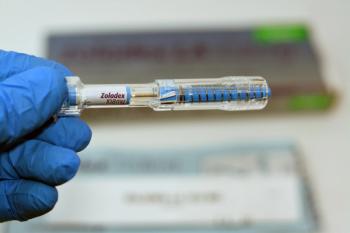
Researchers have developed a meticulous method for analyzing impurities in a product used for early treatment of breast cancer in premenopausal and perimenopausal women, shedding light on the product’s degradation pathways.

Researchers have developed a meticulous method for analyzing impurities in a product used for early treatment of breast cancer in premenopausal and perimenopausal women, shedding light on the product’s degradation pathways.

A comparison between two types of detectors—variable wavelength (VWD) and fluorescence (FLD)—in quantifying azoxystrobin from water samples was conducted.

Researchers have developed a method for the simultaneous determination of betulinic acid, oleanolic acid, and ursolic acid in jujube extract, utilizing high performance liquid chromatography with ultraviolet detection (HPLC–UV) coupled with multilayer perceptron networks, offering a more efficient alternative to classical HPLC techniques.

A recent study enhances capillary electrophoresis by streamlining the preparation process for linear polyacrylamide (LPA)-coated capillaries.

In a recent study, researchers used a dual-isotope labeling method to help improve our understanding of lipid metabolism.

Researchers from the University of Florida have employed gas-phase charge inversion ion/ion reactions to distinguish isobaric lipids in imaging mass spectrometry, offering enhanced molecular specificity for analyte identification.

In a recent study, researchers from Technische Universität Dresden have unveiled a new method for the simultaneous quantification of kynurenine-related metabolites in biological matrices.

Researchers at two US colleges have utilized ion mobility spectrometry–mass spectrometry (IMS-MS) to analyze nonenzymatic posttranslational modifications and peptide cleavages in a single peptide system, revealing insights into critical biomarkers for age-related diseases.

Researchers in Tianjin, China, have employed all ion unfolding–ion mobility–mass spectrometry (AIU–IM–MS) to enhance the differentiation of therapeutic polyclonal antibodies, offering insights into improvements in conformational stability and advantages in cost-effectiveness.

Recent advances in the analysis of odorous substances in drinking water disinfection are crucial for maintaining water quality and public health.

A study conducted at the University of Almeria, Spain, has developed an automated micro-solid-phase extraction (µSPE) clean-up method for pesticide residue analysis in various spice samples, including paprika, curry, turmeric, dry chili, and black pepper, using LC–MS/MS.

Valérie Pichon's review in Analytical and Bioanalytical Chemistry delves into sophisticated liquid chromatography techniques for detecting albumin adducts, vital biomarkers in retrospective mustard agent exposure monitoring, offering a broader window of detection than urine-based methods.

A research team assessed the performance of electron activated dissociation (EAD) in comparison to collision-induced dissociation (CID) using a fast-scanning quadrupole time-of-flight (QTOF) mass spectrometer.

A comprehensive analytical approach utilizing online two-dimensional liquid chromatography coupled with hybrid linear ion trap orbital trap mass spectrometry, has enabled the in-depth analysis of Huangqi Guizhi Wuwu decoction, identifying 170 chemical constituents and offering insights into its complex chemical composition and potential therapeutic properties.

Researchers have developed a highly sensitive and cost-effective HPLC-UV method for simultaneously detecting 36 D/L-amino acids in foods, opening new avenues for food quality control and shedding light on the significance of D-amino acids in nature.

Liquid chromatography-mass spectrometry (LC–MS) often falls short in differentiating between isomeric and isobaric lipid species in complex biological samples.

A study from researchers in the journal Chemosphere reveals how the sorption behavior of PFAS contaminants varies across different organic soil types, emphasizing the importance of organic matter quality, chain length, and pH in understanding their environmental impact.

A molecular dynamics trajectory approach was shown by a research team to improve ion mobility predictions with deviations of mere percentage points from experimental values.

A research team from India recently explored how GC–MS can help target the metabolic profile of IM-resistant chronic myeloid leukemia (CML) cells.

A new ultrahigh-performance liquid chromatography tandem mass spectrometry (UHPLC–MS/MS) was used to detect purine metabolites in rat plasma, revealing more information about their role in several biological disorders.

A recent study published in the Journal of American Society of Mass Spectrometry introduced a new method for characterizing nonpolar lipids (1).

At HPLC 2023, John Langley, a professor at the University of Southampton in Southampton, UK, presented a talk called "(R)evolution of Hyphenations, Through Open-Access RP-HPLC–MS, Open-Access UHPSFC–MS and 2D-LC–IMS-MS in Academia". He spoke with LCGC on the importance of open-access hyphenation, and how to implement it in your research.

Researchers from the University of Poitiers and CNES have developed a groundbreaking gas chromatography method, detailed in the journal Chemosensors, which enables the detection of amino acid-like compounds on Mars, offering a vital tool in the quest for extraterrestrial life.

A novel countercurrent chromatography solvent system, utilizing deep eutectic solvents, offers efficient separation of trans-crocetin and cis-crocetin from Gardenia jasminoides Ellis, enabling high-purity isolation in a single process.

The Green Analytical Chemistry Workshop (1st TGAC) will be held 5–6 February 2024, at Novotel Paris-Charenton, Paris, France.

Researchers have developed a multitargeted internal calibration method for precise quantification of chronic kidney disease (CKD)-related endogenous metabolites using liquid chromatography–mass spectrometry (LC–MS).

In a recent study, a novel micellar electrokinetic chromatography method was used for monitoring ticagrelor in rat plasma.

Lab Innovations 2023 will be held 1–2 November 2023 in Birmingham, United Kingdom. Here’s a sneak preview of what attendees can look forwards to.

In a recent study, researchers from China presented a novel approach that uses a supramolecular solvent (SUPRAS) method for detecting bioactive compounds.

Researchers from Hebei University in China have developed and characterized three novel peptide chiral stationary phases (CSPs) for enantiomeric separation, demonstrating their potential in high performance liquid chromatography (HPLC).