Articles by Shahana Wahab Huq

Known as “forever chemicals”, PFAS exposure has been linked indirectly and directly to a range of potential health issues. The objective of this study was the development of an optimized sample preparation and LC–MS/MS method for the analysis of PFAS in serum for biomonitoring applications.
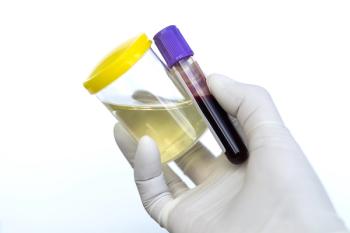
The importance of sample preparation for analyzing pain management drugs in different matrices
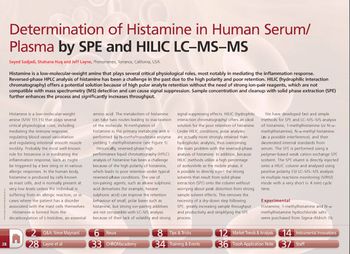
Reversed-phase HPLC analysis of histamine has been a challenge in the past due to the high polarity and poor retention. HILIC (hydrophilic interaction chromatography) offers a potential solution because of high polar analyte retention without the need of strong ion-pair reagents, which are not compatible with mass spectrometry (MS) detection and can cause signal suppression.
As a result of their high toxicity and carcinogenicity, aflatoxins are of major concern for food producers, the food processing industry and consumers. Most countries have legislation setting maximum permissible limits for aflatoxins, which are in the low micrograms per kilogram for food matrices.
Automated solid-phase extraction (SPE) has been used extensively with liquid chromatography–tandem mass spectrometry (LC–MS-MS) to facilitate high-throughput analysis in the pharmaceutical, diagnostic, and forensic toxicology areas. In this work, we demonstrate the use of a systemized approach to SPE method development and LC–MS-MS analysis. This approach provides dramatic savings in analysis time and takes advantage of new innovations in high performance liquid chromatography (HPLC) columns to provide the cleanest extracts for LC–MS injection.