


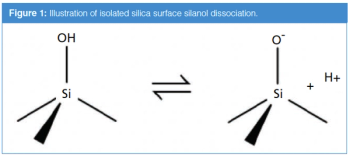
Most HPLC columns are packed with silica onto which some form of hydrophobic ligand is bonded – these columns form the vast majority of those used for modern reversed phase HPLC.

Tony Taylor is Group Technical Director of Crawford Scientific Group and CHROMacademy. His background is in pharmaceutical R&D and polymer chemistry, but he has spent the past 20 years in training and consulting, working with Crawford Scientific Group clients to ensure they attain the very best analytical science possible. He has trained and consulted with thousands of analytical chemists globally and is passionate about professional development in separation science, developing CHROMacademy as a means to provide high-quality online education to analytical chemists. His current research interests include HPLC column selectivity codification, advanced automated sample preparation, and LC–MS and GC–MS for materials characterization, especially in the field of extractables and leachables analysis.
Most HPLC columns are packed with silica onto which some form of hydrophobic ligand is bonded – these columns form the vast majority of those used for modern reversed phase HPLC.

LCGC North America
In-depth knowledge of GC setup is a significant advantage for the user. Here, a checklist is provided for preparation of a GC or GC–MS system prior to analysis work- referencing the actions, checks, tools, and consumable items that might be required.
Peak tailing is a problem that is regularly encountered in capillary gas chromatography (GC). It can cause issues with resolution and peak integration, affecting both qualitative and quantitative analysis. In this first of a series on GC diagnostic and troubleshooting, discover how best to identify the source of the issue, and find suggestions on how to prevent or fix the problems that underly the issue.
LCGC North America
To avoid producing data not fit for purpose, chromatographers need to know how to identify worrying symptoms from HLPC instrument output.
The selectivity (α) of an analytical system describes the ability to discriminate between sample components based on differences in chemical and physical-chemical properties.
The Column
The improved performance of chromatographic detectors, most notably mass spectrometers (MS), has enabled many advances in analytical science, however, one such advance may be given less prominence than perhaps it should.
I’m frustrated with static headspace sampling!
I’ve been dealing recently with issues in the laboratory when using ammonium acetate buffers, including surprising rises in HPLC–MS back pressures when starting the instrument after overnight storage, as well as difficulties with MS sensitivity.
In HPLC Diagnostics Skills Part I we looked at baseline issues, and we continue here with HPLC peaks and in particular the skills required to identify tailing peaks, the causes of peak tailing, and most importantly, how to fix the issues that give rise to this peak deformation.
I wanted to produce a checklist for preparation of a GC or GC–MS system prior to analysis, referencing the actions, checks, tools, and consumable items that might be required.

The Column
As I receive reports from clients in Europe and the United States that helium prices are once again increasing, and warnings are being given regarding yet another laboratory-grade helium shortage, my thoughts turn once again to the use of hydrogen as an alternative carrier-gas for gas chromatography (GC).
The improved performance of chromatographic detectors, most notably mass spectrometers, has enabled many advances in analytical science, however, one such advance may be given less prominence than perhaps it should.
Our recent discussion on the use of hydrogen as a carrier for gas chromatography applications elicited many questions and comments, however one common question was “what are the considerations for using hydrogen carrier with MS detectors?”
As I receive reports from clients in Europe and the United States that helium prices are once again increasing, and warnings are being given regarding yet another laboratory-grade helium shortage, my thoughts turn once again to the use of hydrogen as an alternative carrier-gas for gas chromatography.

The Column
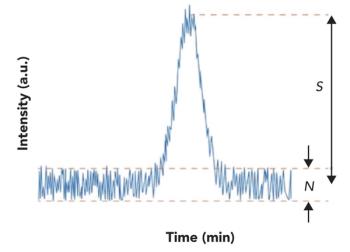
In this instalment of the LCGC Blog, Tony Taylor discusses noisy baselines in high performance liquid chromatography (HPLC).
Modern HPLC method development is dominated by a small number of pH adjusting reagents and buffers that are prevalent even when the method uses UV detection. This is driven primarily by the requirements of mass spectrometry.
LCGC Europe
Sometimes, the conditions specified in legacy liquid chromatography (LC) methods seem like they come from a different planet. This month, we look at which conditions to keep, and which ones to let go of.
To answer the question "Is there a good flow diagram I can use for GC method development?" please see below for our first attempt at something suitable, in the form of stepwise decision trees and flow diagrams.
LCGC North America
In the late “noughties” we couldn’t avoid the webinars, seminars and online calculators which were being released by HPLC column manufacturers to extol the virtues of the “new” core-shell particle morphology that promised high performance at lower back pressures.
Just as medical practitioners are able to discern worrying features from a variety of medical physics devices (electrocardiogram, electroencephalogram, ultrasound, for example), we need to develop the skill to identify worrying symptoms from our HPLC instrument output.

The Column
I’ve written several times on the operational principles and variables used in UV detection, but I also get asked questions on the basic theory of UV detection, and this time I’m going to address some of those FAQs to give a little more background theory as well as some operational tips and tricks.
You may be one of the many analytical scientists who look with envy at those laboratories who are equipped with sophisticated automated HPLC method development systems. These systems are indeed very nice and can be very efficient in narrowing down choices, however, they aren’t a universal panacea and one can achieve a lot with a simple, paired down approach.
UV detectors are undoubtedly the most frequently used type of detector with HPLC systems, and I predict this will continue for many years, despite the rise of the modular mass spectrometric detector.

The Column
In this instalment of the LCGC Blog, solutions for carryover problem in gas chromatography (GC) are considered.
I think its fair to say that there has been a paradigm change in the way we approach mobile-phase design for HPLC in recent years.
In my previous blog, I discussed the possibility of backflash in splitless GC injection and its effect on quantitative reproducibility and carry-over.While much is written in the literature on optimization of splitless injection conditions, little is available on the implementation and optimization of increased head pressure (pressure pulsed) injection, so we will concentrate on this aspect of injection optimization.
Let’s first properly define carry-over in the context that I’d like to discuss here. An injection is made and a chromatogram obtained. On injecting a “blank” as the next injection, one or more of the components of the previous injection appear in the “blank” chromatogram.

LCGC North America
Why the technique is a handy component of any analyst’s arsenal.
Chromatographic methods often require that the analyte response is calibrated (and validated) over a wide concentration range when the analyte concentration in the sample is either unknown or is expected to vary widely. Bioanalysis, environmental, and clinical applications are just a few examples of where this may be the case.
It is often possible to achieve better sensitivity and lower limits of detection and quantitation using standard gas chromatography (GC) equipment-here I’m referring to a standard split/splitless injection port and a Flame Ionization Detector (FID). Paying attention to some of the fundamental variables as well as some of the more esoteric considerations can lead to much improved method performance.