


Recent Advances in Gas Chromatography will be held on Tuesday, September 30, 2025, at the Science and Industry Museum in Manchester, UK.

Tony Taylor is Group Technical Director of Crawford Scientific Group and CHROMacademy. His background is in pharmaceutical R&D and polymer chemistry, but he has spent the past 20 years in training and consulting, working with Crawford Scientific Group clients to ensure they attain the very best analytical science possible. He has trained and consulted with thousands of analytical chemists globally and is passionate about professional development in separation science, developing CHROMacademy as a means to provide high-quality online education to analytical chemists. His current research interests include HPLC column selectivity codification, advanced automated sample preparation, and LC–MS and GC–MS for materials characterization, especially in the field of extractables and leachables analysis.
Recent Advances in Gas Chromatography will be held on Tuesday, September 30, 2025, at the Science and Industry Museum in Manchester, UK.

Switching from helium as a carrier gas is less of a problem than people think. Is it time for you to think about it?

In this LCGC Blog, the author explores stationary phases that incorporate permanent or induced charges within, or alongside, hydrophobic alkyl silica type bonded ligands.
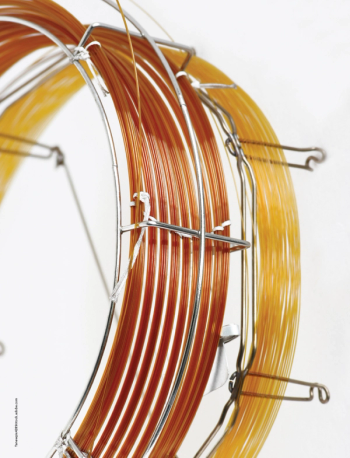
A list of some of the vital components of the GC column-making process.

The benefits and challenges of using hydrogen in the laboratory, specifically regarding GC and GC–MS procedures, are discussed.

The author discusses the benefits and challenges of using hydrogen in the laboratory, specifically regarding gas chromatography and GC–MS procedures.

Recent Advances in Gas Chromatography Event Preview and other important events for chromatographers

In this LCGC blog, we reflect on the movement to make analytical chemistry more environmentally friendly.
In this LCGC Blog, Tony Taylor performs various experiments with ChatGPT to test how useful the AI technology can be in aiding chromatographers' work.

Are analytical chemists really operating sustainable laboratories, or are they being too quick in marketing their “green” laboratory credentials?
Manufacturing capillary gas chromatography (GC) columns is a very complex procedure, with many production factors to consider. In this LCGC Blog, Tony Taylor lists some of the vital components of the GC column-making process.

By following some simple guidelines, you can ensure your GC columns live a long and healthy life.

In this LCGC blog, we reflect on the movement to make analytical chemistry more environmentally friendly, and how to potentially better those efforts for the industry's future.

In this LCGC blog, some words of wisdom are offered to help one avoid that panic situation of having to change the GC column or delay the analytical results.
The new General Chapter <621> does reflect the great work of the Pharmacopoeias in helping chromatographers to use more modern technology for their regulated methods, speeding up analysis, and reducing waste. The latest revision allows us to adjust column dimensions for gradient separations, which is a significant advance. Although these freedoms are welcomed, one must be very mindful of the requirements or limits of the allowable changes and the verification work that underpins our demonstration of equivalent performance of the adjusted method.

You probably think you know how to pipette correctly. But do you?

Robots outperform humans in five areas, and thus can be particularly beneficial for performing sample preparation for HPLC.

An article from The Robot Report contrasted the performance of robots in industry against those of humans. The takeaways from the report are as follows.

At the heart of most chromatographic analyses are the gravimetric and volumetric operations used to prepare samples, standards, and HPLC mobile phases.
I recently read a nice article from The Robot Report (1) that contrasted the performance of robots in industry against those of humans. The takeaways from the report are as follows.

It is a fact that most of us will be experiencing rising helium costs, and in some cases, caps on supply, or an inability to initiate new supply contracts from providers. Based on my own experiences, and those of colleagues and contacts, I’ve prepared what I hope is a succinct and focused guide on the factors one needs to evaluate to properly inform the decision to switch, and what to expect on the implementation journey.
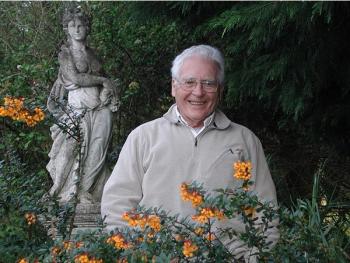
Professor James Ephraim Lovelock, inventor of the electron capture detector and developer of the Gaia theory, died last month on his 103rd Birthday.

We continue our “Critical Evaluation” series with a consideration of liquid chromatography (LC) methods that use mass spectrometric detection.

As chromatographers, our thoughts turn to the use of hydrogen as an alternative carrier gas, to ensure continuity of supply and reduce long-term costs.
In this next installment of our “Critical Evaluation” series, we will examine gas chromatography methods which use mass spectrometric detection (GC–MS).
As chromatographers, our thoughts turn to the use of hydrogen as an alternative carrier gas, to ensure continuity of supply and reduce long-term costs.

Time for some detective work, part 2!

A little preparation eases the challenges of new methods—and increases the fun.
The ability to predict issues and highlight unusual method parameters, before ever entering the laboratory, allows you to be alert for potential issues with a separation, or to change the method (where applicable) prior to initiating any experimentation. These detective skills, when applied in retrospect, are also invaluable for troubleshooting problems with the chromatographic separation or quantitative results.

Understanding the design and operation of a quadrupole mass analyzer can help you plan, optimize, and troubleshoot analytical methods.

January 20th 2021

February 1st 2022

February 1st 2023

September 2nd 2025

