


Time for some detective work

Tony Taylor is Group Technical Director of Crawford Scientific Group and CHROMacademy. His background is in pharmaceutical R&D and polymer chemistry, but he has spent the past 20 years in training and consulting, working with Crawford Scientific Group clients to ensure they attain the very best analytical science possible. He has trained and consulted with thousands of analytical chemists globally and is passionate about professional development in separation science, developing CHROMacademy as a means to provide high-quality online education to analytical chemists. His current research interests include HPLC column selectivity codification, advanced automated sample preparation, and LC–MS and GC–MS for materials characterization, especially in the field of extractables and leachables analysis.
Time for some detective work

The quadrupole mass analyzing device is now accessible to many analytical chemists as a detector in either HPLC or GC instruments due to their increasingly accessible price point. While it’s not vital that we understand the working principle of these detectors, insight into their design and operation can help enormously when planning or optimizing analyses or troubleshooting issues.

It’s time to take the lid off the black box and take a closer look inside electronic pneumatic controller (EPC) devices.
In this series of blog posts, I’m going to explore how the challenges of adopting methods from the literature, or from internal or external clients, can often be made easier, and more enjoyable, by taking time for some detective work prior to even entering the laboratory.

I’m very much a “big picture” type of thinker. By that, I mean unless I can understand all of the working parts of a problem and understand how they interact, I find it difficult to decide the best approach to figuring out how to solve the issue.

In this installment of the LCGC Blog, Tony Taylor discusses the instrument factors that need to be considered when optimising your UHPLC system to match the column hardware and analytical requirements for your applications, and why this is important in the pursuit of efficiency, speed, and increased resolution.
Electronic pneumatic controllers (EPC) were introduced into gas chromatography (GC) systems from the mid-1990s onwards and do an excellent job of regulating gas flow and pressure for GC inlets, columns, and detectors. Regular readers will know that, while I support innovation and improvements in engineering capability, I am inherently skeptical of anything with the “black box” tag and believe that unless we inherently understand how something works, we can neither fully harness the potential benefits, nor properly troubleshoot when something goes wrong. Therefore, read on as we open the lid and take a good look inside these particular black boxes.

The more polar analyte will favour aqueous solvents, and the less polar will be more highly soluble in organic solvent—so which do we choose?
I’m very much a “big picture” type of thinker. By that, I mean unless I can understand all of the working parts of a problem and understand how they interact, I find it difficult to decide the best approach to figuring out how to solve the issue.
I’d like to concentrate on variables that can really impact our chromatography, but may be on hidden, supplementary, or advanced pages of our software, or may appear on the main software acquisitions menus, but are poorly understood or rarely altered. These variables are often not specifically referenced in laboratory methods documents or, if they do appear, are poorly understood.

To achieve the best selectivity and recovery in liquid–liquid extraction (LLE), a few fundamentals need to be clearly understood.
Over the 17 years since the original Hydrophobic Subtraction Model for HPLC selectivity was published, those who curate the model have collected a huge amount of data as new HPLC stationary phases have been added. Analysis of this new data on almost 600 stationary phases has allowed us to update or adjust several of the stationary phase–analyte interaction terms within the model as well as adding one entirely new term to better describe the dipolar interactions with more modern stationary phases such as the pentafluoro phenyl-type phases.
Many of us have faced the situation where we have analytes that vary widely in their polarity or LogP(D) values and encounter issues with analyte solubility when choosing a suitable sample diluent for our high-pressure liquid chromatography (HPLC) analysis. The more polar analyte will favor aqueous solvents, and the less polar will be more highly soluble in organic solvent—so which do we choose?

The question, which is often asked of our technical support and applications chemists, is one to which I often reply, in the words of John F Kennedy, "Ask not what your column can for you, ask what you can do for your column.” OK, JFK substituted “column” for “country” in his version of the quotation, but as you will see, it’s a very relevant premise!
The question, which is often asked of our technical support and applications chemists, is one to which I often reply, in the words of John F Kennedy, "Ask not what your column can for you, ask what you can do for your column.” OK, JFK substituted “column” for “country” in his version of the quotation, but as you will see, it’s a very relevant premise!

Inspiring tips from successful analytical chemistry practitioners, to boost your laboratory activities and brighten your New Year.

Fundamentals
Here are some great tips for optimizing liquid chromatography (LC)–electrospray ionization (ESI)–MS to achieve the best possible results every time. This is a beginner’s guide to LC-ESI–MS.

Here are 10 great tips for optimizing LC-Electrospray Ionization (ESI)-MS so that you achieve the best possible results every time. These tips and tricks have been collated by my colleagues to form a beginner’s guide to LC-(ESI)MS and as a primer for those who are already using the technique.

Judicious initial choices of gas chromatography (GC) column dimensions, and even a change of column dimension during method development, can lead to significant improvements in resolution.

As we approach the holiday season, in what has a been the most challenging of years both inside and outside of the laboratory, I wanted to produce a more light-hearted yet inspiring review of 2020 within the Arch Sciences Group laboratories.

Which key efficiency techniques can maximize your analytical goals? This instalment of the LCGC Blog begins by describing the principles and optimization of liquid-liquid extraction (LLE).
Capillary GC is renowned for being a ”high efficiency” technique, meaning that we typically see very narrow peaks within our chromatograms. This leads to the ability to separate many components in a reasonable amount of time, which is of course analytically advantageous.

Oliver Napoleon Hill (1883– 1970) was an American self-help author once described as ”the most famous conman you’ve probably never heard of” (1 ). Conman maybe, but there is a quote of his that I believe to be particularly true when considering sample preparation for chromatography techniques; ”The one who tries to get something for nothing generally winds up getting nothing for something.”

This article explores how stationary‑phase chemistry and column temperature programmes can impact GC separations, navigating various choices to maximize resolutions.

LCGC North America
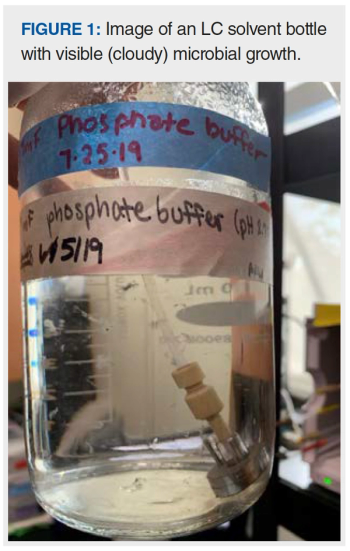
Taking a systematic approach to restarting liquid chromatography instrumentation following the COVID-19 shutdowns will save money and time in the long run.

COVID-19-related laboratory shutdowns are sure to cause a myriad of problems with liquid chromatography (LC) instrumentation across the globe. Taking a systematic approach to restarting these systems will save money and time in the long run by preventing problems that may otherwise appear in days or weeks following startup.

Optimizing gas chromatography (GC) separations typically involves making some informed choices around stationary-phase chemistry and column temperature programs

LCGC North America
There are many potential causes of reduced peak size in gas chromatography (GC), and an inexperienced GC user may not know where to begin the troubleshooting process. Here, we review potential causes for reduced peak size in GC systems.
LCGC Europe
COVID-19-related laboratory shutdowns are sure to cause a myriad of problems with liquid chromatography (LC) instrumentation across the globe. Taking a systematic approach to restarting these systems will save time and money in the long run, by preventing problems that may otherwise appear in days or weeks following startup.
We are frequently asked about issues with reduced peak size in gas chromatography (GC), and I’m guessing this is related to just how difficult this problem is to troubleshoot. There are so many potential causes that an inexperienced GC user may not know where to begin the troubleshooting process. Fear not. What follows is our logical guide to locating and fixing the issues with loss of sensitivity, and we’ve tried to cover as many of the instrument and application issues that we can think of.