

HPLC 2026 highlights AI, 2D-LC, new materials, and pharma separations.
HPLC 2026 highlights AI, 2D-LC, new materials, and pharma separations.

Capillary liquid chromatography (CapLC) offers compelling advantages in sensitivity, solvent reduction, and compatibility with modern mass spectrometry, yet remains underutilized in routine analytical workflows. This article synthesizes expert discussions from a Pittcon 2026 networking session to examine why CapLC adoption has lagged despite decades of development. Key themes include educational gaps, instrumentation limitations, robustness concerns, detection challenges, and supply‑chain constraints. The discussion highlights areas where CapLC already delivers clear value—such as proteomics, oligonucleotide analysis, and high‑throughput screening—and outlines practical pathways for broader adoption through targeted applications, improved instrumentation, and redefined expectations of “routine” chromatography.
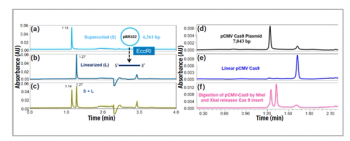
Slalom chromatography speeds mRNA QC—separating plasmid forms and spotting dsRNA impurities in minutes with higher sensitivity than gels or ELISA.
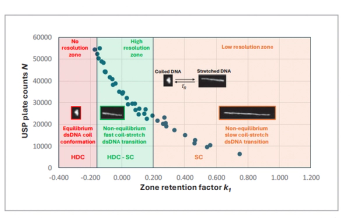
Part 1 of this two-part article series reviews the history of slalom chromatography (SC), the rationale for its recent revival, and the updated mechanistic framework of this technique. Rooted in the fundamental physical properties of deoxyribonucleic acid/ribonucleic acid (DNA/RNA) biopolymers and laminar flow dynamics in packed chromatographic beds, SC is highlighted for its most promising applications in cell and gene therapy. Recent two-year experimental investigations have revealed that SC operates through an out‑of‑equilibrium mechanism, coupling the entropic elasticity of double‑stranded deoxyribonucleic acid/ribonucleic acid (dsDNA/RNA) with the extension and shear forces generated within the interparticle spaces of ultrahigh-pressure liquid chromatography (UHPLC) columns. In contrast to gel permeation chromatography (GPC) or hydrodynamic chromatography (HDC), SC functions at high speed and uniquely elutes smaller dsDNA fragments first, followed by progressively larger ones. Unlike agarose gel electrophoresis (AGE), SC achieves separations of large DNAs in less than three minutes, with nearly twice the resolution power of typical AGE. These findings paved the way for the recent design of a new SC column intended for use in cell and gene therapy as an alternative to standard AGE. Further applications of this new SC column within cell and gene therapy workflows will be discussed in Part 2.

The 54th International Symposium on High Performance Liquid Phase Separations and Related Techniques (HPLC 2025), was held from June 15–19, 2025, in Bruges, Belgium. This “Column Watch” installment presents many of the highlighted topics and trends observed at this symposium.

The aim of this article is to provide a validated and optimized CIC-based method for accurate measurement of total fluorine in materials with polymeric PFAS content in the low-ppm range, which could be used in the consumer electronics and potentially other industries. This, in turn, can aid companies in tracking and mitigating PFAS ahead of regulations.


The latest edition of "Column Watch" features our annual review of new liquid chromatography columns and accessories, introduced at Pittcon and other events over the past 12 months.

This article delves into advancements in green chromatography, focusing on how innovative HPLC column design can drive eco-conscious practices.

This “Column Watch” installment presents many of the highlighted topics and trends observed at the 52nd International Symposium on High Performance Liquid Phase Separations and Related Techniques (HPLC 2024).

This article covers liquid chromatography columns and accessories commercially released after Pittcon 2023 through the 2024 conference.

High performance anion-exchange chromatography coupled with pulsed amperometric detection (HPAEC-PAD) is a potential method of choice for the analysis of carbohydrates.

We explore advancements in silica particles for liquid chromatography, focusing on the shift toward improved monodispersity and its impact on chromatographic parameters, efficiency, backpressure, and sensitivity in high-performance liquid chromatography (HPLC).

This retrospective focuses on trends and topics that were discussed at the annual HPLC symposium in Duesseldorf, Germany.

Analyzing representative standard mixtures, APIs, and synthetic impurities shows that when TRLC is combined with RPLC in 2D-LC, separation performance is improved. We explain why.

Nonspecific adsorption leads to poor peak shapes and poor performance from HPLC systems, but coating-enabling technologies can serve as a potential solution. We explain how.

Our annual review of new liquid chromatography columns and accessories, introduced at Pittcon and other events over the past 12 months.

TRLC can obtain separations similar to those of reversed-phase LC while using only water as the mobile phase.

The application of porous layer open tubular (PLOT) columns can be expanded beyond light compounds to separations of analytes with heavier boiling points.

At HPLC 2022, we heard about new research and developments, in areas such as column technologies, portable instrumentation, and machine learning, among others.

With a new prototype, we explore how to improve the resolution power and usability of LC–MS instruments for routine analysis in pharmaceutical applications.

Knowing the variables that most affect the sample loading capacity in a porous layer open tubular (PLOT) column is vital to determining how much sample to inject.

Our yearly report on liquid chromatography (LC) columns and accessories commercially released over the past year.
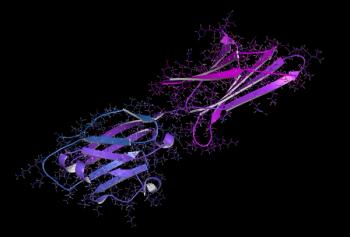
New developments in metal-organic frameworks (MOFs) for LC seek to control MOF distribution on the silica surface, improve understanding of the role of the substrate, and enhance robustness and reproducibility.
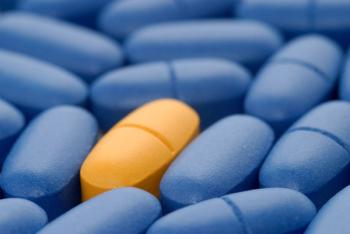
Here, a new automated active pharmaceutical ingredient (API) extraction platform is integrated with online liquid chromatography (LC) to assess drug product potency. The platform dissolves the tablet coating (if present), disintegrates the tablet, and disperses and solubilizes the tablet for analysis.

Columns: Column Watch
This study illustrates the importance of column selection during GC method development.
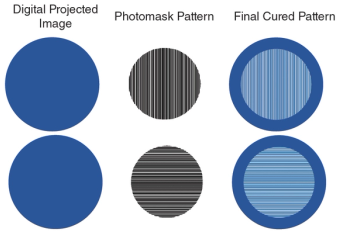
Three-dimensional (3D) printing shows promise for creating stationary phases with tailored geometries. We present a method that overcomes limitations of other approaches, and can produce columns with a feature resolution of 10 μm.

Technology improvements have reignited interest in open-tubular LC, which promises high efficiency, low backpressure, and more environmentally sustainable separations.

Solid adsorbent gas chromatography (GC) columns, such as porous layer open tubular (PLOT) columns, are the best option for GC analysis of C1–C5 hydrocarbons, but water can affect retention and selectivity. We review the effects of water for different types of PLOT columns, and explain how to prevent or remediate the problem.

We present our annual review of new liquid chromatography columns and accessories, introduced between spring 2020 and spring 2021.