
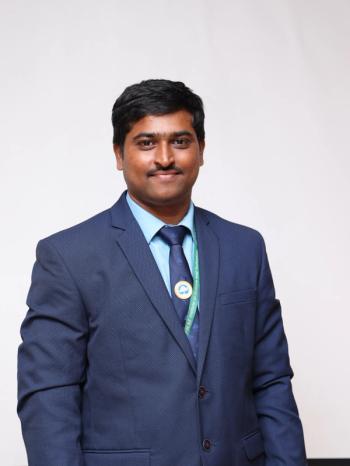
In this interview, we asked Hemanth Kumar Chanduluru from the SRM Institute of Science and Technology in Kattankulathur, India, multiple questions regarding sustainability in analytical separation methods.
In this interview, we asked Hemanth Kumar Chanduluru from the SRM Institute of Science and Technology in Kattankulathur, India, multiple questions regarding sustainability in analytical separation methods.

Rabi Ann Musah, PhD, a professor of chemistry at the University of Albany, State University of New York, is exploring ways to help protect seed viability through optimizing the isolation of specific compounds. We sat down with her to discuss her research and findings.

LCGC spoke with Leon Barron from the Imperial College London about his work measuring contaminants of emerging concern in water.

Analysis of unidentified organofluorine compounds and known PFAS in environmental and human samples presents many challenges. Combustion ion chromatography is one technique that can help.
Newer direct-injection mass spectrometry techniques can improve real-time monitoring of volatile organic compounds.

There is a need for fast and reliable PFAS analyses to monitor drinking water quality. We report on the use of semi-automated sample preparation with EPA methods 533 and 537.1, assessing performance and processing time.

Pyrolysis–gas chromatography–mass spectrometry has advantages for the analysis of environmental microplastic samples compared to other leading analytical methods, including spectroscopic techniques.

Environmental laboratories with high sample throughput often wish to analyze PCDD/Fs and PCBs in separate fractions. The cleanup method described here results in complete separation, and offers an alternative to fully manual or fully automated cleanup.

LCGC North America
LC–MS techniques, particularly those using high-resolution MS and nontargeted analysis, are advancing many areas of water research. Here, Imma Ferrer of the University of Colorado shares some of her recent work in this field.
LCGC North America
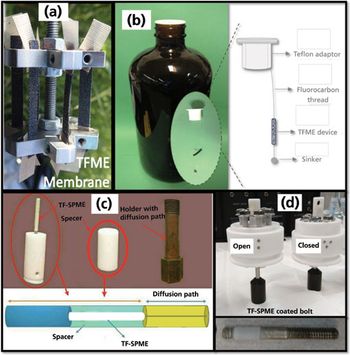
In on-site environmental applications, representative sampling and proper replication are essential. For these reasons, recent work in thin-film solidphase microextraction has focused on the development of unique holders and customized samplers that are tailored for distinct sampling environments. Here, we explore the latest developments.

LCGC North America
The environmental analysis community sorely needs a system by which new and up-to-date methods are more easily developed, shared, and adopted.
LCGC North America
In this interview, Thomas Letzel of the Technical University of Munich considers the current state of water analysis, looking at recommended techniques, the growth of nontargeted screening, and multi-disciplinary collaboration.
LCGC North America
James Stry of FMC Agricultural Solutions talks about best practices for developing robust environmental analysis methods, including simplifying sample preparation and dealing with matrix effects.
LCGC North America
In the environmental analytical chemistry literature, the topic of matrix interferences and matrix effects has not been addressed in a fundamental way. Here, we examine which methods appear to have a tendency for matrix interference and suggest ways to reduce the problem.