

Marinella Vitulli calls formal cross-laboratory proficiency testing, not better detection technology, the field's biggest gap in NIAS analysis.
Marinella Vitulli calls formal cross-laboratory proficiency testing, not better detection technology, the field's biggest gap in NIAS analysis.
Ruling out false-positive NIAS annotations using triplicate testing and matched oven blanks rather than spectral criteria alone.
Ranking non-intentionally added substance (NIAS) risk by consumer exposure and packaging use-case, not by hazard data alone.
Marinella Vitulli finds concentrated extracts reveal a broader contaminant profile than simulant migration tests, but filtration risks introducing cross-contamination.
The identification-confidence framework used to rank suspect and non-intentionally added substance (NIAS) detections is discussed.
Marinella Vitulli explains how her lab prioritizes and updates its PFAS and bisphenol screening libraries as new analogues emerge.

Sheher Mohsin and Jeremy Koemel explore where machine learning and predictive CCS could transform PFAS identification, and what's holding it back.

Siuzdak argues the field must correct AI-fueled “phantom metabolites” before trusting predictive models, favoring experimentally grounded measurement.
Sheher Mohsin and Jeremy Koemel identify the biggest bottlenecks in non-targeted PFAS workflows, from CCS libraries to human review.
With 960,000 empirically acquired standards, Siuzdak shows how METLIN delivers reliable, cross-instrument IDs and reveals fragmentation artifacts.
Sheher Mohsin and Jeremy Koemel walk through a real CCS Atlas example showing how homologous series confirm unknown PFAS identifications.
Jeremy Koemel discusses detecting low-intensity PFAS features when MS/MS signal is too weak, and how they work around it.
As metabolomics datasets balloon, Siuzdak explains using retention time and in-source fragmentation checks to separate real molecules from artifacts.
Sheher Mohsin explains how CCS measurements add a physical confirmation layer beyond mass and retention time in PFAS analysis.
Siuzdak separates true standard-based empirical spectra from artifactual signals, warning AI trained on flawed data risks perpetuating errors.
Gary Siuzdak explains how uMRM converts inconsistent untargeted LC–MS data into standardized MRM transitions.
Wallman argues proteomics is moving from niche tool to high-throughput platform core, with the greatest untapped potential in covalent drug programs and targeted protein degradation.
Wallman explains that PeptDeepKontext is designed to generalize without lab-specific calibration, though highly unusual setups may still benefit from additional fine-tuning in the future.
Wallman unpacks how graph-level fragmentation in fragDETR captures internal fragments and neutral losses, with peak and intensity improvements concentrated in challenging non-standard peptides.
Wallman explains how spectral library accuracy, retention time prediction, and instrument-specific variation make deep learning essential yet difficult in data-independent acquisition proteomics.
Wallman details PeptDeepKontext, a model built to predict peptide properties across diverse instruments and PTMs by embracing rather than eliminating inter-laboratory variability.
Exact mass, isotopic distribution, and MS/MS library matching are used together to differentiate PFAS hits from sulfur-rich food compounds that share a similar mass defect range.
Antonio Ferracane addresses regulator concerns about cleanup-free PAH methods, noting cleanup isn't mandatory if matrix validation proves reliable.
The approach remains non-targeted by prioritizing PFAS-like ions in the first DDA pass; the tunable mass tolerance window can be adjusted to capture structurally unusual PFAS subclasses.
Christine Fisher describes her method using mass defect filtering at the data acquisition stage to improve non-targeted PFAS detection in complex food matrices.
Antonio Ferracane explains how each sample prep step adds error and can strip target PAHs, so skipping cleanup can improve recovery, accuracy, and precision.
Antonio Ferracane discusses moving to minimal sample preparation for PAH analysis, and why matrix-matched calibration can replace cleanup steps.
Antonio Ferracane outlines a combined technique using cryogenic peak compression and pseudo-MRM to sharply boost sensitivity for trace PAHs.

ASMS 2026 highlighted AI-driven MS software, faster/deeper proteomics, spatial biology imaging, biopharma characterization tools, PFAS monitoring, and greener instrumentation.
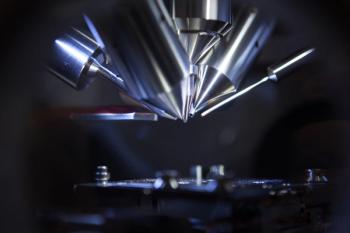
2026 ASMS awards honor advances in native MS, single-cell proteomics, metabolomics, and instrumentation, spotlighting mass spectrometry's scientific impact.