The Column-11-06-2019

Ear.jpg

The Column

The Column spoke to Nelson Roberto Antoniosi Filho, a professor at the Chemistry Institute of the Federal University of Goiás (UFG), in Goiânia, Brazil, about his development of a gas chromatography–mass spectrometry (GC–MS) method for cancer diagnosis using cerumen.

The Column

Agilent Technologies has announced the opening of a new state-of-the-art facility for spectroscopy research and development at the Harwell Science and Innovation Campus in Oxfordshire, UK.

Allergens.jpg

The Column

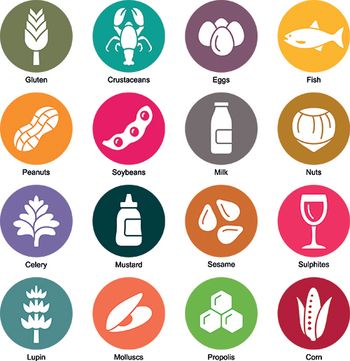
Researchers attempting to overcome complex matrix interference in commercial food analysis have developed a targeted LC–MS/MS method and open source analysis software capable of identifying allergens in complex food matrices.

White.jpg

The Column

Researchers have developed two new methods for the analysis of MOAHs in highly purified mineral oil fractions (white oils) using comprehensive AgLC×GC, one method uses FID, while the other uses VUV.

Figure 1 L.png

The Column

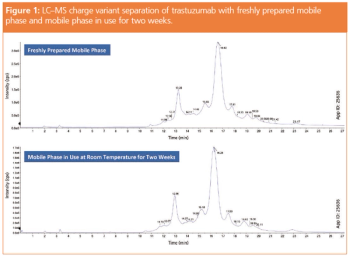
The utility of native high-resolution mass spectrometry (HRMS) in intact protein characterization is rapidly growing because of advances in both ion-exchange chromatography (IEC) as well as MS-compatible buffer systems. MS is a critical component of biotherapeutic characterization, but its combination with traditional chromatographic separations, such as size-exclusion chromatography (SEC) and IEC, has been slow because of the predominant use of high salt mobile phases, which are incompatible with MS. Recently reported methods using cation-exchange chromatography (CEX) with volatile buffer systems for pH gradient elution has given researchers the ability to use these chromatographic techniques with MS detection. In this article a robust, MS-compatible buffer system for high sensitivity IEC with pH gradient elution for charge variant analysis of intact monoclonal antibodies (mAbs) is described.