

News
Paul Haddad, of the University of Tasmania, is well known for developing mathematical models to improve fundamental understanding of chromatographic techniques. He recently spoke to us about his research work and career.
News
Paul Haddad, of the University of Tasmania, is well known for developing mathematical models to improve fundamental understanding of chromatographic techniques. He recently spoke to us about his research work and career.

Capillary GC has been miniaturized, while maintaining some performance aspects of full-size laboratory systems. The benefits and challenges involved with considering these newer, smaller gas chromatographs for typical analytical problems are discussed.

Liquid chromatography (LC) pumps produce mobile-phase streams with short-term variations in mobile-phase composition. We explain the impact of these waves on retention time in reversed-phase LC and what to do about it.

A new free simulator is available for students, educators, and trainers to teach and perform virtual HPLC experiments that are applicable to real HPLC instrumentation and method development.

Even after 40 years, we have yet to find a perfect solution to the problem of demonstrating and achieving acceptable column precision for high-performance liquid chromatography (HPLC) packing material.
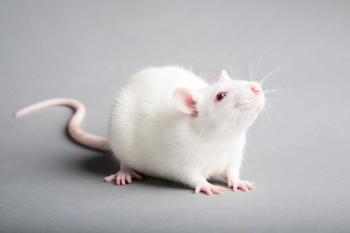
A UHPLC–MS/MS method is described for rapid quantification of five major bioactive alkaloids in rat urine. The results obtained help lay the foundation for the clinical application and safety evaluation of the bioactive ingredients of menispermi rhizoma, used in herbal medicines.

Sorbent-based extractions using metal-organic frameworks (MOFs) have several advantages, notably selectivity. How do these extractions work, and where are they most useful? We look into the current state of the art.