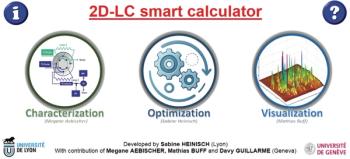
An Excel-based tool has been developed to help users understand the fundamentals of comprehensive 2D-LC.

Davy Guillarme is with the School of Pharmaceutical Sciences Institute of Pharmaceutical Sciences of Western Switzerland, at the University of Geneva, in Geneva, Switzerland, and the University of Geneva, Geneva, Switzerland.
An Excel-based tool has been developed to help users understand the fundamentals of comprehensive 2D-LC.

Pressure-enhanced liquid chromatography (PE-LC) offers a new approach for improving selectivity for large molecule separations. Examples shown here include short oligonucleotides in ion-pairing reversed-phase (IP-RP) liquid chromatography and larger nucleic acids in ion-exchange (IEX) chromatography.

Multi-isocratic elution mode is a powerful chromatographic approach for characterizing minor isoforms of monoclonal antibodies.
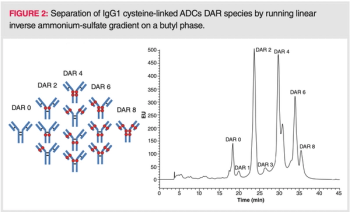
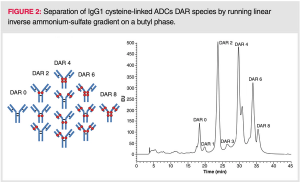
In the second part of this review of the current state of HIC, some practical considerations are explained, including method development, selection of the phase system, combined salt systems, and possibilities to combine HIC with other chromatographic modes.

A review of the current state of HIC, focusing on retention and separation mechanisms with the aim of developing more robust methods. Can HIC be considered as a non-denaturing and non-destructive technique with advantages for protein analysis?

A new free simulator is available for students, educators, and trainers to teach and perform virtual HPLC experiments that are applicable to real HPLC instrumentation and method development.

An introduction from guest editors, Koen Sandra and Davy Guillarme, on this special supple-ment from LCGC Europe focusing on recent developments in biopharmaceutical analysis.
Special Issues
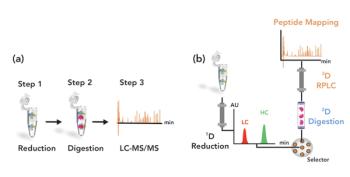
The potential of multidimensional online peptide mapping analysis as a strategy for improving a postlabeling workflow for protein–protein interactions is demonstrated using both hydroxy radical footprinting–mass spectrometry (HRF–MS) and LC–MS/MS.

LCGC Europe
Davy Guillarme previews his presentation at HPLC 2019 highlighting the new trends in LC×LC applied for biopharmaceutical characterization, including the hyphenation with high‑resolution mass spectrometry (HRMS) and ion mobility spectrometry (IMS).

Special Issues
The impact of ionic strength, buffer capacity, and pH-response on the retention behavior and peak shape of mAb species characterization is evaluated for IEX-MS. The aim of the present study was to understand the impact of ionic strength, buffer capacity, and pH-response on the retention behavior and peak shape of mAb species.

Special Issues
Characterization of mAbs and related products requires the identification of chromatographic peaks with MS. However, the conventional salt- and pH-gradient elution techniques used in IEX are inherently incompatible with MS. Ammonium acetate- and ammonium carbonate-based mobile phase systems have been recently applied in IEX-MS, but the influence of the eluent composition on peak shape and retention has not been discussed nor studied systematically until now. The aim of the present study was to understand the impact of ionic strength, buffer capacity, and pH-response on the retention behaviour and peak shape of mAb species.

The Column
This is the first in a series of articles exploring current topics in separation science that will be addressed at the HPLC 2019 conference in Milan, Italy, from 16–20 June. In this preview, Davy Guillarme discusses multidimensional liquid chromatography approaches for the characterization of protein biopharmaceuticals.

The Column
This is the first in a series of articles exploring current topics in separation science that will be addressed at the HPLC 2019 conference in Milan, Italy, from 16–20 June.

LCGC Asia Pacific
Several new materials and columns have been introduced in recent years for size-exclusion separations of proteins. How do I know which one to choose, and which separation conditions will be the best for my protein separation?

Special Issues
An introduction from the guest editors of this special supplement from LCGC Europe focusing on recent trends in pharmaceutical analysis.

LCGC North America
Much of the conventional wisdom regarding size-phase separations of proteins has been negated thanks to development of superior chemistries and advances in research. In this article, details that the authors have found to be especially beneficial in achieving effective SEC separations are examined.

LCGC Europe
Several new materials and columns have been introduced in recent years for size-exclusion separations of proteins. How do I know which one to choose, and which separation conditions will be the best for my protein separation?

LCGC Asia Pacific
Several new materials and columns have been introduced in recent years for reversed-phase separations of proteins. How do I know which one to choose, and which separation conditions will be best for my protein separation?

LCGC Europe
Several new materials and columns have been introduced in recent years for reversed-phase separations of proteins. How do I know which one to choose, and which separation conditions will be best for my protein separation?

LCGC North America
For reversed-phase separations of proteins, you must consider pore size,column temperature, and stationary-phase chemistry. Here are some guidelines.


LCGC Europe
These are exciting times to be involved in monoclonal antibody (mAb) and biopharmaceutical analysis. Advances in instrumentation, column technology, and reagents are providing analysts with a new set of tools to broaden their understanding of the highly complex products they are studying. A good example is hydrophilic interaction chromatography (HILIC). While the technique has been used for more than 20 years to profile enzymatically released and fluorescently labelled N-glycans, the introduction of new columns (sub-2-µm and widepore) has paved the way to explore the technique further. Remarkable separations at all levels of analysis, including protein, peptide, and glycan levels, have been demonstrated. With data from the authors’ laboratories, the versatility of HILIC in mAb analysis will be demonstrated in this month’s “Biopharmaceutical Perspectives”.

LCGC Europe
This instalment in our series on ultrahigh-pressure liquid chromatography (UHPLC) highlights its benefits in fast analysis, high-resolution separations, high performance liquid chromatography (HPLC) method development, reduced solvent and sample usage, and enhanced sensitivity and precision performance.
LCGC North America
UHPLC’s benefits include fast analysis, high-resolution separations, reduced solvent and sample usage, enhanced sensitivity and precision, and more.
Special Issues

Special Issues
The aim of this article is to illustrate the current status of computer-assisted method development and retention modelling. This study focuses on the successful method development of typical small pharmaceutical compounds (impurity profiling) and large therapeutic proteins. By choosing appropriate initial conditions, the method development can be performed in less than one day. However, for small molecules possessing different physicochemical properties, the conditions can be multifarious, while for biopharmaceuticals (for example, monoclonal antibodies [mAbs], antibody–drug conjugates [ADCs]), a generic method can easily be developed. In addition to retention modelling and optimization, the potential of simulated robustness testing is also demonstrated. Depending on the applied retention model, the impact of any change among six experimental parameters (tG, T, pH, ternary composition, flow rate, and initial- and final mobile phase compositions) on the separation can be assessed using a 26 or 36 type virtual
LCGC Europe
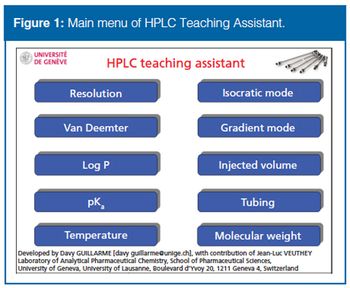
The free spreadsheet-based program HPLC Teaching Assistant was developed for effective and innovative learning and teaching of liquid chromatography. This software allows teachers to illustrate the basic principles of high performance liquid chromatography (HPLC) using virtual chromatograms (simulated chromatograms) obtained under various analytical conditions. In the first instalment of this series, we demonstrate the possibilities offered by this spreadsheet to illustrate the concept of chromatographic resolution, including the impact of retention, selectivity, and efficiency; understand the plate height (van Deemter) equation and kinetic performance in HPLC; recognize the importance of analyte lipophilicity (log P) on retention and selectivity in reversed-phase HPLC mode; and manipulate or adapt reversed-phase HPLC retention, taking into account the acido-basic properties (pKa) of compounds and the mobile-phase pH.

LCGC North America
Part II of this series describes additional features of the HPLC Teaching Assistant software, including the possibility to simulate the impact of the mobile phase temperature on HPLC separations; understand the chromatographic behavior of a mixture of diverse compounds in both isocratic and gradient elution modes; show the influence of instrumentation (injected volume and tubing geometry) on the kinetic performance and sensitivity in HPLC; and demonstrate the impact of analyte molecular weight on thermodynamic (retention and selectivity) and kinetic (efficiency) performance.

Special Issues
The recent trends in column technology for reversed-phase LC, SEC, ion-exchange chromatography, and HIC for analysis of biopharmaceuticals are critically discussed.

Special Issues
An introduction from the guest editors of this special supplement from LCGC Europe revealing recent developments in small-molecule drug analysis.

October 9th 2020