

There is a need for fast and reliable PFAS analyses to monitor drinking water quality. We report on the use of semi-automated sample preparation with EPA methods 533 and 537.1, assessing performance and processing time.
There is a need for fast and reliable PFAS analyses to monitor drinking water quality. We report on the use of semi-automated sample preparation with EPA methods 533 and 537.1, assessing performance and processing time.

Are the days numbered for long linear runs of univariate data in separation science?
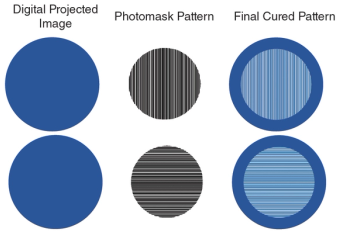
Three-dimensional (3D) printing shows promise for creating stationary phases with tailored geometries. We present a method that overcomes limitations of other approaches, and can produce columns with a feature resolution of 10 μm.

Improved analysis of pharmaceutical and natural medicine products requires advances in reversed-phase LC stationary phases. We examine two synthesized stationary phases with applicability in quality control and chiral separation for analysis of natural products.

In a continuing series on peak shapes, we focus on potential physical causes of asymmetry, including column packing, changes in the packed particle bed, and accumulation of debris in the column.

The late Harold McNair had a remarkable 60-year career as a chromatographer. He taught us many valuable lessons, three of which we discuss here.
We look at five modern treatments of chromatographic sample extraction, explaining their initial conception and development to shed light on their current roles as analytical tools.