

The Column
The 38th International Symposium on Capillary Chromatography (ISCC) and 11th GCXGC Symposium will be held at the Palazzo dei Congressi in Riva del Garda, Italy, from 18–23 May 2014.
The Column
The 38th International Symposium on Capillary Chromatography (ISCC) and 11th GCXGC Symposium will be held at the Palazzo dei Congressi in Riva del Garda, Italy, from 18–23 May 2014.

The Column
Click the title above to open The Column April 28, 2014 North American issue, Volume 10, Number 7, in an interactive PDF format.
The Column
Click the title above to open The Column April 28, 2014 Europe & Asia issue, Volume 10, Number 7, in an interactive PDF format.
LCGC Europe eNews
Agilent Technologies (California, USA) has announced that Joshua Rabinowitz, a professor at Princeton University (New Jersey, USA), has received an Agilent Thought Leader Award to support his work on quantitative analysis of cellular metabolism.
E-Separation Solutions
The 2015 budget for the US Food and Drug Administration (FDA) will rise by 8.1% over the 2014 budget.
E-Separation Solutions
The European Food Safety Authority (EFSA) has put out a call to scientists to join its teams of risk assessment experts and make a difference to Europe?s food safety system.

E-Separation Solutions
This blog attempts to provide an impartial guide to liner selection which is representative of the considerations in modern capillary GC.
E-Separation Solutions
Click here to view the complete E-Separation Solutions newsletter from April 17, 2014.
LCGC Europe eNews
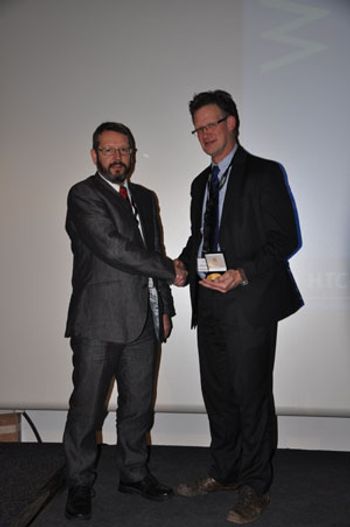
The Analytical Division Separation Science Group of the Royal Society of Chemistry has awarded the Knox medal to Peter Schoenmakers of the Van?t Hoff Institute in Amsterdam, the Netherlands.
E-Separation Solutions
LCGC recently spoke with the 2014 LCGC Lifetime Achievement Award winner, Fred E. Regnier, the John H. Law Distinguished Professor in the Department of Chemistry at Purdue University in West Lafayette, Indiana, about his early work, his numerous patents and start-up companies, as well as his vast accomplishments in separation science and his role as a teacher.
In this new short interview, Deirdre Cabooter of KU Leuven in Belgium, discusses the advantages of using UHPLC in method development and tips to follow when transferring methods from UHPLC to HPLC instrumentation.
The aim of this study was to apply quality-by-design principles to build in a more scientific and risk-based multifactorial strategy in the development of an ultrahigh-pressure liquid chromatography (UHPLC) method for omeprazole and its related impurities.
E-Separation Solutions
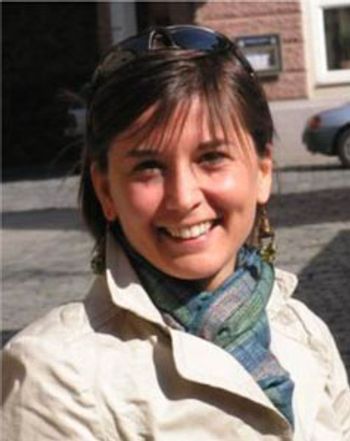
LCGC spoke to Giorgia Purcaro of the Department of Food Science at the University of Udine, Italy, and Chiara Cordero of the Department of Drug Science and Technology at the University of Turin, Italy, about the sensory evaluation of olive oil and the benefits of a comprehensive approach.
E-Separation Solutions
Click here to view the complete E-Separation Solutions newsletter from April 10, 2014.
LCGC Europe eNews
The Working Group Separation Sciences of the Analytical Division of the German Chemical Society has awarded the Eberhard Gerstel Prize to Jakob Haun, a doctoral student at the Institute for Energy and Environmental Technology (Duisburg, Germany) for an outstanding research publication.
LCGC Europe eNews
The 38th International Symposium on Capillary Chromatography (ISCC) will be held at the Palazzo dei Congressi, in Riva del Garda, Italy, from 18?23 May 2014. The four-day event will feature recent findings from leading academic and industrial experts in the form of lectures and posters. LCGC Europe will be present as Platinum Sponsor during the entire event and welcome you to join us at our booth located in the Exhibition Hall to discuss past, present, and future mutual relationships.

E-Separation Solutions
Graduate students seeking doctoral degrees in chemistry require guidance and help in completing their dissertations. In the April installment of The LCGC Blog, Kevin Schug discusses this process and the efforts of four of his students.
LCGC North America
AOAC International (Gaithersburg, Maryland) has named Guo-Fang Pang as the recipient of the 2014 Harvey W. Wiley Award in recognition of his outstanding contributions to analytical chemistry.
LCGC Asia Pacific eNews
AOAC International (Gaithersburg, Maryland) has named Guo-Fang Pang as the recipient of the 2014 Harvey W. Wiley Award in recognition of his outstanding contributions to analytical chemistry.

The Column
Four new ozone-depleting substances (ODSs) - CFC–1121, CFC–112a, CFC–113a, and HCF–133a - have been detected and identified in the Earth's atmosphere using gas chromatography–mass spectrometry (GC–MS).1 The research published in Nature Geoscience compared samples collected between 1978 and 2012 to establish a clear increase in the emissions of these gases, even though CFC production has been banned globally since 1987.
The Column
Scientists from Bristol-Myers Squibb Company have developed a novel approach for the simultaneous quantitation of neutralizing antibodies, residual drug, and human Immunoglobulin G (IgG) in immunogenicity assay development using liquid chromatography–tandem mass spectrometry (LC–MS–MS). This work published in Analytical Chemistry presents a new approach that aids the refinement of therapeutic protein neutralizing antibody assays in drug development
The Column
A team of scientists based in the US has used solid–phase microextraction (SPME) and gas chromatography–mass spectrometry (GC–MS) to provide the first analysis of volatile organic compounds (VOCs) present in human earwax (cerumen).1

The Column
There are many sources of advice on how to select the most appropriate stationary phase for sample analysis, but the mobile phase is not often discussed. This article provides tips for selecting the most appropriate mobile phase for your analysis.

The Column
The goals in ultrahigh-pressure liquid chromatography (UHPLC) method development are to first find the best separation, second find the best column, and third find the most robust method in a multifactorial Design Space. Trial and error methods are not sufficient anymore and solid science based on Quality by Design (QbD) principles is required.
The Column
Click the title above to open The Column April 08, 2014 North American issue, Volume 10, Number 6, in an interactive PDF format.
The Column
Click the title above to open The Column April 08, 2014 Europe & Asia issue, Volume 10, Number 6, in an interactive PDF format.
In two new videos from LCGC TV, Milton L. Lee from Brigham Young University discusses the principles of TGGC, and the possible advantages of TGGC over traditional GC methods.