

LCGC North America
Kevin Dorfman discusses his work to improve electrophoresis and nanochannel technologies to obtain genomic information.
LCGC North America
Kevin Dorfman discusses his work to improve electrophoresis and nanochannel technologies to obtain genomic information.

LCGC Europe
Why should you be concerned about mobile-phase degassing - it's all done automatically, isn't it?

LCGC Europe
In this article, we discuss radical MS, an increasingly important area of MS development and the application to bioanalysis. At the current stage, most of the research is performed by a small set of academic groups; it is likely that these types of fundamental studies will attract more attention and even be commercialized in the near future.
LCGCPrimer1013r1
LCGC North America
LCGC and Spectroscopy magazines are seeking contributed manuscripts for the March 2015 issue of Current Trends in Mass Spectrometry.

Special Issues
We present a brief review of this year's ASMS conference, which took place June 14–19, 2014, in Baltimore, Maryland
LCGC Print Ad Specs
LCGC Europe
Click the title above to open the LCGC Europe July 2014 regular issue, Vol 27 No 7, in an interactive PDF format.
LCGC North America
Click the title above to open the LCGC North America July 2014 regular issue, Vol 32 No 7, in an interactive PDF format.
Special Issues
Click the title above to open the July 2014 issue of Current Trends in Mass Spectrometry, Volume 12, Number 3, in an interactive PDF format.
LCGC Europe eNews
Latest newsletter from June 26 2014.
E-Separation Solutions
Click here to view the complete E-Separation Solutions newsletter from June 23, 2014.
E-Separation Solutions
The study of sewage using chromatographic techniques is a rapidly expanding area that can provide insights into the consumption of illicit drugs. Measuring illicit drug concentrations can provide authorities with a close to real time identification of consumption trends and rates in specific geographical areas.
E-Separation Solutions
Alberta's oil sands produce 1.9 million barrels of oil each day and contributes to 55% to all Canadian crude production.1 This industrial activity poses a potential threat to the regional environment, with concerns over potential water contamination from toxic chemicals. LCGC spoke to Jonathan W. Martin, an associate professor from the Division of Analytical & Environmental Toxicology at the University of Alberta (Alberta, Canada) about the analytical challenges he faces and solves in this research.
The Column
A simple, rapid, and robust UHPLC method for the simultaneous determination of polyphenols, methylxanthines, sweeteners, and flavouring substances as well as some common preservatives has been developed using an automated method scouting and method optimization workflow.

The Column
Incognito presents his pick of the review articles that have helped him progress in his chromatography career.

The Column
The 8th Annual International Conference on Packed Column SFC (SFC 2014) will take place at the Congress Center Basel in Switzerland from 8–10 October 2014.

The Column
James Frahill, who is a Research Analyst at the Pfizer Process Development Centre (Cork, Republic of Ireland), spoke to Bethany Degg of The Column about the role of the chromatographer in the pharmaceutical process development group at Pfizer.

The Column
This article describes the advantages of miniaturizing laboratory instruments, as well as the challenges to adapt to and overcome

E-Separation Solutions
The International Symposium on Capillary Chromatography (ISCC) and GCxGC Symposium combined conference provides an excellent combination of high impact, cutting edge science, and a great social program in an interesting venue. Kevin Schug shares his thoughts about innovations in gas chromatography presented at this year's conference in Riva del Garda, Italy.

The Column
Profiling impurities in MDMA (also known as ecstasy) is essential to forensic science as different profiles can provide clues about the source. Two researchers from Michigan State University (Michigan, USA) investigated the effect of liquid–liquid extraction (LLE), headspace solid-phase microextraction (HS–SPME), and different gas chromatography temperature programmes highlighting the need for standardized procedures.
The Column
Dried blood spot (DBS) sampling and high performance liquid chromatography coupled to high-resolution tandem mass spectrometry (HPLC–MS) has been demonstrated in the routine testing of athletes for anabolic steroid esters.
The Column
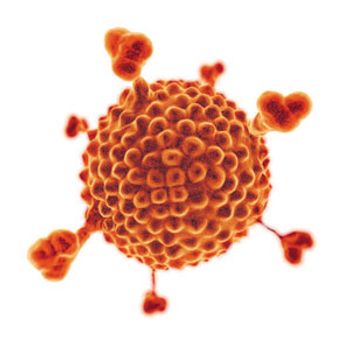
A new method for the purification of adenovirus serotype 5 (Ad5) by two-column, size-exclusion simulated countercurrent chromatography (SEC) has been published in the Journal of Chromatography A.
E-Separation Solutions
Click here to view the complete E-Separation Solutions newsletter from June 19, 2014.
The Column
Researchers at the Universite de Montreal in Canada have developed and validated a new liquid chromatography tandem mass spectrometry (LC–MS–MS) method to identify compounds present in suspected counterfeit or even adulterated erectile dysfunction drugs. According to the study published in the Journal of Chromatography A, the method has now been introduced to the Inspectorate Laboratory Programme at Health Canada (Canada).
This webcast will begin on Wednesday, July 23, 2014 at 2:00 PM EDT.
The Column
Click the title above to open The Column June 19, 2014 North American issue, Volume 10, Number 11, in an interactive PDF format.
The Column
Click the title above to open The Column June 19, 2014 Europe & Asia issue, Volume 10, Number 11, in an interactive PDF format.
E-Separation Solutions
This Tuesday morning session will be presided over by Alison Danell of East Carolina University, and it will be held at 8:30?10:30 a.m. in Exhibit Hall AB.
E-Separation Solutions
The June 18 Wednesday morning session "The Triple Quadrupole: 35 Years of Evolution and Application to Celebrate Chris Enke's 80th Birthday" starts at 8:30 a.m. in Room 309-301. R. Graham Cooks, of Purdue University (West Lafayette, Indiana), will preside.